
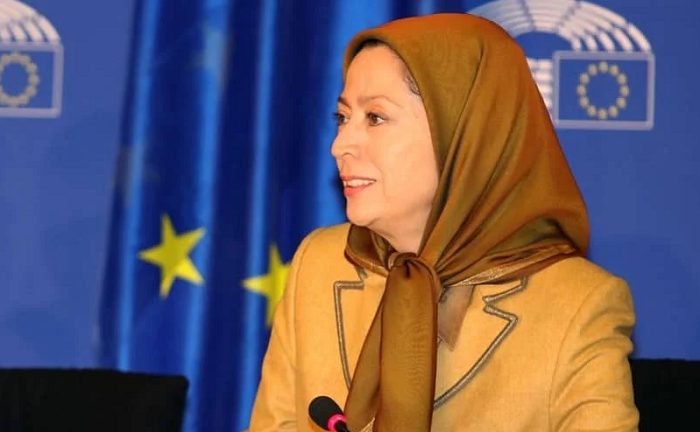
In a compelling opinion piece published in the German daily Die Welt, Iranian opposition President-elect Maryam Rajavi of the National Council of Resistance of Iran (NCRI), has outlined a detailed plan for achieving regime change in Iran.
Her vision is timely, as the fall of Syrian dictator Bashar al-Assad, a strategic ally of Tehran’s regime, signals a shift in the region’s power dynamics. Rajavi emphasizes that Assad’s ousting has dealt a significant blow to the Iranian regime’s core strategies: domestic oppression and regional interference through terrorism and military aggression. She cites Iran’s massive financial and military investments in Syria, estimated at $50 billion between 2012 and 2020, as evidence of the regime’s reliance on Assad for geopolitical influence. With Assad’s downfall, this strategy has unraveled, leaving Iran’s leadership vulnerable both domestically and internationally.
The NCRI leader draws attention to the deepening unrest within Iranian society, fueled by a deteriorating economy, soaring inflation, widespread unemployment, and systemic corruption. Notably, she highlights the plight of Iranian women, whose suppression has become emblematic of the regime’s broader human rights abuses. Rajavi asserts that these factors have galvanized public dissatisfaction, creating fertile ground for another uprising.
Rajavi’s roadmap for Iran’s future is both comprehensive and pragmatic. She proposes the formation of a transitional government for no more than six months, tasked with organizing free and fair elections for a constituent assembly. This body would draft a constitution and pave the way for a democratic republic. Her vision includes:
After its significant failure in the region, the mullahs’ regime has accelerated its program to build #nuclear weapons to avoid being overthrown. Therefore, it is urgent to activate the Snapback mechanism of the @UN Security Council Resolution 2231. The only way to prevent a… pic.twitter.com/YGB1KfNnqZ
— Maryam Rajavi (@Maryam_Rajavi) December 19, 2024
- Electoral legitimacy: Ensuring that ballot boxes serve as the sole source of authority.
- Freedom and gender equality: Guaranteeing equal rights for women.
- Ethnic autonomy: Supporting self-determination for ethnic groups within a united Iran.
- Religious equality: Protecting the rights of all faiths, including Shiites, Sunnis, and other minorities.
- Secular governance: Establishing a clear separation between religion and state.
- Regional peace: Committing to a non-nuclear Iran that fosters stability.
She also calls on the European Union to support Iran’s quest for freedom by recognizing the Iranian people’s right to overthrow the regime. Rajavi argues that holding Tehran accountable for human rights abuses, terrorism, and nuclear ambitions would not only align Europe with Iranian aspirations but also promote peace across the region. Rajavi’s vision, grounded in democratic principles, presents a beacon of hope for a future where Iran’s people can live in freedom and dignity, free from oppression and fear.

MEK Iran (follow us on Twitter and Facebook), Maryam Rajavi’s on her site, Twitter & Facebook, NCRI (Twitter & Facebook), and People’s Mojahedin Organization of Iran – MEK IRAN – YouTu