
The abrupt downfall of Syrian President Bashar al-Assad, culminating in his flight to Russia with billions in assets, has sent political shockwaves through Tehran.
This dramatic turn of events, evocative of the Shah of Iran’s 1979 exile, has ignited fierce internal debates among Iran’s ruling factions. As rival narratives compete for dominance, one unifying theme emerges: the urgent need to address a regime whose policies appear increasingly disconnected from the realities of the modern Middle East.
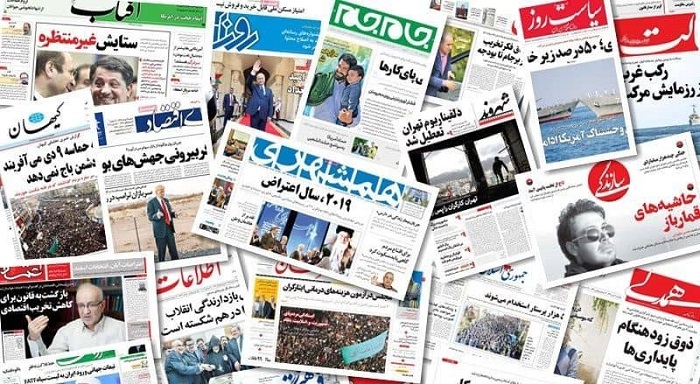
Iranian media outlets have not held back in critiquing the fallout from Assad’s ousting. Reformist newspaper Ham-Mihan delivered a stinging rebuke of Supreme Leader Ayatollah Khamenei’s loyalists, questioning the regime’s dogged regional strategies. Referencing a senior IRGC commander’s claim that Iran’s power remains intact, the paper countered, “If Assad’s presence didn’t bolster Iran, why would his absence weaken it?” The editorial concluded with a cautionary note, invoking Persian poet Rudaki: “He who learns nothing from the passage of time will learn from no teacher.”
The regime’s critics have spotlighted the broader implications of Assad’s downfall. State-run Etemad warned of the societal impact, noting that narratives portraying Assad’s fall as a symbol of Iran’s failed regional ambitions fuel public discontent. Drawing parallels to the 2017-2018 protests that erupted over economic grievances before escalating into anti-regime demonstrations, the paper cautioned against underestimating the public’s growing frustration.
Why #Syria’s Regime Change Shakes #Tehran to Its Corehttps://t.co/ADsRiQDtSW
— NCRI-FAC (@iran_policy) December 11, 2024
In another sharp critique, Ensaf News questioned the rationale behind Tehran’s prolonged involvement in Syria. “Was Assad’s survival worth the devastation of an entire nation?” the outlet asked, further highlighting the immense human cost and regional instability. Such probing questions underline the difficulty Tehran faces in disentangling itself from Syria’s complex and volatile dynamics. The regime’s propaganda and intelligence apparatus have also come under fire. Conservative newspaper Jomhouri Eslami criticized diplomats and analysts for failing to anticipate Assad’s departure.
It lambasted a culture of sycophancy that blinds officials to inconvenient truths, calling for a complete overhaul of Iran’s diplomatic strategy. Economic concerns loom large in these critiques. Reformist daily Hamdeli highlighted the staggering cost of Iran’s Syrian intervention, citing estimates of up to $80 billion. MP Mohammad Manan Raisi’s fiery protest encapsulated public anger: “After sacrificing 6,000 soldiers and billions, Syria was handed over to the opposition in a week. If this isn’t divine wrath, what is?”
#Iran’s Regime Feels Besieged Amid #MiddleEast Crises and Internal Discontenthttps://t.co/QYriNI9qqU
— NCRI-FAC (@iran_policy) December 1, 2024
As Tehran grapples with these crises, the regime faces mounting pressure to reconsider its regional ambitions and address the fractures within its ranks. Assad’s fall has laid bare the heavy costs of Iran’s foreign policy choices, leaving an embattled leadership to confront a rapidly shifting landscape—both abroad and at home.

MEK Iran (follow us on Twitter and Facebook), Maryam Rajavi’s on her site, Twitter & Facebook, NCRI (Twitter & Facebook), and People’s Mojahedin Organization of Iran – MEK IRAN – YouTu