
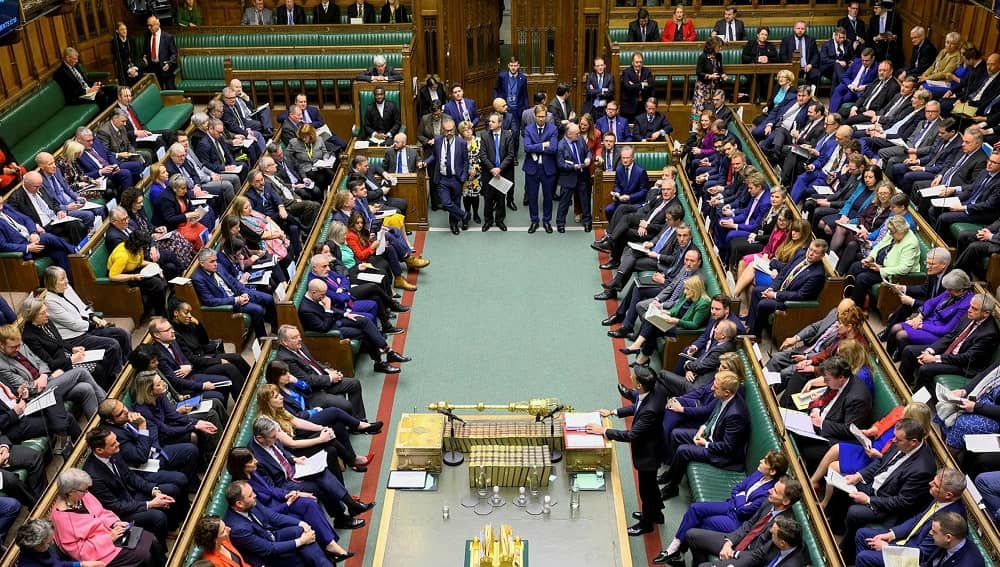
FILE PHOTO: Inside the UK House of Commons
On May 19, 2025, UK Home Secretary Yvette Cooper addressed Parliament with a stark warning about growing national security threats, including alleged activities by Iranian agents operating on British soil. Speaking during a House of Commons debate, Cooper revealed that three Iranian nationals had been charged under the National Security Act 2023 on May 17. This marked the first time individuals from Iran have faced charges under the newly enacted legislation.
The accused are alleged to have conducted surveillance and reconnaissance with the intent to carry out serious violence in the UK, and to have assisted a foreign intelligence service. Cooper emphasized that the investigation is ongoing and invoked the sub judice rule, limiting detailed discussion to protect judicial proceedings.
Citing an alarming uptick in Iran-linked activity, Cooper reminded MPs of MI5 Director General Ken McCallum’s October 2024 statement that UK authorities had thwarted 20 Iranian-backed plots. “We will not tolerate growing state-backed threats on UK soil,” she declared. In response, the Foreign Secretary has summoned Iran’s ambassador, delivering a formal condemnation of Iran’s alleged activities in the UK.
#Iran News: UK Lawmakers Slam Regime, Demand Tougher Action After Arrests of Iranian Nationalshttps://t.co/Gx9LtclBUh
— NCRI-FAC (@iran_policy) May 7, 2025
As part of a broader strategy, the government will classify the entire Iranian state under the “enhanced tier” of the upcoming foreign influence registration scheme, set to begin on July 1. Cooper also announced new sanctions targeting Iranian-backed criminal networks, including the so-called Foxtrot network. She underscored the importance of international cooperation and said the UK will host ministerial counterparts from allied nations to coordinate efforts against transnational threats.
Cooper also highlighted the evolving nature of the UK’s security challenges. “While threats from terrorists remain, malign activities by foreign states have grown,” she said. According to MI5, state threat investigations have risen by 50% over the past year, while counter-terror police have seen a fivefold increase in state-linked cases since 2018. She warned that the traditional distinctions between terrorism, organized crime, and state aggression are increasingly blurred.
NCRI Dep Dir @HoAbedini told @Baldwinrants: “The #Iranian regime has always considered the #UK a weak link in western countries. This is why they have been so brazenly attacking even the UK embassy in Tehran." via @Daily_Express https://t.co/4fo7YWXYwp
— NCRI-FAC (@iran_policy) March 18, 2025
Parliamentarians across party lines expressed deep concern. DUP MP Jim Shannon praised the work of counter-terrorism units but described recent arrests as “the tip of the iceberg.” He criticized systemic flaws in the UK asylum process, calling for safeguards to prevent its exploitation by hostile foreign nationals.
Shadow Home Secretary Chris Philp (Conservative) condemned Iran’s global influence, highlighting its support for militant groups, drone supplies to Russia, and oppression of women. He criticized the government’s inaction on proscribing the Islamic Revolutionary Guard Corps (IRGC) and questioned why suspected Iranian diplomats had not been expelled.
Liberal Democrat MP Lisa Smart called for stronger sanctions and tools to counter destabilizing regimes, also pressing for confirmation that the IRGC could soon be formally proscribed. Richard Tice of Reform demanded the detention and deportation of Iranians who entered the UK illegally and were later charged with terror-related offences.
#Iran News: #UK Parliament Condemns Clerical Regime’s Role in Regional Destabilization Amid Houthi Strikeshttps://t.co/J3HIOX99WS
— NCRI-FAC (@iran_policy) May 2, 2025
Labour MP David Pinto-Duschinsky raised concerns about the Iranian community’s safety amid fears of transnational repression, while Conservative MP David Reed questioned the Iranian government’s decision to summon the British envoy, calling it evidence of a “disconnect from reality.”The debate reflects growing cross-party urgency to address state-led threats in a rapidly shifting security landscape.

MEK Iran (follow us on Twitter and Facebook), Maryam Rajavi’s on her site, Twitter & Facebook, NCRI (Twitter & Facebook), and People’s Mojahedin Organization of Iran – MEK IRAN – YouTu