

The Islamic Republic of Iran is grappling with a significant crisis in its education system, where nearly one million students have dropped out of school as of 2024.
This alarming statistic not only highlights the growing inequality within the country but also reflects the systemic issues driving the problem. The mullahs’ regime has cultivated a class-based society, with stark divisions present across provinces, cities, and even neighborhoods. This segmentation extends to schools, where children from varying economic backgrounds are treated unequally, leading to further societal disintegration.
What was once a unified system where children could learn and play together has devolved into one where some attend elite private schools, while others are forced into child labor or scavenging to survive. A recent report from the state-run Etemad newspaper sheds light on this issue, documenting the harrowing stories of children working as trash sorters in Tehran. From sunrise to sunset, these children collect discarded items to sell, with some relying on leftover food from local shops.
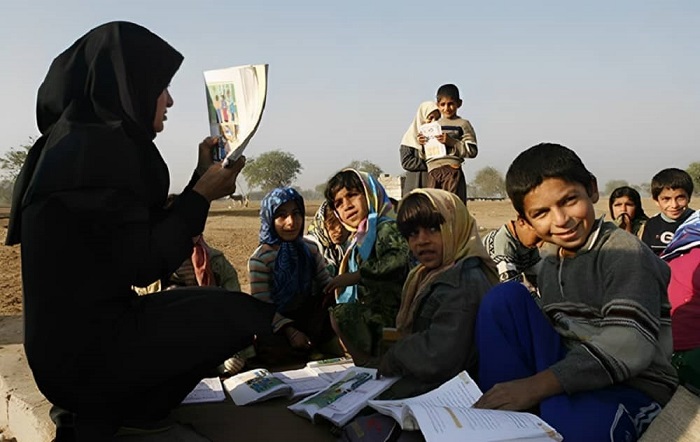
The students of Iran, particularly those from poorer backgrounds, are the primary victims of these divisions.
This issue is not limited to isolated incidents but is widespread across the country. Official statistics reveal a concerning rise in dropout rates over the years. In 2016, approximately 778,000 students had left school early. By 2024, this figure had surged to over 930,000. The dropout rate is highest among teenagers aged 15 to 17, a group increasingly forced out of education due to economic hardship.
While the regime acknowledges these numbers, it consistently fails to address the root causes of the crisis. The government’s budget prioritizes religious institutions, military spending, and regional proxy groups over education, exacerbating poverty and deprivation. The focus on regime survival, bolstered by massive investments in institutions like the Islamic Revolutionary Guard Corps (IRGC), leaves little room for improving the livelihoods of the average Iranian citizen, particularly children.
Ultimately, the dropout crisis in Iran is not merely a result of economic instability but a direct consequence of the political structure that governs the country. For any significant change to occur, there must be a shift in regime priorities that currently perpetuate inequality and social injustice.
