
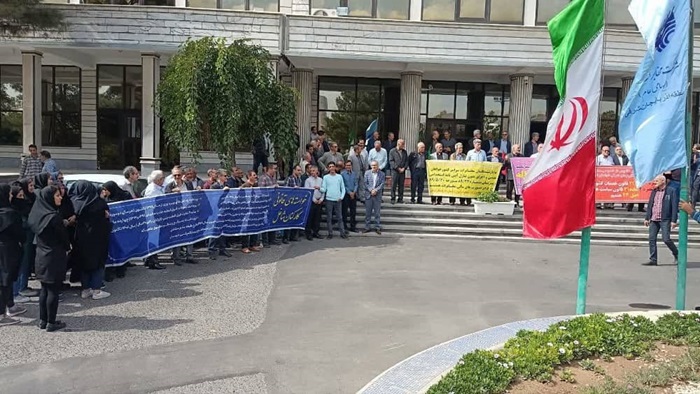
On September 23, protests erupted across Iran as citizens from various sectors expressed mounting frustration over the government’s economic mismanagement, corruption, and deteriorating living conditions.
These demonstrations, which have gained momentum across multiple cities, are fueled by delayed wages, unpaid subsidies, and worsening working conditions, signaling growing unrest in the country. The capital, Tehran, saw significant protests as electric taxi drivers gathered outside the city council, criticizing local authorities for municipal mismanagement and demanding long-overdue payments of subsidies. Similarly, employees of the Telecommunications Company of Iran (TCI) rallied against the government’s failure to pay delayed wages, reflecting a broader trend of financial neglect.
In Tabriz, northwest Iran, TCI employees and retirees staged a second consecutive day of protests. Their demands for better working conditions and overdue wages are echoed by workers in other cities, showcasing a deeply rooted frustration among Iran’s workforce, particularly in key industries. The coastal city of Ahvaz also witnessed protests from telecommunications retirees demanding economic justice and immediate payment of their long-delayed wages.
September 23—Kermanshah, western Iran
Retirees and pensioners of the Telecommunications Company of Iran rally to protest low pensions and poor living conditions. #IranProtestspic.twitter.com/Fxwk9JKBYF— People's Mojahedin Organization of Iran (PMOI/MEK) (@Mojahedineng) September 23, 2024
Retirees and pensioners in Kermanshah joined the wave of demonstrations, calling for pension reforms and living wage adjustments. With Iran experiencing skyrocketing inflation, many elderly citizens find themselves struggling to meet basic needs, amplifying the sense of urgency surrounding pension reform. In the western city of Ilam, protests targeted the state-run Maskan-e Melli housing company, which has been accused of corruption and mismanaging housing projects. Demonstrators criticized the company for failing to deliver promised housing despite collecting large down payments from customers.
Protests also engulfed Iran’s industrial sectors, with petrochemical workers in Mahshahr, southwest Iran, rallying against poor working conditions and delayed payments. Meanwhile, in northeast Iran’s Alborz Sharqi region, over 400 coal miners demanded early retirement options, marking the continuation of their multi-day protest.
September 23—Tehran, Iran
Electric taxi drivers rally in front of the city council to protest unpaid subsidies, poor management and unfair policies by the municipality. #IranProtests pic.twitter.com/pWFv8ukmk9— People's Mojahedin Organization of Iran (PMOI/MEK) (@Mojahedineng) September 23, 2024
Perhaps the most significant demonstrations occurred in Iran’s vital oil and gas sectors. Workers in Asaluyeh, Kangan, and offshore platforms decried unpaid wages and illegal salary deductions. Given the critical role these industries play in Iran’s economy, such protests highlight a growing sense of discontent within the country’s economic backbone.
With no immediate solutions in sight, the widespread protests across Iran suggest rising instability as workers, retirees, and pensioners increasingly confront the government’s failure to address economic grievances. The unrest shows no signs of subsiding, indicating that the country may be headed for further upheaval.
September 23—Tehran, Iran
Employees of the Telecommunications Company of Iran rally to protest delayed and unpaid wages. #IranProtests pic.twitter.com/Qcjbkj0sji— People's Mojahedin Organization of Iran (PMOI/MEK) (@Mojahedineng) September 23, 2024

MEK Iran (follow us on Twitter and Facebook), Maryam Rajavi’s on her site, Twitter & Facebook, NCRI (Twitter & Facebook), and People’s Mojahedin Organization of Iran – MEK IRAN – YouTu