
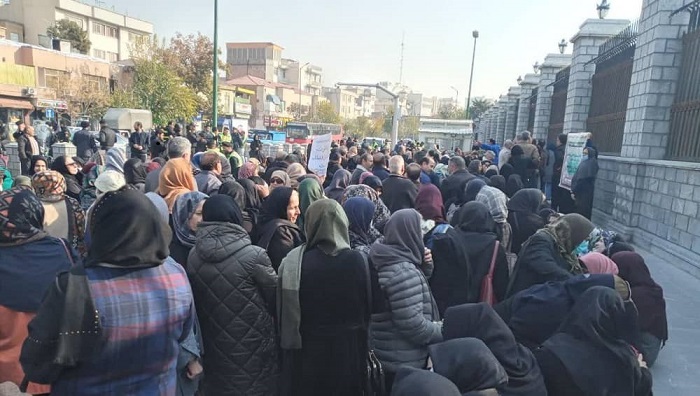
In recent weeks, Iran has witnessed a surge of protests and rallies as citizens from diverse social backgrounds voice their grievances over mounting economic hardships, systemic injustices, and government mismanagement.
The demonstrations, spanning multiple cities and provinces, underscore the growing pressure on the regime as people demand accountability and justice.Economic pressures, including inflation, unemployment, and escalating living costs, have driven widespread dissatisfaction. Teachers, retirees, students, and workers have taken to the streets, facing increasing repression while demanding their rights.
Key Protests Across the Country
On December 7, medical students from Azad University in Tehran protested against a 200–300% hike in tuition fees. The demonstrations coincided with a visit by the Judiciary Chief to the university, with students displaying banners stating, “Education is our right” and “No to tuition hikes.” Similarly, retired teachers gathered outside the parliament, demanding overdue payments and fair wages. Chants like “Justice, justice, strike down injustice” reflected their growing frustration with economic disparities.
December 6—Najaf Abad, central Iran
Retired teachers rally in front of the office of Majlis member, protesting low pensions and poor living conditions.#IranProtests pic.twitter.com/GPxlvURTug— People's Mojahedin Organization of Iran (PMOI/MEK) (@Mojahedineng) December 6, 2024
The following day, on Iran’s Student Day, members of the PMOI-led Resistance Units conducted symbolic anti-regime activities, displaying images of opposition leaders and calling for systemic change. Their actions emphasized the role of students as catalysts for freedom and resistance.In Khuzestan Province, various groups rallied to highlight economic struggles. Retired oil workers in Abadan continued their protests over inadequate pensions, chanting, “This nation has never seen such injustice.”
Literacy campaign educators in Shadgan demanded employment opportunities, while residents in Dezful who lost savings in state-affiliated financial institutions called for justice.Protests extended to other provinces as well. In Isfahan, retired teachers highlighted pension issues, while female students in Ezhieh protested the lack of classroom heating by gathering in schoolyards wrapped in blankets. In Qom, nurses demanded better working conditions, voicing their frustrations over neglect.
December 4—Yazd, central Iran
Employees of the Welfare Organization protest authorities not turning on heating at the workplace.#IranProtests pic.twitter.com/glYMr5oOGV— People's Mojahedin Organization of Iran (PMOI/MEK) (@Mojahedineng) December 4, 2024
A Tipping Point?
The widespread demonstrations reveal deep-seated dissatisfaction among citizens, exposing cracks in the regime’s ability to address economic and social grievances. Protesters from various sectors have united under a common banner, denouncing corruption, inequality, and systemic failures.
These rallies mark a critical juncture for Iran. As economic pressures mount and public dissent grows, the regime faces an increasingly fragile situation. How the government responds to these calls for justice and reform may determine the country’s future trajectory.
Under its new president Masoud Pezeshkian, Iran's regime has been increasing executions to prevent uprisings. In response, the rebellious youth of Iran are targeting the regime's centers of suppression and corruption, reiterating their determination to topple the regime. pic.twitter.com/7gayTMwhbm
— People's Mojahedin Organization of Iran (PMOI/MEK) (@Mojahedineng) December 5, 2024

MEK Iran (follow us on Twitter and Facebook), Maryam Rajavi’s on her site, Twitter & Facebook, NCRI (Twitter & Facebook), and People’s Mojahedin Organization of Iran – MEK IRAN – YouTu