
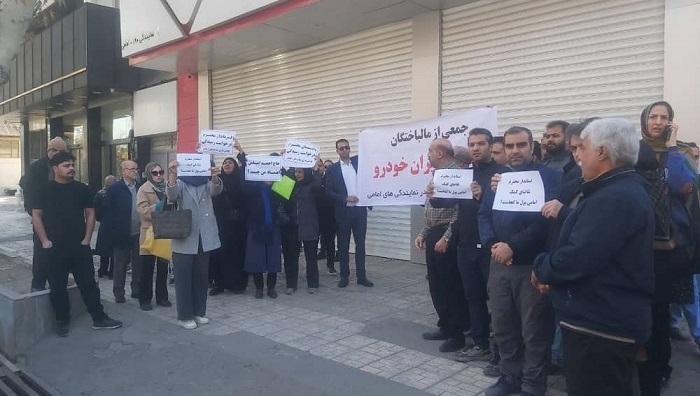
Iran has been gripped by a surge of protests in recent days, with citizens across various sectors voicing discontent over oppressive policies, economic mismanagement, and social injustices.
Demonstrations, spanning from Tehran to remote provinces, highlight the growing unrest in a nation burdened by crises. On November 30, Tehran saw medical science graduates rallying outside the Ministry of Health to protest restrictive employment regulations. One demonstrator lamented the barriers these policies create for young professionals seeking work, underscoring the broader challenges facing Iran’s educated youth. 
Meanwhile, municipal workers in Dogonbadan, southwest Iran, demanded three months of unpaid wages in a demonstration that exposed the neglect of basic labor rights by local authorities. Similarly, healthcare staff and nurses in Ahvaz rallied against low wages and unpaid arrears, chanting for their rights in a poignant call for justice within Iran’s struggling healthcare system.
November 30—Ahvaz, southwest Iran
Workers of the Haft Tappeh Sugarcane Agro-Industry Company hold protest rally in front of the provincial governorate, protesting the government's lack of response to their long-standing demands.#IranProtests pic.twitter.com/97FPrIQeqt— People's Mojahedin Organization of Iran (PMOI/MEK) (@Mojahedineng) November 30, 2024
Labor disputes also took center stage in Haft Tappeh, where sugarcane workers demonstrated outside the provincial governor’s office. These protests reflected long-standing grievances tied to the management of the Haft Tappeh Agro-Industrial Complex. In Qom, disabled citizens marked International Day of Persons with Disabilities with a protest, urging officials to uphold Article 27 of the Disability Rights Law.
The unrest is not new. On November 29, PMOI Resistance Units in Zahedan distributed leaflets calling for regime change, defying the government’s suppressive measures. A day earlier, pensioners and workers in Ahvaz chanted slogans condemning inadequate wages and delayed payments. Oil sector retirees demanded adjustments to pensions amidst spiraling inflation, emphasizing the financial precarity faced by the elderly.
PMOI Resistance Units in Zahedan, southeast Iran, continue anti-regime activities and call for regime change.#PMOI #ResistanceUnits pic.twitter.com/QyoATvRNPZ
— People's Mojahedin Organization of Iran (PMOI/MEK) (@Mojahedineng) November 30, 2024
In northwest Iran, truck drivers in Buinzahra rallied against gasoline shortages that have crippled transportation. Tehran’s cigarette wholesalers also launched a strike over rising operational cost.
One of the most shocking incidents occurred in Bampur, southeast Iran, where the killing of Elyas Narouyi by security forces sparked outrage. Official claims of aggression were contradicted by reports that Narouyi was visiting the police station for paperwork when he was fatally shot.
November 28—Tehran, Iran
Cigarette wholesalers in Molavi Street on strike.#IranProtestspic.twitter.com/gpAjZqut3V— People's Mojahedin Organization of Iran (PMOI/MEK) (@Mojahedineng) November 28, 2024
Workers from Esfandaqeh Mining Company in Kerman decried systemic exploitation and corruption, lamenting their inability to afford basic necessities. “We are dying of hunger while some live in excess,” said one protester.

MEK Iran (follow us on Twitter and Facebook), Maryam Rajavi’s on her site, Twitter & Facebook, NCRI (Twitter & Facebook), and People’s Mojahedin Organization of Iran – MEK IRAN – YouTu