
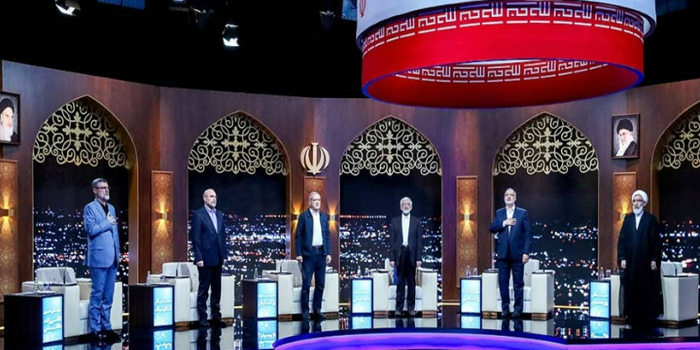
With less than a week before Iran’s contentious presidential election, the atmosphere is fraught with political tension and fierce rivalries.
Six candidates, approved by the Guardian Council, have been vigorously campaigning, culminating in three live televised debates that have captivated the nation. On Saturday, June 22, Supreme Leader Ali Khamenei issued a stern warning to the candidates, urging them to avoid statements that could be construed as pleasing to the regime’s adversaries.
This remark underscores his apprehension about a repeat of the 2009 post-election unrest, which saw widespread protests fueled by intense rivalries and allegations among candidates.
The third debate highlighted critical issues such as women’s rights, internet freedom, and cultural liberties. Candidates made numerous promises, often seen as attempts to garner votes and bolster the regime’s propaganda efforts to maintain a veneer of legitimacy.
Alireza Zakani, in a heated exchange, targeted the administration of former President Hassan Rouhani, accusing candidates Masoud Pezeshkian and Mostafa Pourmohammadi of being part of a failed administration. “Pezeshkian and Pourmohammadi were part of the previous administration that failed the people,” Zakani asserted. Pezeshkian retorted dismissively, “It’s not necessary to respond to Zakani’s attacks. We don’t even know if he will stay in the race until the end.”
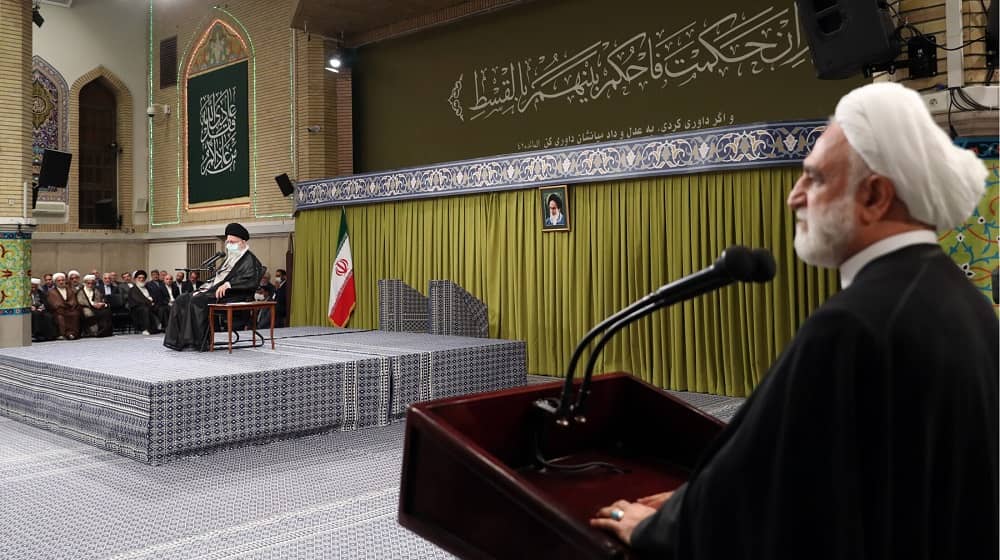
“My advice is that the debates and statements made by the candidates should not be such that they cause our enemies to rejoice,” Khamenei declared during a meeting with senior officials of the judiciary.
Pourmohammadi, attempting to project a moderate stance, commented, “Some friends here are not serious candidates,” without directly naming Zakani. In response, Zakani accused Pezeshkian and Pourmohammadi of coordinating attacks against him, vowing, “I will stay in the race and will not let you become president.”
The debate also saw a clash between internet restrictions and women’s rights. Pezeshkian mocked the other candidates, stating, “We are all against internet censorship and for women’s dignity. So, who is appointing these morality police?” This provoked a sharp rebuke from Zakani, who viewed Pezeshkian’s comments on hijab enforcement as a personal attack.
Despite criticizing internet censorship, Pezeshkian revealed a unified stance among all candidates regarding suppressing public dissent, defending the complete internet shutdown during nationwide protests. Pourmohammadi, trying to rebrand himself as a human rights advocate, said, “As someone who has served in the harshest security roles, I say we must be humble before women.”
As various regime factions desperately try to deceive people into participating in the upcoming sham #elections, remember this: On Aug 21, 2019, months before the 2019 uprising, then-FM Javad Zarif claimed the majority support the clerical dictatorship, citing over 70% turnout. pic.twitter.com/RuA0vIKfpd
— NCRI-FAC (@iran_policy) June 20, 2024
Zakani differentiated between censorship and the “Protection Bill,” advocating for internet platforms with data servers in Iran, citing the U.S. actions against TikTok. Amir Hossein Ghazizadeh Hashemi promoted online jobs for women to balance work and household responsibilities and criticized unplanned digital restrictions, calling the Google Play ban “harassment of the people.”Mohammad Bagher Ghalibaf opposed gender equality but supported “gender justice,” and endorsed limited internet access for security reasons, praising Khamenei’s cultural influence, “Khamenei is not just a political leader but also a prominent cultural figure known worldwide.”

MEK Iran (follow us on Twitter and Facebook), Maryam Rajavi’s on her site, Twitter & Facebook, NCRI (Twitter & Facebook), and People’s Mojahedin Organization of Iran – MEK IRAN – YouTu