
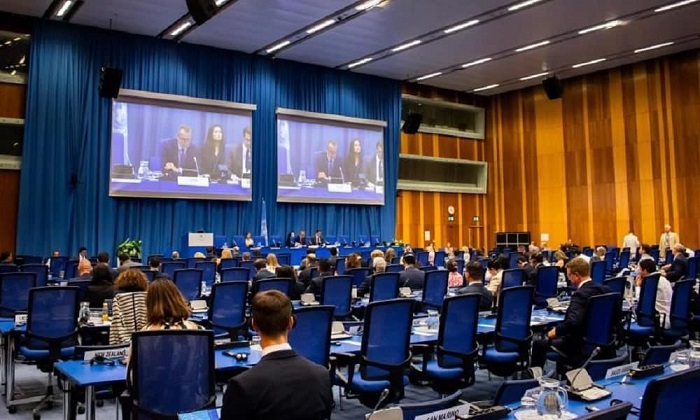
Source: KAZ inform website
The recent Vienna conference held to review the Treaty on the Non-Proliferation of Nuclear Weapons (NPT) became a focal point for international concerns, as representatives from various countries, including the European Union, Germany, the United Kingdom, and others, sounded alarms about the clerical regime in Iran potentially obtaining nuclear weapons.
These countries collectively appealed for an immediate halt of Iran’s nuclear pursuits and highlighted its consistent violations of the NPT. Central to the concerns was the European Union’s representative, speaking on behalf of member states and several other nations.
She underscored the EU’s determination to prevent Tehran from acquiring nuclear capabilities. Citing the International Atomic Energy Agency’s (IAEA) reports, she stressed the significant deviation of Iran’s activities from its 2015 nuclear deal commitments, particularly its uranium enrichment.
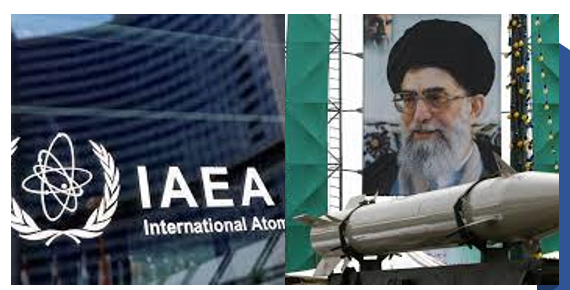
The recent Vienna conference held to review the Treaty on the Non-Proliferation of Nuclear Weapons (NPT) became a focal point for international concerns.
Robert Siegfried of Germany emphasized the gravity of the situation, noting Iran’s progress in enriching uranium up to 60%, an unprecedented feat for a non-nuclear weapons state. H.E. Mr. Aidan Liddle of the UK echoed these sentiments, emphasizing the threat Iran’s program poses to global security. He also raised concerns about Russia’s infractions involving Iran and the DPRK.
Ambassadors and representatives from Sweden, Canada, Belgium, Italy, Japan, Ireland, the Netherlands, New Zealand, and Mexico voiced their apprehensions, noting the alarming advancements and lack of transparency in Iran’s nuclear activities. The overarching sentiment was that Iran’s actions, particularly its uranium enrichment efforts and limited cooperation with the IAEA, challenge the integrity of IAEA safeguards and the broader NPT regime.
Ambassador Hikihara Takeshi of Japan expressed concern over Iran’s “continued actions inconsistent with its commitments” and its stockpiles of highly enriched uranium. Representing Ireland, concerns were raised about the “profoundly concerning” safeguards issues due to “insufficient substantive cooperation” by Iran.
At #NPT2023, that is taking place in Vienna from July 31 to August 11, representatives from various countries addressed pressing concerns regarding the #Iranian regime’s nuclear activities and denounced the violations of its commitments.https://t.co/AqGotHPvuF
— NCRI-FAC (@iran_policy) August 2, 2023
New Zealand’s representative voiced hopes for the restoration of the JCPOA nuclear deal but emphasized that Iran needs to address the IAEA’s concerns regardless of the deal’s status. The Mexican delegate concluded by urging for unwavering efforts in negotiations to ensure Iran’s program is limited to civilian purposes, vital for Middle East stability.
As the global community watches with bated breath, the Vienna conference serves as a stark reminder of the challenges and responsibilities that lie ahead in ensuring that nuclear technology is harnessed for peaceful purposes, and the threats of nuclear weapons proliferation are mitigated.

MEK Iran (follow us on Twitter and Facebook), Maryam Rajavi’s on her site, Twitter & Facebook, NCRI (Twitter & Facebook), and People’s Mojahedin Organization of Iran – MEK IRAN – YouTu