
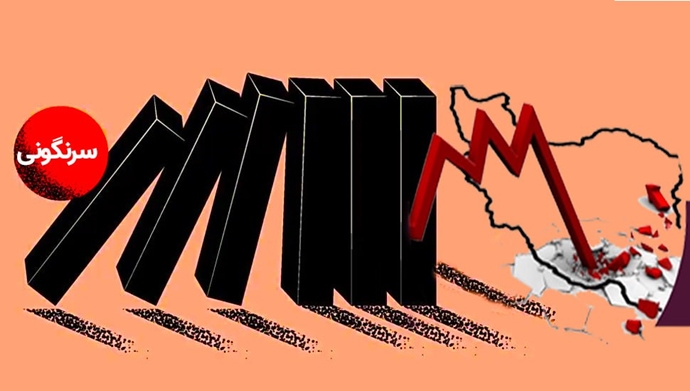
Iran’s regime facces setbacks in 1403
As Iranians mark the arrival of Nowruz 1404, the traditional Persian New Year, the country finds itself mired in profound political, economic, and social turmoil. The preceding year, 1403, witnessed an extraordinary erosion of the ruling regime’s authority, exposing cracks in its ideological foundation and signaling a potentially historic shift in the nation’s trajectory.
The regime, under Supreme Leader Ali Khamenei, faced cascading failures across multiple fronts. His push for ideological “purification,” outlined in the 2019 “Second Step of the Revolution” manifesto, sought to consolidate control by eliminating moderate voices from political institutions. However, this strategy only deepened social divisions and alienated the public, sparking ongoing protests demanding democracy and accountability.
The March 2024 elections for parliament and the Assembly of Experts marked a turning point. Intended to affirm the regime’s authority, they instead became a national boycott, with turnout in Tehran dropping to an unprecedented 7%. This electoral collapse reflected not just disillusionment with specific figures but a broader rejection of the entire theocratic system.
Adding to the instability was the sudden death of President Ebrahim Raisi in a plane crash. Once seen as Khamenei’s likely successor, Raisi’s demise left a leadership vacuum and further disrupted regime cohesion. His replacement, Masoud Pezeshkian, presented as a moderate, quickly revealed his loyalty to hardline policies, disappointing hopes for change.
Internationally, Iran’s aggressive regional policies backfired. Involvement in the Gaza conflict resulted in heavy losses and backlash. Key proxies suffered devastating blows, including the deaths of Hezbollah’s Hassan Nasrallah and Hamas leader Ismail Haniyeh. The fall of Bashar al-Assad in Syria dealt a major blow to Iran’s regional influence, weakening its entire proxy network.
At home, the economy deteriorated rapidly. Inflation surged, the rial plummeted, and poverty deepened. Basic goods became unaffordable, and social issues like homelessness and mental health crises surged. Meanwhile, regime spending prioritized foreign proxies and domestic suppression over citizen welfare.
The regime responded with brutal repression—mass executions, show trials against the opposition group PMOI/MEK, and even attempted assassinations abroad. Yet, resistance persisted. Grassroots opposition, particularly from organized groups like the PMOI Resistance Units, continued to challenge the regime’s grip on power.
As 1404 begins, Iran stands at a pivotal juncture. The past year exposed the regime’s vulnerability and the people’s growing demand for systemic change. Nowruz, a symbol of renewal, may this year represent more than a seasonal shift—it could herald the dawn of a transformative era in Iran’s struggle for freedom and democracy.

MEK Iran (follow us on Twitter and Facebook), Maryam Rajavi’s on her site, Twitter & Facebook, NCRI (Twitter & Facebook), and People’s Mojahedin Organization of Iran – MEK IRAN – YouTu