
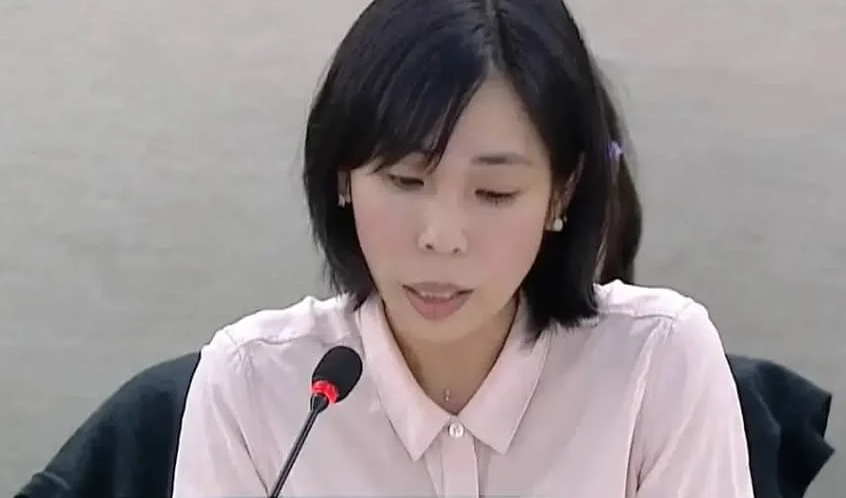
Mai Sato, UN Special Rapporteur on the Situation of Human Rights in Iran, addresses the UN Human Rights Council
In a stark report presented to the United Nations Human Rights Council on March 12, 2025, UN Special Rapporteur Mai Sato detailed alarming human rights violations in Iran, raising concerns over systemic repression, gender-based violence, and a surge in executions. The report, submitted under Human Rights Council resolution 55/19, covers developments throughout 2024 and highlights the gendered dimensions of these violations under Iran’s clerical regime.
One of the most disturbing findings is the sharp rise in executions, making 2024 the deadliest year since 2015. Non-governmental organizations report over 900 executions, cementing Iran’s status as the highest per capita executor globally. The Iranian government has refrained from publishing official figures, a practice that Sato criticizes as a violation of fundamental human rights, particularly the right to access information and truth.
Alarmed by Iran's Supreme Court upholding #DeathSentence of Kurdish activist Pakhshan Azizi. Reportedly tortured in solitary confinement, denied fair trial&legal representation. Her case reflects broader persecution of minority women activists. https://t.co/gPkuT5Vd3e
— Mai Sato (@drmaisato.bsky.social) (@drmaisato) January 17, 2025
The report also underscores the disproportionate impact of Iran’s judicial system on women. At least 29 women were executed in 2024, the highest number recorded in a decade. Many of these women were convicted for killing abusive spouses or acting in self-defense, a reflection of the broader issue of gender-based violence and discrimination within Iran’s legal framework. Sato emphasized that globally, many women sentenced to death for homicide had committed their offenses within violent and oppressive domestic settings.
Additionally, the report condemns the execution of juvenile offenders, spotlighting the case of Mohammadreza Azizi, who was sentenced to death for a crime committed at the age of 17. Sato reiterated that executing individuals for crimes committed as minors violates international legal norms and must be abolished.
Ethnic minorities also face severe repression, with the Kurdish and Baluchi communities disproportionately affected by capital punishment. The report calls on Iranian authorities to provide transparent data to counter accusations of discriminatory practices.
10 October is #WorldDayAgainstTheDeathPenalty. 500+ executions were reportedly carried out in #Iran since Jan '24. This includes the use of #CapitalPunishment against women activists &supporters of the Woman, Life, Freedom movement. I join the call to end #DeathPeanlty in this📹 pic.twitter.com/k79W4kZ4ll
— Mai Sato (@drmaisato.bsky.social) (@drmaisato) October 9, 2024
Another grave concern highlighted is the prevalence of femicide and honor-related killings. At least 179 cases were reported in 2024, with most perpetrators being male relatives. Iran’s Penal Code, particularly Articles 301 and 630, continues to provide legal leniency for honor killings, further institutionalizing gender-based violence.

MEK Iran (follow us on Twitter and Facebook), Maryam Rajavi’s on her site, Twitter & Facebook, NCRI (Twitter & Facebook), and People’s Mojahedin Organization of Iran – MEK IRAN – YouTu