
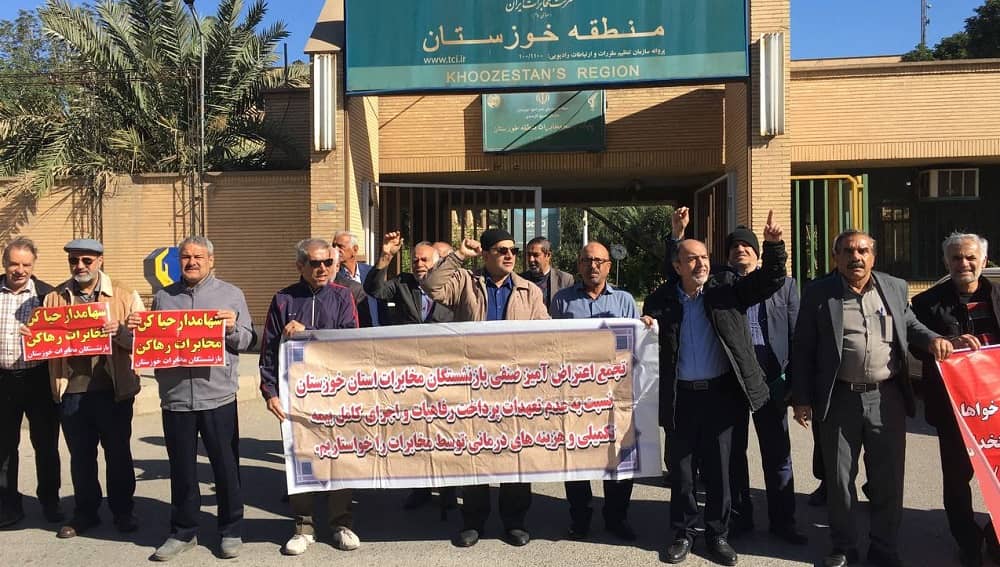
Social Security retirees protest in Ahvaz, southern Iran, on February 24, 2025
Iran is witnessing a surge in nationwide protests as economic distress fuels discontent across various sectors. Retirees, healthcare workers, industrial laborers, and defrauded investors have taken to the streets, voicing their frustrations over unpaid wages, rising living costs, and government mismanagement. Demonstrators accuse the ruling regime of neglecting their grievances while funneling national wealth into foreign interventions and ideological projects.
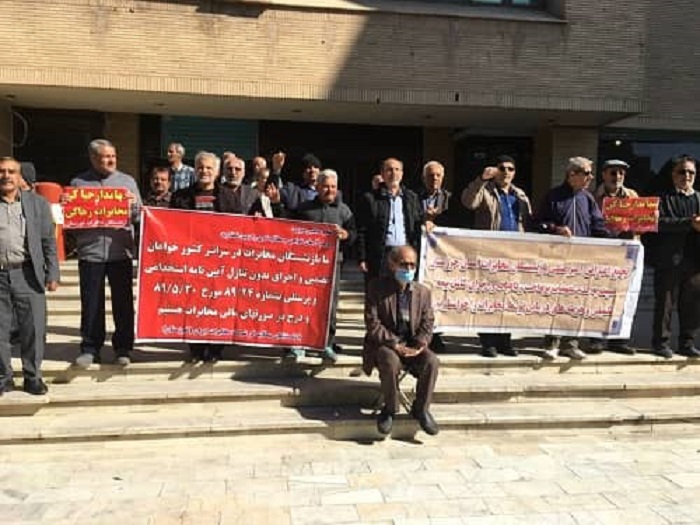
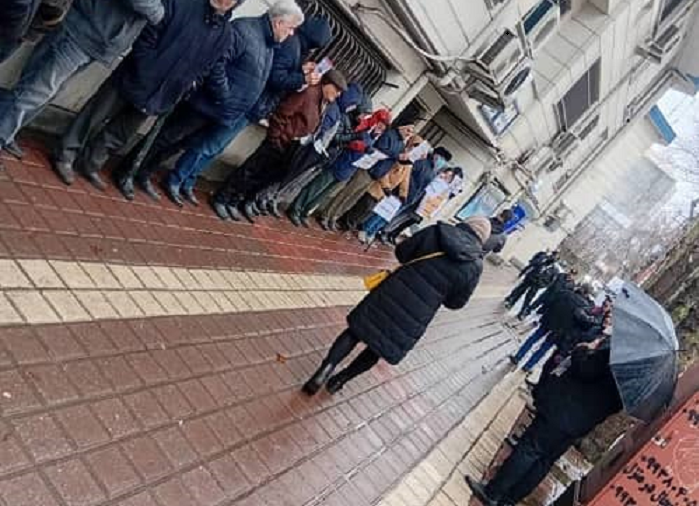
In major cities such as Ahvaz and Rasht, retirees from the Social Security and Telecommunications sectors have braved security forces to demand unpaid benefits and pension reforms. Their chants—“Enough oppression, our tables are empty!” and “From Khuzestan to Gilan, shame on our officials!”—reflect a growing anger over repeated unfulfilled promises from authorities. So far, the government has provided no concrete response to their demands.
Industrial workers are also mobilizing. Employees at Saipa Citroën in Kashan have gone on strike, protesting stagnant wages and unfair job classification policies. They claim the company has ignored their demands and provided better treatment to workers at Iran Khodro, the country’s largest automaker. Similarly, contract workers at the Electricity Distribution Company in Isfahan staged a protest outside company headquarters after officials failed to honor commitments for better wages and full-time contracts. Frustrated by the lack of engagement from management, they later took their demonstration to the provincial governor’s office. Healthcare workers have also joined the growing wave of unrest.
In Ahvaz’s Arya Hospital, nurses and administrative staff walked off the job after management deducted portions of their salaries to fund year-end bonuses.
Officials attempted to pacify workers by promising salary restorations in the coming months, but employees rejected these vague assurances. Beyond labor strikes, consumer protests have gained traction. In Tehran, customers of Farda Motor and Kerman Motor demonstrated against delayed vehicle deliveries, accusing the companies of fraud and government complicity. “These companies take our money, lie, and keep delaying deliveries. If ordinary citizens owed a small amount, the law would crush them. But the rich get away with it,” said one outraged protester.
Educators are also challenging the government. Teachers and university lecturers are protesting unfair salary structures, while retired educators from Farhangian University have condemned the exclusion of pension increases. Some have criticized the government’s focus on ideological curriculum changes instead of addressing systemic issues in education.
Tensions are particularly high in Sistan and Baluchistan Province following the assassination of senior security official Mohammadreza Sandi (Sandgol) in Khash. His killing is seen as retaliation for years of land confiscations, arbitrary arrests, and extrajudicial killings targeting Baluchi communities. Local sources also report intensified home demolitions in Iran Shahr, further inflaming grievances. The situation worsened after the bodies of four Baluchi men—arrested three months ago—were returned to their families, sparking accusations of state brutality.
As the protests spread, the Iranian government’s response remains one of repression rather than reform. While ordinary citizens face mounting economic hardships, authorities continue to allocate billions to foreign militant groups.
The recent extravagant state funeral for Hezbollah’s Hassan Nasrallah has only reinforced public anger.With increasing coordination between labor unions, pensioners, and disenfranchised groups, the protests are evolving beyond economic grievances, posing a direct challenge to the ruling establishment’s legitimacy. The question remains: Will the Iranian regime address these deepening crises, or will it continue down the path of suppression and neglect?

MEK Iran (follow us on Twitter and Facebook), Maryam Rajavi’s on her site, Twitter & Facebook, NCRI (Twitter & Facebook), and People’s Mojahedin Organization of Iran – MEK IRAN – YouTu