
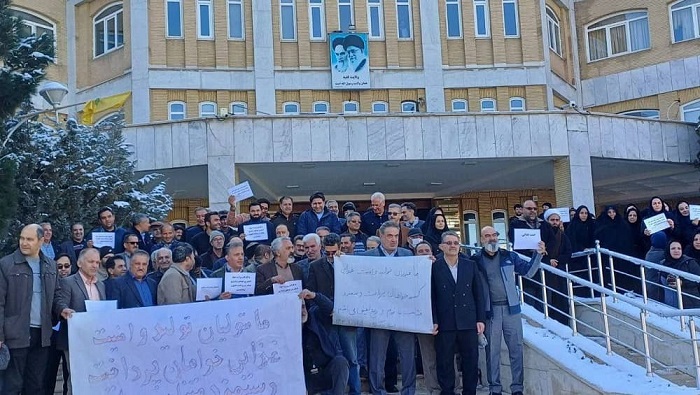
Iran has been gripped by a wave of protests and strikes over the past week, as citizens from diverse sectors voice grievances ranging from unpaid wages to deteriorating working conditions.
The unrest, spanning multiple cities and industries, underscores the mounting frustrations of workers, retirees, and marginalized communities, laying bare deep-seated economic and social challenges.In Khorramshahr, Khuzestan Province, workers at the Iran Ofogh Company marked the 12th consecutive day of strikes on January 4, demanding better pay and improved working conditions at the Yadavarn oil field. Their calls have been met with silence from authorities, further fueling discontent.
Similarly, Zanjan witnessed protests by Ministry of Agriculture workers over low wages and adverse working conditions, while in Kerman, recently retired teachers rallied against the non-payment of overdue retirement bonuses. Their plight mirrors that of retirees in Ahvaz, where oil industry pensioners protested against pension inequality and unpaid benefits, chanting slogans like “Retirees rise up against oppression and injustice.”
In Zahedan, members of the PMOI Resistance Units intensified anti-regime activities, pointing to the growing inefficacy of oppressive state measures to quell dissent. Meanwhile, in Tabriz, defrauded homeowners demanded the completion of their long-delayed housing units, venting their frustrations against officials for mismanagement and corruption.
January 4—Khorramshahr, southwest Iran
12th day of strikes by workers of Iran Ofogh company in the Yadavarn oil field, protesting regime authorities ignoring their demands for better pay and working conditions.#IranProtests pic.twitter.com/x8sVeEt6Gm— People's Mojahedin Organization of Iran (PMOI/MEK) (@Mojahedineng) January 4, 2025
Environmental concerns also fueled unrest in Arak, where residents protested severe air pollution for a third consecutive day. This marks a broader spectrum of discontent, extending beyond economic grievances to encompass public health and environmental neglect.
The unrest has not spared industrial hubs like Sirjan and Abadan, where workers from the Gol Gohar Company and Abadan Petrochemical Complex rallied against job insecurity, delayed wages, and facility closures. Protesters’ chants of “Enough with empty promises; our tables are empty” highlight the dire financial straits faced by many.
The protests’ persistence across sectors and provinces signals a society increasingly unwilling to endure hardship in silence. Analysts warn that the government’s inaction risks turning these isolated protests into a coordinated national movement, potentially escalating tensions.
January 4—Zanjan, northwest Iran
Workers of the ministry of agriculture rally to protest low wages and poor working conditions.#IranProtests pic.twitter.com/nGfl25RQWn— People's Mojahedin Organization of Iran (PMOI/MEK) (@Mojahedineng) January 4, 2025
As economic hardships deepen and grievances remain unaddressed, Iran faces a critical juncture. The government’s ability—or failure—to respond effectively to these demands could determine the trajectory of these protests, shaping the country’s socio-political landscape in the months ahead.

MEK Iran (follow us on Twitter and Facebook), Maryam Rajavi’s on her site, Twitter & Facebook, NCRI (Twitter & Facebook), and People’s Mojahedin Organization of Iran – MEK IRAN – YouTu