
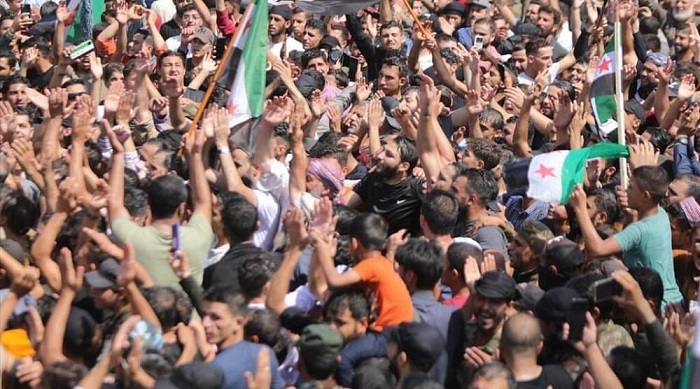
The collapse of Bashar al-Assad’s government in Syria has sent shockwaves through Iranian state-controlled media and political circles, unveiling significant unease within Tehran’s leadership.
As one of Syria’s closest allies, Iran now faces a critical juncture in its regional strategy, with Assad’s removal exposing vulnerabilities in the so-called Axis of Resistance. While Tehran has refrained from making official statements, the evolving rhetoric in Iranian media and lawmakers’ urgent reactions highlight the regime’s concerns about the broader implications of this seismic shift.
In the days leading up to Assad’s ouster, Iranian media began adjusting their tone towards his opponents. Previously described as “terrorists” or “takfiri” groups, they were relabeled as “armed opposition groups,” and eventually “militias” following Assad’s confirmed downfall. This calculated shift underscores the regime’s effort to recalibrate its narrative amid the unfolding crisis.
Prominent outlets tied to the Islamic Revolutionary Guard Corps (IRGC) openly reflected on the potential fallout. Mashregh News, for instance, raised pointed questions about the future of the Axis of Resistance, acknowledging Assad’s loss as a “heavy blow” but proposing strategies to compensate. Suggestions included bolstering alliances in Yemen and other regions or leveraging advancements in military technology to counterbalance the shift in regional power dynamics.
#Iranian Regime Fears Collapse of #Syria and Regional Setbackshttps://t.co/NyZA7MWt15
— NCRI-FAC (@iran_policy) December 7, 2024
Other IRGC-affiliated outlets like Fars News framed Assad’s tenure as a mutual opportunity that fell short. Criticizing Assad’s resistance to Iranian advice, the outlet reassured readers by emphasizing Iran’s ability to regroup and redirect its efforts to other theaters, including Iraq, Palestine, and Yemen. “In war, setbacks must be turned into lessons for future victories,” the outlet proclaimed. Tehran’s parliament has echoed the media’s urgency. Lawmakers like Hamid Rasaee and Mohammad Taqi Naqdali have called for closed sessions to address the ramifications, with some urging a shift in focus toward addressing domestic economic concerns.
The broader discourse reveals a regime grappling not just with external setbacks but also with internal pressures as discontent grows among its population. Adding to the narrative, websites like Tabnak have underscored the strategic losses tied to Syria’s departure from the Axis. They warn that Assad’s successors may adopt policies hostile to Hezbollah, further destabilizing the regional power balance. Simultaneously, critical voices within Iran’s media landscape have drawn parallels between Assad’s fall and the risks of ignoring popular sentiment, urging Tehran’s leadership to heed lessons from Damascus’ downfall.
#Iran #News: Khamenei Rallies Basij Amid Fears of Protests and Pressure to Change His Regional Strategy https://t.co/L6oe0jFAu7
— NCRI-FAC (@iran_policy) November 27, 2024
As Iran’s political and military leadership seeks to regroup, the fall of Assad stands as both a strategic setback and a stark warning. Tehran’s ability to adapt will determine whether it can maintain its regional ambitions or face further isolation amidst growing domestic and international challenges.

MEK Iran (follow us on Twitter and Facebook), Maryam Rajavi’s on her site, Twitter & Facebook, NCRI (Twitter & Facebook), and People’s Mojahedin Organization of Iran – MEK IRAN – YouTu