
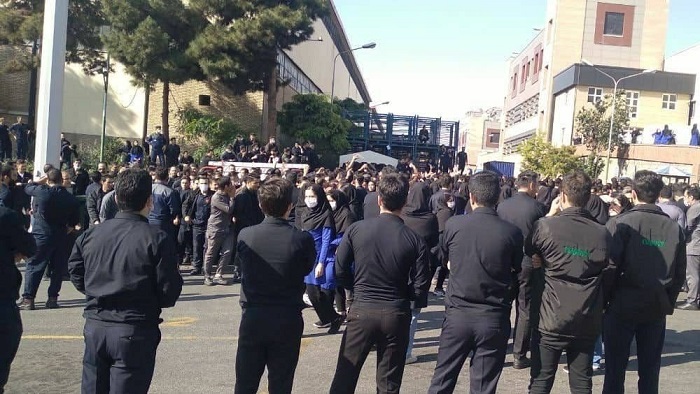
The clerical regime in Iran is facing mounting internal discontent and escalating regional challenges, prompting a sharp increase in repressive measures targeting dissent and marginalized communities.
From implementing severe laws against women to carrying out a surge in executions, Tehran appears to be tightening its grip in a bid to stave off growing unrest and the potential for another nationwide uprising.
Regional Turmoil and Nuclear Standoff
Iran’s geopolitical challenges have heightened its sense of vulnerability. State-controlled media, such as the Kayhan newspaper, recently voiced concerns about perceived threats to Tehran’s influence in the region, particularly in Syria. Reports suggest offers were made to Syrian President Bashar al-Assad to distance his administration from Iran’s orbit, with Kayhan calling such negotiations with “treacherous enemies” naïve. Iranian officials, including Foreign Minister Abbas Araqchi, have pointed to increased Takfiri activity in Syria as evidence of external efforts to destabilize the Islamic Republic.
Domestically, economic sanctions and international scrutiny over its nuclear program have prompted Iranian officials to adopt a defiant stance. High-ranking politicians have even threatened withdrawal from the Non-Proliferation Treaty, reflecting a hardline strategy to counter external pressures.
#IranProtests Spread Nationwide as Economic Grievances Escalatehttps://t.co/3uDNBy7vQF
— NCRI-FAC (@iran_policy) November 28, 2024
Social Unrest and Public Outcry
Despite the regime’s clampdown, protests across Iran underscore widespread public dissatisfaction. Workers, retirees, and healthcare professionals have taken to the streets, with significant demonstrations in Bushehr, where gas facility employees demanded fair wages. Simultaneously, healthcare professionals in Ahvaz and retired teachers in Yazd voiced their grievances over wage disparities and systemic corruption.
These protests are not confined to economic issues. Members of the People’s Mojahedin of Iran (PMOI/MEK) and youth activists have escalated resistance, targeting symbols of state oppression such as Basij militia bases and IRGC headquarters. State media, including the Jomhouri Eslami newspaper, has acknowledged the potential for explosive unrest, warning of a “revolution of the hungry” fueled by corruption and inequality.
Iran’s regime sentences six political prisoners to death https://t.co/emPdK1mNna
— People's Mojahedin Organization of Iran (PMOI/MEK) (@Mojahedineng) December 1, 2024
Oppressive Measures Target Women and Dissenters
The newly implemented “Chastity and Hijab” law exemplifies the regime’s strategy to suppress dissent through gender-based restrictions. The law imposes severe financial penalties and limits access to essential services for women deemed non-compliant with mandatory hijab rules. Critics argue that such measures are disconnected from societal realities and risk provoking further unrest.
Internet censorship has also intensified, with platforms like Instagram and Telegram blocked to hinder protest organization and public discourse. Meanwhile, executions have surged, with over 540 carried out in the past year alone, according to reports. Political prisoners endure brutal treatment, further stoking public outrage.
The newly passed "Chastity and Hijab" law in #Iran is a clear violation of women's rights, restricting freedom and imposing severe control over women’s lives. We’ve put together a quick slideshow to highlight the most critical provisions of this law and show how it targets women,… pic.twitter.com/gGbG8y6JHL
— Women's Committee NCRI (@womenncri) December 2, 2024
A Precarious Survival Strategy
Tehran’s reliance on repression and regional interference reflects a regime in survival mode. While these tactics have long sustained its grip on power, growing resistance and international isolation suggest diminishing returns. As protests and defiance increase, Iran’s leadership faces a society inching closer to a breaking point, potentially heralding transformative change.

MEK Iran (follow us on Twitter and Facebook), Maryam Rajavi’s on her site, Twitter & Facebook, NCRI (Twitter & Facebook), and People’s Mojahedin Organization of Iran – MEK IRAN – YouTu