
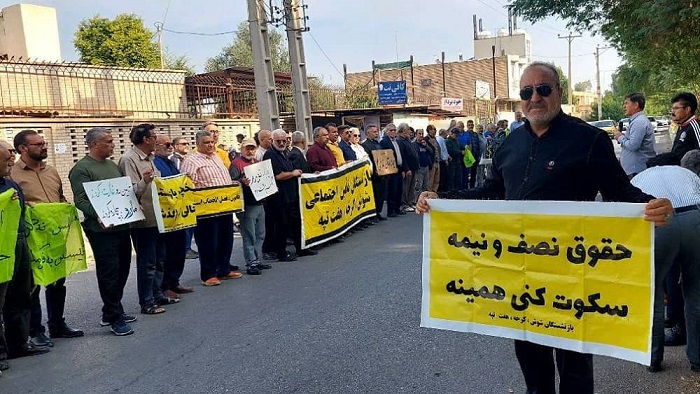
On Sunday, November 17, 2024, protests erupted across Iran as citizens from various sectors, including retirees, healthcare workers, and merchants, took to the streets in multiple cities.
These coordinated demonstrations, which spanned several provinces, highlighted widespread dissatisfaction with the country’s economic conditions, including soaring inflation, stagnant wages, and government mismanagement. In the capital, Tehran, retirees from the oil sector gathered in front of the National Iranian Oil Company headquarters, chanting slogans such as, “Until we get our rights, we won’t stay quiet.” Protesters expressed frustration over the government’s failure to address their demands for fair pensions and better living conditions. The rally was a direct response to the economic hardship many retirees are facing, as inflation continues to outpace pension increases.
Meanwhile, in Ahvaz, located in southwest Iran, retirees of the Social Security Organization resumed their protests, decrying the government’s prioritization of regional conflicts over domestic welfare. Chanting “Stop the warmongering; our tables are empty,” they voiced their anger at the regime’s policies that they feel neglect their economic needs.
November 17—Isfahan, central Iran
Retirees of the steel industry hold protest rally, demanding higher pensions and better living conditions. Protesters chant, "You lying government, what happened to your promises?"#IranProtestspic.twitter.com/0JqMgUxTgo— People's Mojahedin Organization of Iran (PMOI/MEK) (@Mojahedineng) November 17, 2024
Similar protests took place in Shush, also in Khuzestan Province, where pensioners took to the streets demanding better living conditions and the release of political prisoners. Demonstrators in Isfahan, central Iran, rallied outside the Steel Pension Fund’s offices, holding the government accountable for years of unfulfilled promises regarding pension adjustments. “You are lying government, what happened to your promises?” they chanted, reflecting a growing sense of betrayal among Iran’s elderly population. In Sirjan, in southern Iran, metal merchants staged a protest against sudden government measures, including increased sales tolls and shop closures. The harsh policies, they argue, have devastated their businesses, leaving many struggling to survive.
November 17—Shiraz, southern Iran
Medical emergency employees rally to protest poor working conditions and unpair wage-setting and tariff policies.#IranProtests pic.twitter.com/JyTH6iWFJD— People's Mojahedin Organization of Iran (PMOI/MEK) (@Mojahedineng) November 17, 2024
Protests also flared in Zahedan, in southeast Iran, where public transportation drivers rallied after their fuel cards were deactivated without explanation. Despite repeated requests for resolution, local authorities failed to take action, intensifying frustration among the drivers. Healthcare workers also joined the wave of protests. In Yasuj, medical sector employees rallied against low wages and poor working conditions, demanding meaningful wage adjustments. In Shiraz, emergency medical personnel highlighted similar grievances, calling for inflation-matching wages and job security, with the Coordination Council of Nurses demanding urgent reforms to the healthcare system.
November 17—Shush, southwest Iran
Pensioners of the Social Security Organization hold protest rally, reiterating their demands for higher pensions and better living conditions.
Protests also call for the release of political prisoners.#IranProtestspic.twitter.com/7ICVuLq3El— People's Mojahedin Organization of Iran (PMOI/MEK) (@Mojahedineng) November 17, 2024
The protests reflect growing dissatisfaction across Iranian society, with citizens from diverse sectors expressing their frustration with the government’s inability to address basic economic needs. From retirees to healthcare workers and merchants, these demonstrations reveal the depth of discontent within the country. As protests continue to spread, they signal mounting pressure on the government to address widespread economic grievances.

MEK Iran (follow us on Twitter and Facebook), Maryam Rajavi’s on her site, Twitter & Facebook, NCRI (Twitter & Facebook), and People’s Mojahedin Organization of Iran – MEK IRAN – YouTu