
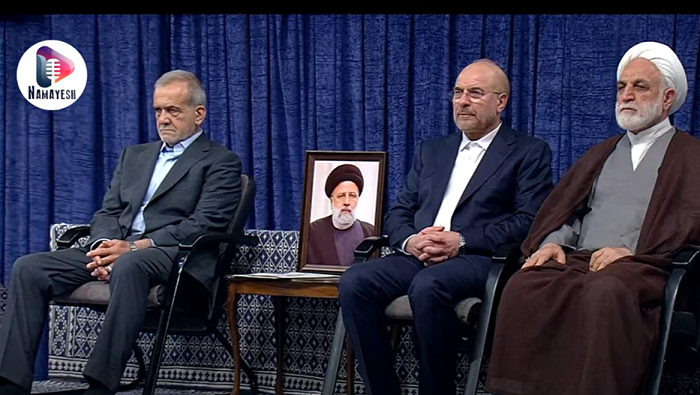
In a disturbing report, the National Council of Resistance of Iran (NCRI) revealed on October 7 that the Iranian regime executed 27 prisoners on November 5 and 6.
These executions contribute to a grim tally of 438 carried out during the presidency of Masoud Pezeshkian, a period marked by increasing repression and swift retaliation against dissent. The latest wave of executions has spurred outrage both within Iran and internationally, fueling protests and escalating attacks against government facilities by opposition groups. On November 5, President Pezeshkian justified the regime’s use of capital punishment, claiming it was a necessary measure against alleged violent criminals and accusing critics of cowardice. In a defiant statement, he cited traditional rhetoric, declaring that suffering purifies the soul—a sentiment that did little to quell the anger of Iranian activists and citizens who oppose the escalating executions.
The following day, November 6, dissidents retaliated with a series of attacks targeting the regime’s symbols and structures. In Kahnuj, Kerman, an explosion occurred at the judiciary building, notorious for prosecuting political dissidents. In Ahvaz and Mashhad, Iranian Revolutionary Guard Corps (IRGC) Basij bases—a network central to enforcing state loyalty—were set ablaze. Further incidents included burning down state propaganda and images of former president Ebrahim Raisi, an act interpreted as a sign of rising defiance against the government’s intensified crackdowns.
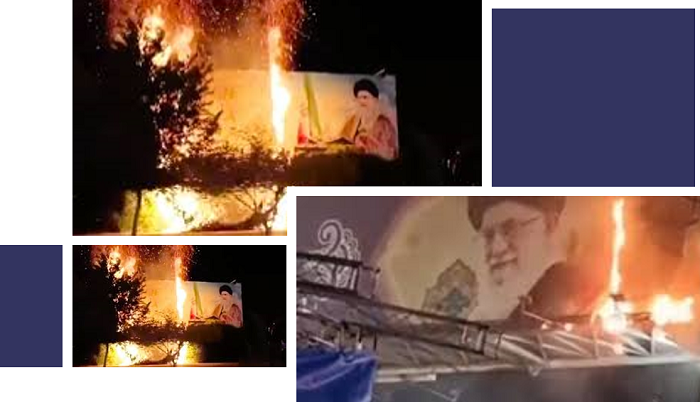
Iran’s youth, often at the forefront of these protests, launched similar attacks on November 3, setting fire to IRGC bases, propaganda billboards, and posters of the regime’s leaders across multiple cities, including Yazd, Kerman, and Izeh.
These demonstrations, and the violent responses they evoke, are part of a growing movement opposing what activists describe as an “execution-driven regime.” Political prisoners across Iran have launched the “No to Executions Tuesdays” campaign, marking the 41st week of a coordinated hunger strike against capital punishment. The prisoners’ statement underscored the worsening trend, calling for all activists to amplify their opposition to Iran’s state-sanctioned executions.
Maryam Rajavi, president-elect of the NCRI, condemned the mass executions as “Khamenei’s desperate attempt to curb public outrage and prevent uprisings.” She called upon the international community to hold Iran’s leadership accountable for decades of repression, emphasizing the urgent need for global solidarity in opposing these human rights violations. As Iran continues to witness a surge in repression and retaliatory attacks, the crisis has reignited calls for accountability from activists and international leaders alike, with pressure mounting for action against those responsible for what the NCRI calls “crimes against humanity.”

MEK Iran (follow us on Twitter and Facebook), Maryam Rajavi’s on her site, Twitter & Facebook, NCRI (Twitter & Facebook), and People’s Mojahedin Organization of Iran – MEK IRAN – YouTu