
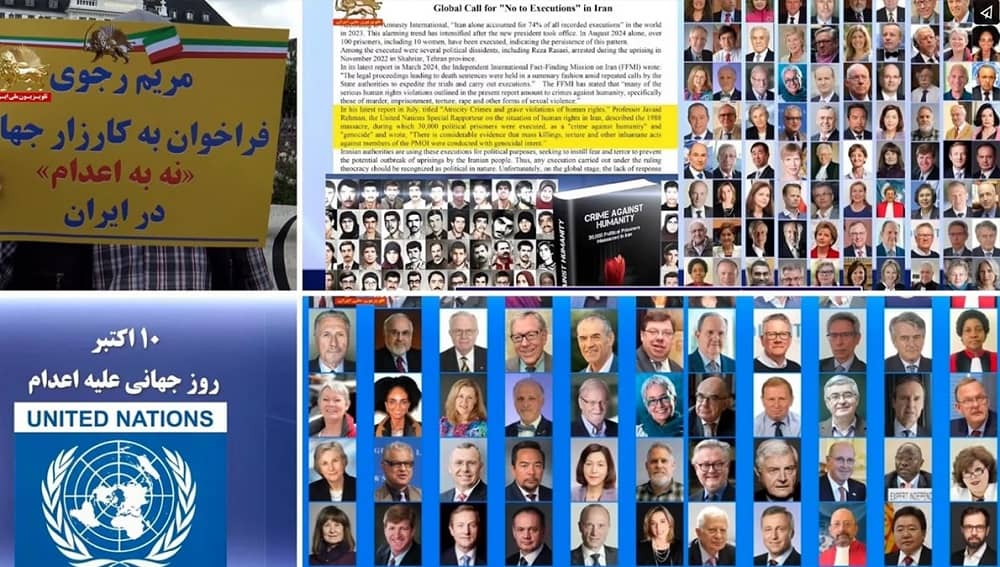
A powerful global movement to halt executions in Iran has gained significant traction, as the Iran Human Rights Monitor (Iran HRM) issued a compelling statement backed by 1,500 dignitaries from 78 countries.
This united response follows an appeal from Maryam Rajavi, President-elect of the National Council of Resistance of Iran (NCRI), urging an end to capital punishment in the country. The timing of this call is crucial, as Iran has seen an alarming surge in executions under the leadership of President Masoud Pezeshkian. In August 2024 alone, hundreds of prisoners, including women, were executed. Iran HRM’s statement, citing data from Amnesty International, emphasized that Iran was responsible for 74% of all recorded executions worldwide in 2023, a trend that has only intensified under Pezeshkian’s administration.
“Iranian authorities are using these executions for political purposes, seeking to instill fear and terror to prevent potential uprisings,” Iran HRM’s statement read, shedding light on the regime’s use of capital punishment as a tool to suppress dissent.
The report from the Independent International Fact-Finding Mission on Iran (FFMI) in March 2024 underscored the severity of the situation. It revealed that many of the death sentences were issued after “summary” trials, with state authorities pushing for swift executions. The FFMI concluded that the human rights abuses committed by the regime—including murder, imprisonment, torture, and sexual violence—constitute “crimes against humanity.”
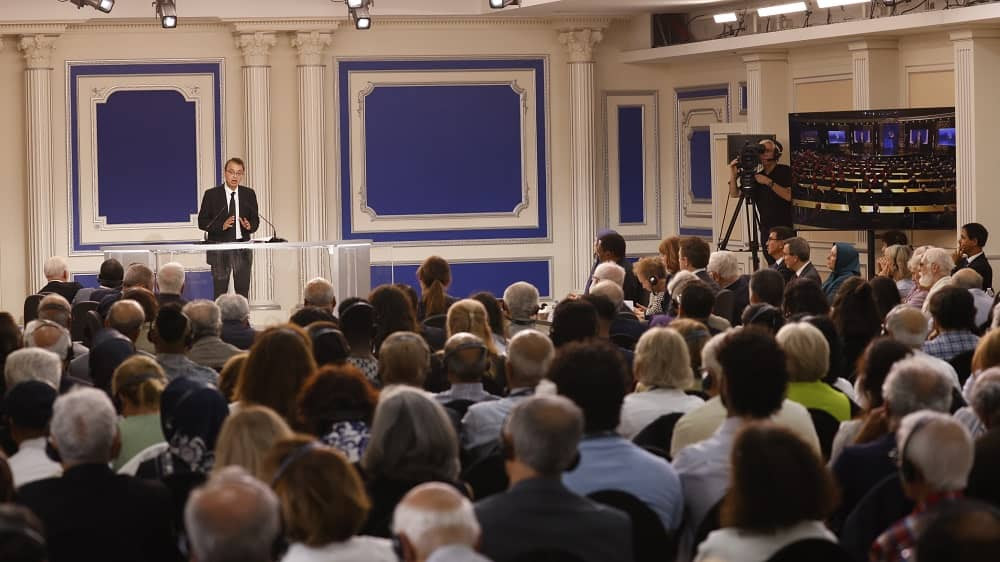
Professor Javaid Rehman, the United Nations Special Rapporteur on Iran, further raised concerns in his July 2024 report.
He classified the 1988 massacre of 30,000 political prisoners as “genocide” and highlighted the regime’s continued use of mass executions with “genocidal intent.” Professor Rehman also pointed out that the executions disproportionately target political dissidents, particularly members of opposition groups like the People’s Mojahedin of Iran (PMOI/MEK).
Since the beginning of 2024, political prisoners in 22 Iranian prisons have been staging weekly hunger strikes as part of the “No to Executions” campaign. The movement has garnered widespread support, both domestically and internationally. Human rights activists and Iranian dissidents have thrown their weight behind Rajavi’s call to abolish the death penalty.
As Rajavi stated during the International Jurists’ Conference in Paris in August, “The global community must unite against the regime’s atrocities and support the ongoing efforts to stop executions in Iran.”The momentum of the “No to Executions” campaign continues to build, with increasing global pressure on the Iranian regime to end its reliance on capital punishment.
