
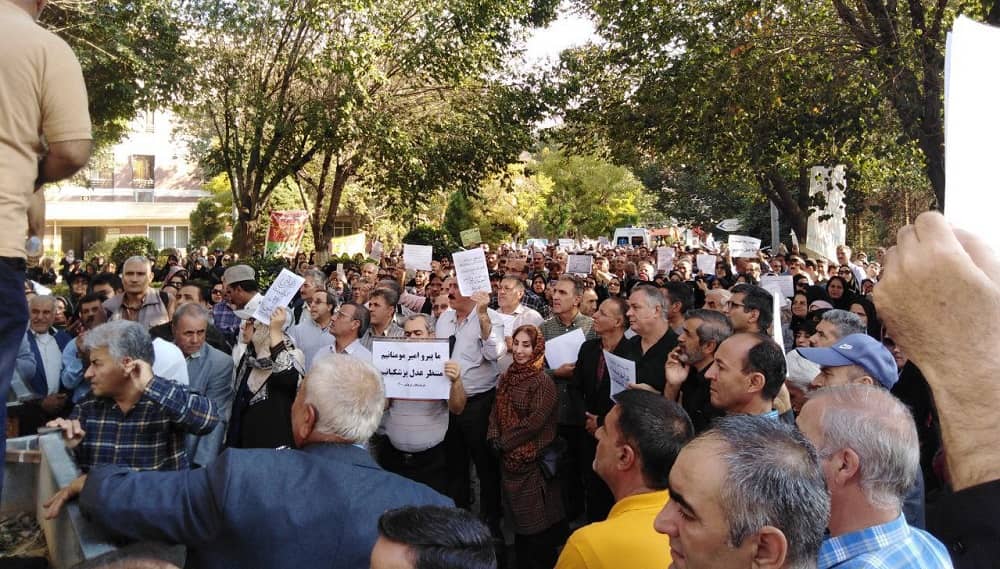
On October 13, 2024, protests erupted across Iran as workers, retirees, and educators voiced their frustrations over unpaid wages, insufficient pensions, and poor working conditions.
These demonstrations, taking place in various cities, showcase the growing discontent with the government’s handling of the economy, which is affecting multiple sectors and social groups. In Tehran, literacy educators gathered before the Ministry of Education, demanding promotions to official teaching positions. These educators have long fought for recognition and the benefits that come with full employment, and their patience has worn thin.
Also in Tehran, over 5,000 retired educators rallied in front of the Budget and Planning Organization. They protested against unpaid wages and opposed the government’s new ranking system, which affected their pensions. These retirees are calling for justice and compensation that reflects their years of service.
October 13—Tehran, Iran
Literacy educators rally in front of the education ministry, reiterating their demands to be promoted to official teachers.#IranProtests pic.twitter.com/lfP7YscM68— People's Mojahedin Organization of Iran (PMOI/MEK) (@Mojahedineng) October 13, 2024
In the central city of Isfahan, retirees from the steel industry took to the streets demanding higher pensions and enforcement of the basic rights guaranteed by the government. Their current pensions, they say, are inadequate to meet their daily living expenses, leaving many struggling.
Similar grievances were echoed in Shush, located in the Khuzestan Province. Here, retirees and pensioners from the Social Security Organization demanded higher pensions and access to essential services. Protesters stressed that their pensions barely cover one week of living expenses, highlighting the severe financial hardships faced by retirees in southwest Iran.
More photos of the protest rally of retired educators in Tehran. #IranProtests pic.twitter.com/MBfArngaqi
— People's Mojahedin Organization of Iran (PMOI/MEK) (@Mojahedineng) October 13, 2024
Taxi drivers in Kashan from Wireless Taxi Service 133 staged a protest, focusing on the increasing fuel prices and reduced rations, which have drastically cut into their earnings. Drivers are demanding fair compensation and better working conditions to keep their livelihoods sustainable. In Qazvin, housing investors gathered in front of government offices, demanding action on failed housing projects. Many of these investors had put their money into these projects years ago, but they are still waiting to receive their promised homes, causing significant financial strain.
The wave of unrest also spread to Fars Province, where workers of the Lamerd Cement Company protested outside the governor’s office over delayed wage payments. In Kerman, coal industry retirees demonstrated the payment of overdue wages and pensions, expressing deep frustration over the government’s failure to uphold their basic rights.
More photos of the protest rally of retired educators in Tehran. #IranProtests pic.twitter.com/MBfArngaqi
— People's Mojahedin Organization of Iran (PMOI/MEK) (@Mojahedineng) October 13, 2024
In a protest with a different focus, students in Tehran preparing for the 2025 university entrance exam (Konkoor) gathered to demand changes in the examination system. These students expressed concerns over the fairness and adequacy of the current system, advocating for reforms that would better meet their educational needs.
The economic discontent also touched the water and sewage sector in Izeh, where employees of the Water and Sewage Company (Abfa) went on strike after three months of unpaid wages. Workers claim they are owed a total of 300 million tomans, with back pay dating as far back as 2020.
Meanwhile, in Yazd Province, workers of the Central Iron Ore Company extended their ongoing strike, demanding wage increases and improved working conditions. Despite attempts to negotiate with management, the workers felt their demands were ignored and left in protest.
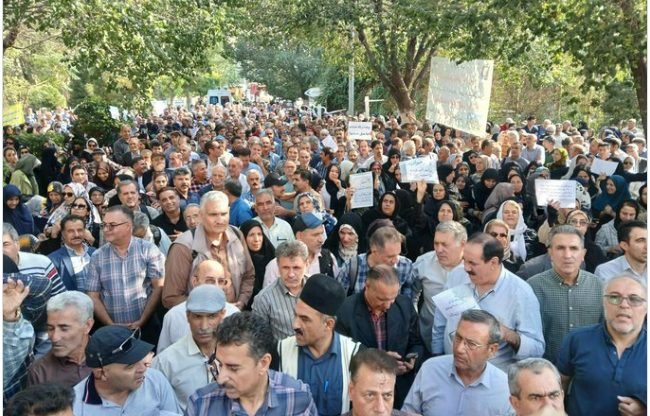
More than 5,000 retirees from the education sector attended today’s protest rally in Tehran in front of the Planning and Budget Organization.
A particularly tragic event unfolded in Khuzestan Province, where Faleh Saadi, a 48-year-old seasonal worker from the Haft-Tappeh Sugarcane Company, passed away after setting himself on fire on October 10. Saadi’s contract had not been renewed, leaving him unemployed. His self-immolation was a desperate act of protest against his dire employment situation.
He succumbed to his injuries on October 12, with many blaming company management’s corruption and neglect for his death. These protests underscore the widespread dissatisfaction in Iran, as inflation surges and wages remain unpaid. Workers, retirees, and students are increasingly taking to the streets, demanding accountability, better pay, and improved living conditions.
