
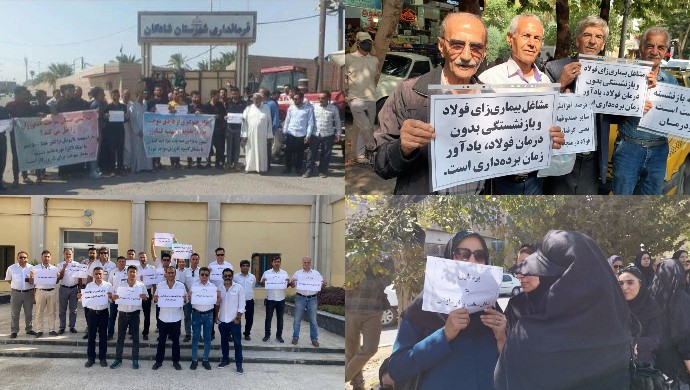
As Iran’s political and economic crises deepen, public unrest continues to grow, with citizens frequently taking to the streets in protest.
The culmination of a controversial election and the inauguration of a new government has only underscored the regime’s failure to address the country’s mounting issues. The administration, selected by Supreme Leader Ali Khamenei, has yet to offer meaningful solutions to the systemic problems plaguing Iran.
In September 2024, at least 412 protests were documented across the country, reflecting widespread dissatisfaction from various sectors of society:
- Workers: 159 protests
- Pensioners: 112 protests
- Business owners: 11 protests
- Nurses: 10 protests
- Farmers: 6 protests
- Educators: 6 protests
- Taxi drivers: 3 protests
- Truck drivers: 2 protests
- Cattle farmers: 1 protest
- Other sectors: 102 protests
September 30—Kangan, southern Iran
Protest rally by employees of Pars Oil and Gas Company who demand changes to retirement rules, removing the salary ceiling, and other needs.#IranProtests pic.twitter.com/rulwE2mI4j— People's Mojahedin Organization of Iran (PMOI/MEK) (@Mojahedineng) September 30, 2024
Workers’ Protests
Among the most vocal groups were workers, with at least 159 organized protests. Their grievances ranged from job insecurity and mass layoffs to mistreatment by management and the lack of adequate wages. Workers in the oil and gas sectors, particularly those at the Pars platforms and South Pars Gas Field, protested the failure to implement agreements regarding working conditions and job classifications. Delays in payments, unfair salary caps, and poor working conditions further fueled discontent.
These protests spanned key industries, including refineries and petrochemical plants. Workers from oil platforms in Bushehr and Asaluyeh, as well as temporary workers at major refineries, participated in these demonstrations. In other sectors, steelworkers, miners, and laborers demanded better wages and job stability, with notable protests from steelworkers in Anzali and miners in Tazareh.
September 29—Isfahan, central Iran
Retirees of the steel sector resume protest rallies, demanding higher pensions and other basic needs. #IranProtestspic.twitter.com/YS6lj8RJBA— People's Mojahedin Organization of Iran (PMOI/MEK) (@Mojahedineng) September 29, 2024
Pensioners’ Protests
Pensioners also staged at least 112 protests, focusing on income inequality, delays in receiving pensions, and the denial of various benefits. Their frustration was compounded by rising inflation, which has eroded the value of their pensions. Despite repeated protests, the government has yet to adequately address their concerns, leaving many struggling with the country’s economic mismanagement.
Business Owners and Healthcare Workers
Business owners held 11 protests in cities like Sanandaj, Saqqez, and Kermanshah, marking the anniversary of last year’s nationwide uprising. Additionally, merchants in Iranshahr protested local authorities for road closures that impacted their businesses. Meanwhile, healthcare workers, particularly nurses, held at least 10 rallies in cities like Behbahan, Qom, and Isfahan. These protests focused on poor living conditions, delayed overtime payments, and the government’s failure to address demands for wage increases.
Iran’s escalating protests reflect widespread frustration with the government’s inability to resolve the country’s systemic economic and social issues, suggesting continued unrest as the public’s demands for reform grow louder.
September 26—Yazd, central Iran
Large rally by nurses at Yazd Medical Sciences University, protesting unpaid wages, lack of reform in tariff rules, lack of implementation of regulations for harsh work, forced overtime work, & other problems.#IranProtests pic.twitter.com/Fh3HEjWdrM— People's Mojahedin Organization of Iran (PMOI/MEK) (@Mojahedineng) September 26, 2024
Nurses’ Protests
At least 10 protest rallies were organized by nurses in cities like Behbahan, Qom, and Isfahan. They rallied against poor living conditions, delayed overtime payments, and the failure of authorities to meet their demands for wage increases. These protests highlighted the broader issue of neglecting healthcare professionals who have been under immense strain due to both the economic crisis and inadequate healthcare infrastructure.
