
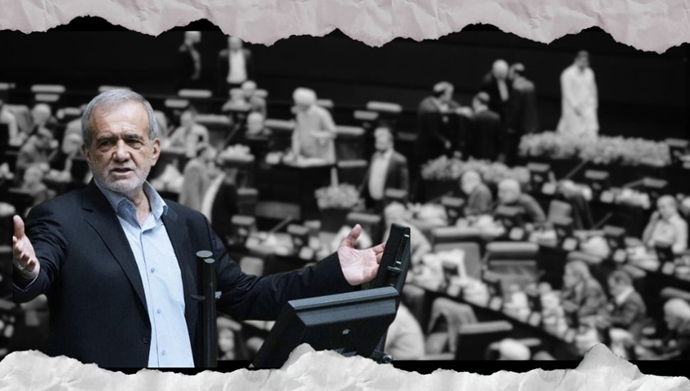
On August 21, the Iranian Majlis (Parliament) approved the entire cabinet proposed by President Massoud Pezeshkian, ending five days of intense disputes and chaos.
This approval was secured only after Pezeshkian repeatedly emphasized that all ministerial candidates were chosen by Supreme Leader Ali Khamenei himself, a revelation that has sparked widespread criticism and highlighted concerns about the extent of Khamenei’s control over the government.
During the parliamentary session, Pezeshkian openly admitted that the selection of ministers, particularly for key ministries, was carried out in coordination with various powerful entities within the regime, including the security agencies, the Islamic Revolutionary Guard Corps (IRGC), and the intelligence organizations. This admission painted a stark picture of the Supreme Leader’s absolute authority, reducing the role of the Parliament, government, and other democratic institutions to mere formalities.
Hamid Rasaee, a member of Parliament, took to social media to voice his dissatisfaction, stating, “After the unprecedented cost that Pezeshkian incurred from the Leader to approve his cabinet, the entire proposed cabinet was approved by the Parliament. The internal discord didn’t stop there. MP Abdolvahid Fayazi defended the Supreme Leader’s choices, while MP Rahim Zare criticized the Parliament Speaker for allowing discussions that hinted at the orchestration of upcoming elections. These internal disputes underscored the deep-seated tensions and power struggles within the regime.

Pezeshkian’s remarks were met with criticism from within the Parliament itself, with some MPs openly questioning the legitimacy of the entire process.
In a pointed critique, MP Ali Khezrian referenced the 2009 elections, which led to widespread protests, questioning the purpose of elections if the outcome is predetermined. Similar sentiments were echoed by Amir-Hossein Sabeti, who suggested that if Khamenei’s approval is the final word, the Parliament’s role in voting should be rendered obsolete.
Amid these controversies, former President Mohammad Khatami attempted to mediate, urging a “realistic approach” to the situation. However, his call for understanding did little to quell the growing dissatisfaction among reformist factions within the regime, who viewed the new cabinet as a mere continuation of the previous administration. Iranian opposition President-elect Maryam Rajavi of the National Council of Resistance of Iran (NCRI), condemned the approval of the new cabinet, asserting that it only serves to reinforce the regime’s authoritarian grip.
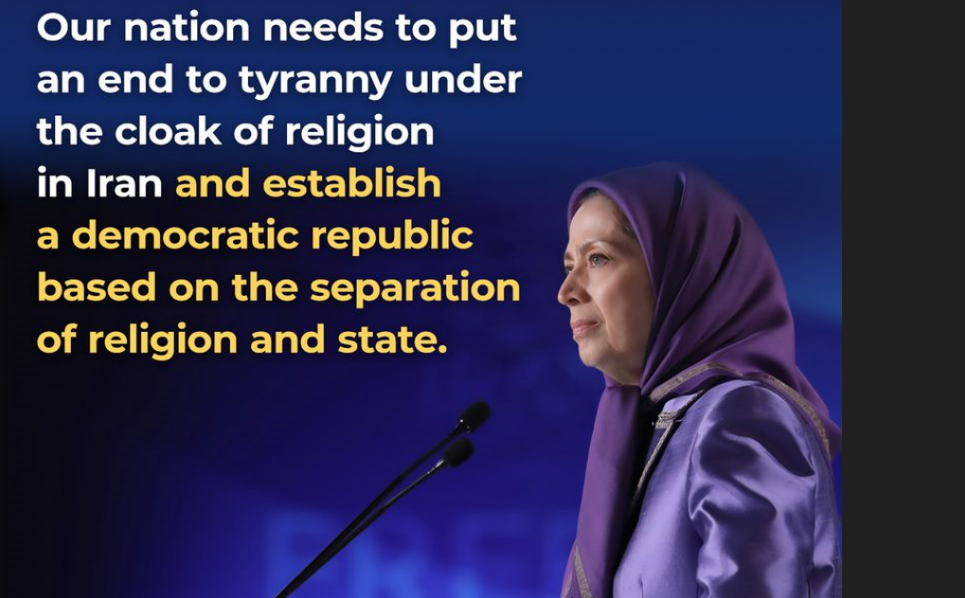
Maryam Rajavi highlighted the recent spike in executions as a sign of the regime’s desperation and the oppressive nature of its leadership.
As Iran’s political landscape continues to be shaped by the Supreme Leader’s influence, the legitimacy of its democratic institutions remains under scrutiny, raising questions about the future of governance in the country.

MEK Iran (follow us on Twitter and Facebook), Maryam Rajavi’s on her site, Twitter & Facebook, NCRI (Twitter & Facebook), and People’s Mojahedin Organization of Iran – MEK IRAN – YouTu