
IAmidst ongoing infighting among factions of the Iranian regime over the cabinet of the newly appointed President Massoud Pezeshkian, a wave of protests has surged across Iran.
Various social groups and segments of the population, seemingly indifferent to the dirty power-sharing struggle at the top, are increasingly taking to the streets to voice their discontent. Over the past few weeks, protests have become a daily occurrence in Iranian cities, driven by widespread disapproval of the regime and its newly formed government. This groundswell of opposition contrasts sharply with the empty rhetoric of government officials, who have pledged to continue along the unpopular path of former President Ebrahim Raisi.
The administration’s stated intention to continue Raisi’s policies has been met with skepticism and disdain, particularly given these policies have been widely criticized by economists and condemned for perpetuating repression, misogyny, and economic hardship. In a stark example of these harmful policies, bread prices were abruptly raised by 25%, and 40 trillion rials were withdrawn from the bankrupt pension fund to stage government theatrics during the Arbaeen pilgrimage.
The economic hardships facing the Iranian people have been exacerbated by the government’s failure to address their needs. As the Jamaran website reported on July 19, regime-affiliated economic analysts have repeatedly warned that economic decisions made without considering social realities will only deepen inequality and spur further social unrest. They caution that economic policies cannot be viewed in isolation from their social and political consequences. Despite this, Pezeshkian’s administration, restricted by the overarching control of Supreme Leader Ali Khamenei and his inner circle, has shown little capability or willingness to make the necessary economic reforms.
August 27—Hamedan, western Iran
Nurses continue their weeks-long protests in front of the provincial governorate.#IranProtestspic.twitter.com/k7OzLRya9j— People's Mojahedin Organization of Iran (PMOI/MEK) (@Mojahedineng) August 27, 2024
The Growing Tide of Social Unrest
Faced with a government unwilling or unable to improve their lives, many Iranians have taken to the streets, convinced that direct action is the only way to reclaim their rights. Across the country, various groups are finding opportunities to show solidarity and are even exploiting gaps in the regime’s security apparatus to make their voices heard.
The past week alone has seen a series of significant protests. Nurses and healthcare workers in several cities have staged rallies, chanting slogans like “We won’t stop until we get our rights” and “The rallies, sit-ins, and strikes will continue.” These hardworking professionals, already operating under grueling conditions, demand fair wages and improved working conditions. Simultaneously, employees in the oil and gas sectors have protested in cities such as Aghajari, Lavan, and Siri, calling for changes to their contracts and better wages.
Retirees from various sectors, including telecommunications, steel, and the public sector, have also participated in protests across dozens of cities. These individuals, who have spent their lives serving their country, are now struggling to survive on pensions that fail to meet their basic needs. Meanwhile, creditors of the state-run Maskan-e Melli housing company in Shahrekord have protested the government’s failure to deliver on housing promises, despite making down payments years ago.
August 27—Bandar Abbas, southern Iran
Nurses rally in front of the provincial governorate to reiterate their demands for higher wages and better working conditions.
"We don't want promises, we want our rights!" protesters chant.#IranProtestspic.twitter.com/2rc3skKIu6— People's Mojahedin Organization of Iran (PMOI/MEK) (@Mojahedineng) August 27, 2024
The Government’s Ineffectiveness and Public Response
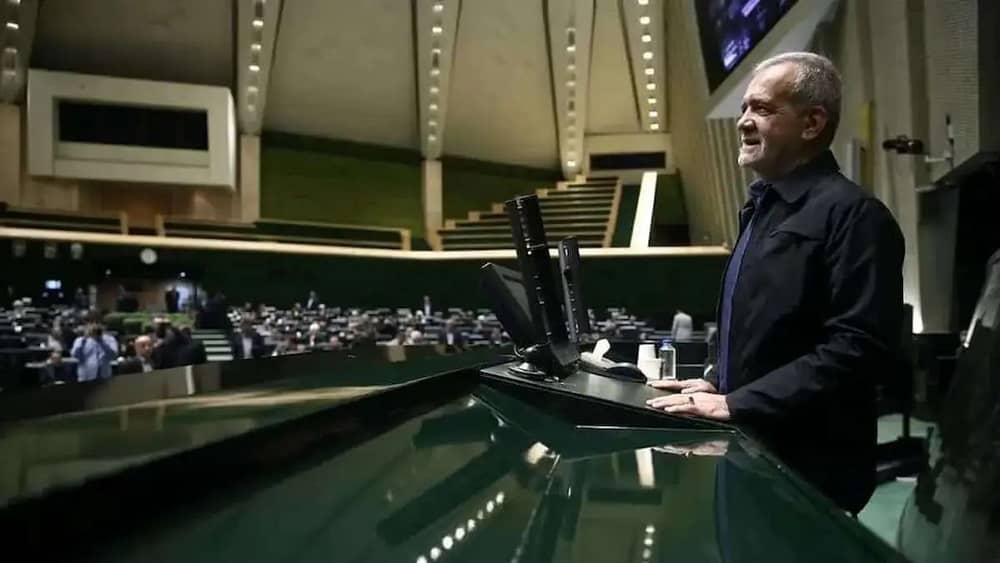
The recent speech by President Pezeshkian in Parliament on August 17 highlighted the regime’s inability to address the country’s mounting social and economic crises. Despite his appeals to Parliament to approve ministers loyal to Khamenei, the new administration is perceived as incapable of improving social and economic conditions. Instead, it seems more focused on suppressing dissent and maintaining the status quo.
In this context, it is no surprise that public dissatisfaction is growing. As highlighted by a recent article in Farhikhtegan newspaper, the Iranian government operates in a state of anxiety, fearing that any substantive action might spark further unrest. This paralysis only exacerbates the sense of disillusionment among the Iranian people, who increasingly see street protests as the only viable means of effecting change.
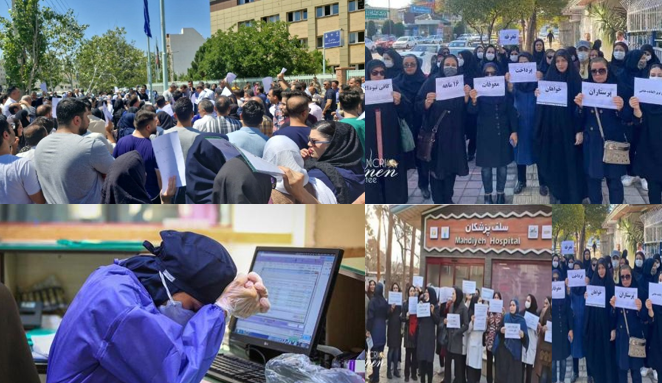
As economic and social crises continue to deepen, so too will the determination of ordinary Iranians to make their voices heard.
The Iranian populace, particularly those bearing the brunt of economic hardship, has received the message loud and clear: the government is weak, anxious, and unable to deliver on its promises. This cycle of unrest is likely to intensify, with more frequent and widespread protests expected in the coming weeks and months.

MEK Iran (follow us on Twitter and Facebook), Maryam Rajavi’s on her site, Twitter & Facebook, NCRI (Twitter & Facebook), and People’s Mojahedin Organization of Iran – MEK IRAN – YouTu