
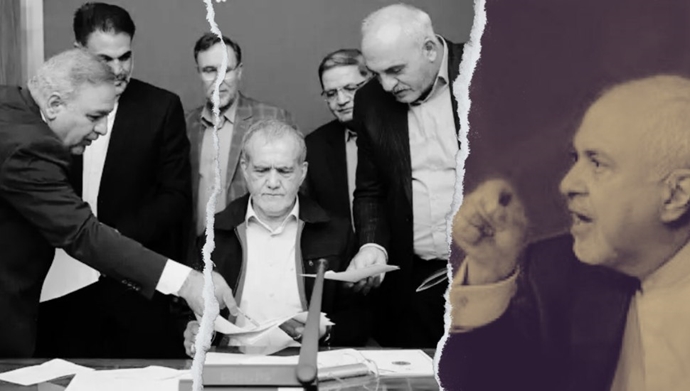
Iran’s newly appointed president, Massoud Pezeshkian, ascended to the presidency with a clear warning: “I came because I saw the system in danger.”
His statement, made in July, hinted at the deepening crisis within Iran’s ruling theocracy. However, the immediate backlash from both reformist and hardline factions within the government suggests that Pezeshkian’s arrival has only exacerbated the tensions threatening the regime’s stability.Pezeshkian introduced his cabinet on August 11, a move that ignited significant infighting within the Majlis (parliament) and further deepened rifts between rival factions. Reformists, who had initially hoped for meaningful change, were quick to express their disillusionment.
Azar Mansouri, the nominal head of the reformist front, voiced her disappointment in the composition of Pezeshkian’s cabinet. She criticized the coalition government as having “no owner,” arguing that its formation would likely contribute to the existing governance crisis rather than resolve it. The sentiment among disillusioned reformists was echoed across various platforms, with some expressing that they held no expectation for significant change from Pezeshkian’s administration.
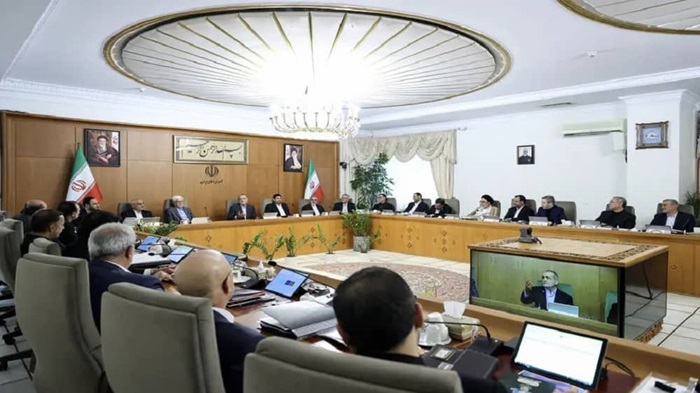
In a pointed letter, the reformist front warned Pezeshkian that his government must symbolize change and reform in both policymaking and management, cautioning that failure to do so would only widen the chasm between the government and the people.
On the other side, the hardline faction within the regime, unsatisfied with its share of influence, has threatened to obstruct Pezeshkian’s government. The introduction of the cabinet was met with grumbling from parliamentarians, with MP Hossein-Ali Haji Deligani predicting that at least six of the proposed ministers would struggle to secure a vote of confidence. Other hardline voices have similarly expressed their intent to derail the government’s efforts.
The newspaper described members of former Foreign Minister Mohammad Javad Zarif’s advisory council as “corrupt and unworthy,” claiming they were more suited for trial benches than government positions. The harsh rhetoric reflects the deep mistrust and animosity between Pezeshkian and the hardline elements within the regime.
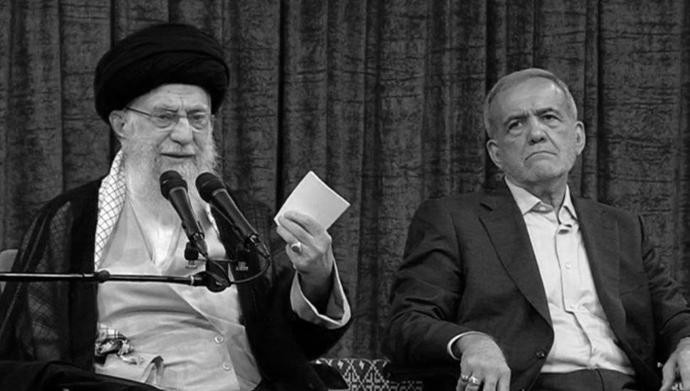
The conservative Kayhan newspaper, a known mouthpiece for Supreme Leader Ali Khamenei, did not mince words in its attack on Pezeshkian associates.
Iranian opposition President-elect Maryam Rajavi of the National Council of Resistance of Iran (NCRI), encapsulated the dire state of the regime, remarking that Pezeshkian’s cabinet represents a troubling mix of elements from previous administrations, symbolizing a regime caught in its internal strife. As Pezeshkian steps into his role, the challenges he faces are stark. The internal conflicts and lack of unity within the regime threaten to undermine his presidency before it has truly begun, casting a long shadow over the future of Iran’s leadership.

MEK Iran (follow us on Twitter and Facebook), Maryam Rajavi’s on her site, Twitter & Facebook, NCRI (Twitter & Facebook), and People’s Mojahedin Organization of Iran – MEK IRAN – YouTu