

On July 30, Massoud Pezeshkian was inaugurated as the president of Iran, an event marked by his strong reaffirmation of loyalty to the directives of Supreme Leader Ali Khamenei.
During the ceremony at the Majlis (parliament), Pezeshkian not only signed the pledge document but also emphasized his commitment to implementing Khamenei’s programs. This commitment was evident in his speech, where he lauded key figures of the regime, including its founder, Ruhollah Khomeini, former IRGC Quds force commander Qassem Soleimani, and former president Ebrahim Raisi. Pezeshkian’s words made it clear that his presidency would be deeply rooted in pursuing Khamenei’s policies.
In the realm of foreign policy, Pezeshkian also mirrored Khamenei’s approach, particularly in the use of Palestine as a tool to advance the regime’s regional agenda. He adopted the Supreme Leader’s rhetoric, using it to deflect international criticism of Iran’s human rights record. This approach found favor with the regime’s parliament speaker, Mohammad Bagher Ghalibaf, who indicated that the parliament’s support for Pezeshkian’s government was contingent upon his adherence to these principles.
However, Pezeshkian’s unwavering allegiance to Khamenei’s directives has not gone unnoticed, with some of his supporters expressing concern about the potential consequences of such subservience. On July 29, an article on the Jahan-e Sanat news website highlighted the numerous crises facing Iran, warning that these could push the country to the brink of disaster. The article advised Pezeshkian to undertake significant reforms in both domestic and foreign policy to avoid the collapse of the regime.
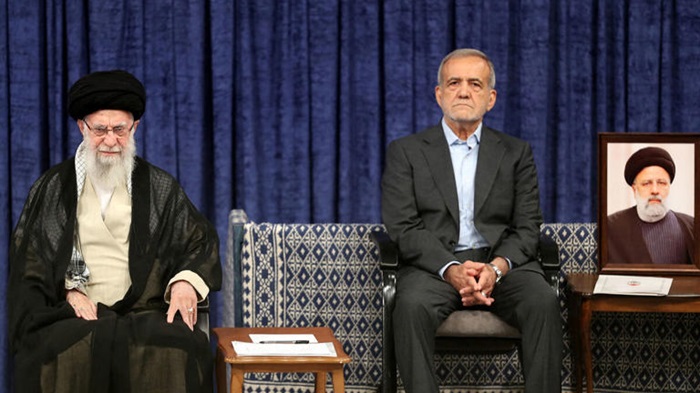
Khamenei, both in the endorsement decree and his speech at the ceremony made it clear that Pezeshkian’s role was to follow a single directive: subservience. This was to be modeled after his predecessor, Raisi.
The piece argued that Pezeshkian has two options. The first is to leverage his experience and find ways to circumvent the constitutional and structural obstacles that have hampered the country’s progress for years. The second option, should he find himself unable to overcome these challenges, is to acknowledge his limitations and return to his previous profession in medicine, with the consent of the regime’s leadership.
However, the article’s author seemingly overlooked Pezeshkian’s earlier pledges of unwavering loyalty to these very “structural and constitutional obstacles.” Pezeshkian’s candidacy and subsequent presidency were rooted in his deep commitment to preserving the regime, a fact he emphasized repeatedly during his campaign. For him, the presidency is not a crossroads but a continuation of his subservience to Khamenei’s vision. As the new president, Pezeshkian appears to be entrenched in a quagmire of compliance, with no apparent path to escape the challenges he faces.
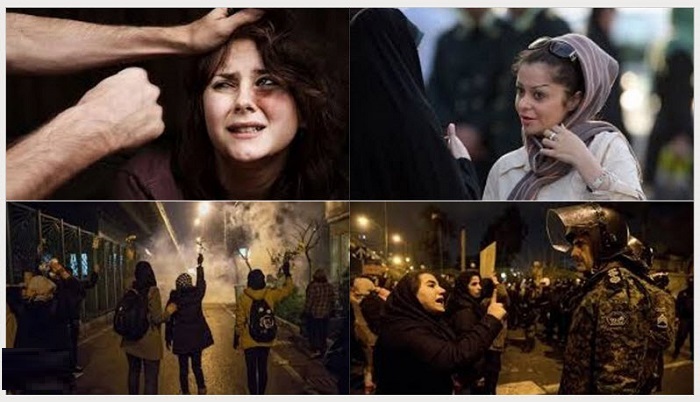
The Supreme Leader’s appointees echoed this sentiment, cautioning Pezeshkian to avoid overstepping his authority and to focus on economic issues rather than engaging in controversial cultural matters such as hijab enforcement and internet censorship.
Pezeshkian’s presidency underscores the complexities and difficulties of navigating Iran’s political landscape, where loyalty to the Supreme Leader often outweighs the need for reform. His administration, like those of his predecessors, may find itself trapped in the very structures it seeks to uphold, with little room for meaningful change. As Iran faces mounting internal and external pressures, the true test for Pezeshkian will be whether he can maintain his loyalty while addressing the critical issues threatening the stability of the regime.

MEK Iran (follow us on Twitter and Facebook), Maryam Rajavi’s on her site, Twitter & Facebook, NCRI (Twitter & Facebook), and People’s Mojahedin Organization of Iran – MEK IRAN – YouTu