
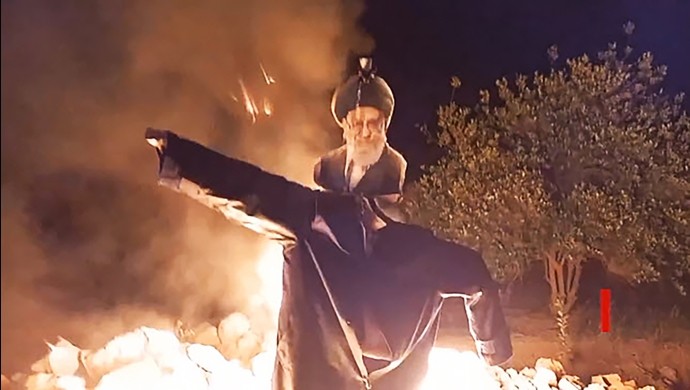
The Iranian regime has admitted that the presidential elections held on June 28 witnessed the lowest voter turnout in the country’s history.
This revelation marks a significant setback for the regime and a personal defeat for Supreme Leader Ali Khamenei, who had vehemently advocated for high participation, enlisting support from former presidents and disenchanted officials, including Hassan Rouhani, Mohammad Khatami, and Ali Larijani.
Just days before the elections, Khamenei underscored the importance of high voter turnout, emphasizing that it was crucial for the pride and reputation of the Islamic Republic. He argued that robust participation would silence critics and prevent them from rejoicing over the regime’s challenges. On the morning of the elections, Khamenei reiterated this message, declaring that the survival, strength, dignity, and international reputation of the Islamic Republic depended on the people’s participation.
The regime’s statistics confirmed the lowest participation rates in its history, with state media describing the situation as a “complete collapse,” “vote drought,” and “unexpected participation.”
The Ebtekar newspaper reported on July 1 that the voter turnout in the March parliamentary elections was a mere 41 percent, with Tehran witnessing only a 24 percent turnout the lowest in the history of the Islamic Republic. This marked the third time in four years that voter turnout for elections had fallen below 50 percent. The newspaper highlighted that the declining turnout, coupled with three significant protest movements between 2017 and 2019, has precipitated a legitimacy crisis for the Iranian political system.
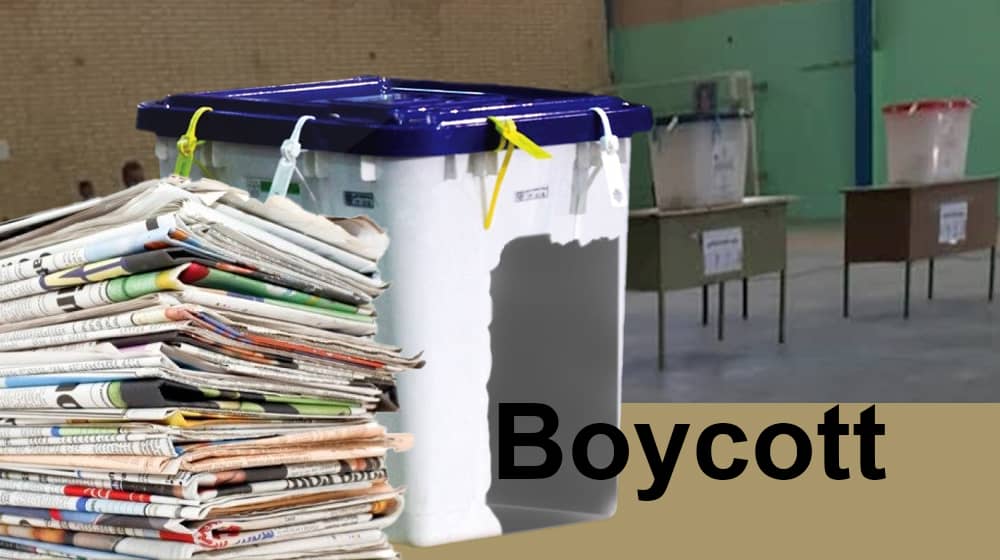
Despite these appeals, the Iranian populace delivered a resounding rebuke to the regime by staging a widespread boycott.
Etemad newspaper, in a veiled critique of Khamenei’s last-minute pleas, noted that while the election showcased diversity and competition, it failed to mobilize the masses, signaling a deeper societal discontent. The newspaper warned that despite a new figure assuming the presidency, the underlying societal unrest posed a significant threat to the regime’s stability.
Iranian opposition President-elect Maryam Rajavi of the National Council of Resistance of Iran (NCRI), addressed the regime’s defeat at the Free Iran Global Summit. She described the election as a reflection of the regime’s political and strategic desperation, emphasizing that the low turnout—an estimated 88 percent boycott—demonstrated the Iranian people’s decisive rejection of dictatorship and a clear desire for regime change. Rajavi highlighted that fewer than 7.4 million people, including those coerced into voting and those casting invalid ballots, participated in the election.
This overwhelming abstention, Rajavi asserted, signaled a growing momentum for a free Iran under a democratic republic. The election results have thus exposed the regime’s declining social base and highlighted the escalating demand for democratic reform in Iran.

MEK Iran (follow us on Twitter and Facebook), Maryam Rajavi’s on her site, Twitter & Facebook, NCRI (Twitter & Facebook), and People’s Mojahedin Organization of Iran – MEK IRAN – YouTu