
POLITICAL PLATFORM
- Title: Iran’s Defiant Resistance: The People’s Fight for Freedom
- Khamenei’s Real Fear: Unrest Within, Not Threats from Abroad
- As Protests Spread, Khamenei’s Plea Reflects a Shaken Regime
- UK Parliament Confronts Iran-Linked Security Threats
- Title: U.S. House Endorses Democratic Future for Iran with Bipartisan Resolution
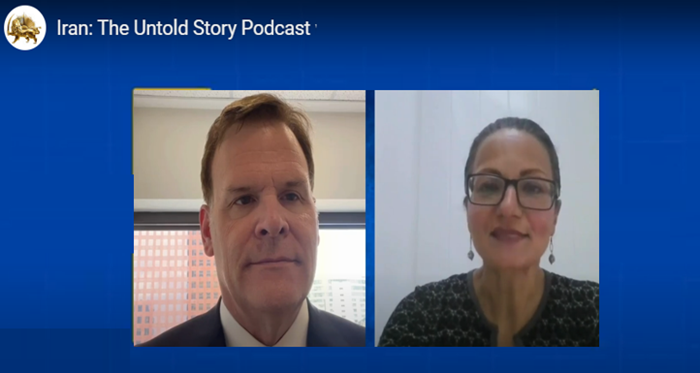
In a recent episode of the “Iran: The Untold Story” podcast, John Baird, former Canadian Minister of Foreign Affairs, offered an insightful analysis of Iran’s political landscape, human rights record, and prospects.
With a wealth of experience in public service and international relations, Baird provided a nuanced perspective on the complexities facing Iran today. Baird highlighted three main concerns regarding the Iranian government: its support for global terrorism, its deteriorating human rights record, and its nuclear ambitions. He articulated these issues succinctly: “We had three big concerns with the government of Iran: its material support for terrorism around the world, its abysmal and deteriorating human rights record, and its nuclear program.”
Focusing on human rights, Baird condemned the Iranian regime’s brutal repression of dissent, referencing historical events such as the 1988 massacre of political prisoners and the ongoing suppression of protests. “If anything, Iran’s human rights record has deteriorated considerably over the last 10 years,” he noted, emphasizing the regime’s relentless crackdown on opposition.
Pleased to be in Paris to support the people of Iran. #IRGC_Out #freeiran #1988massacre pic.twitter.com/0OhgxyKqc1
— John Baird (@Baird) December 16, 2017
On Iran’s nuclear ambitions, Baird warned of the dangers, arguing that the regime’s pursuit of nuclear capabilities poses a significant threat to regional and global security, making normal diplomatic relations impossible. Reflecting on Canada’s 2012 decision to close its embassy in Iran, he cited safety concerns for diplomats, drawing parallels with the American embassy takeover in 1979 and the burning of the Saudi embassy. “We just didn’t feel that we could count on the government of Iran to keep our diplomats safe,” he said.
Baird criticized policies aimed at appeasing the Iranian regime, describing them as “tremendously dangerous.” He argued that the regime cannot be trusted to honor agreements and highlighted the lack of moderate voices within Iran’s leadership. “Every time there’s a change in leadership, there’s this great excitement…but the bottom line is that we haven’t seen any moderates come out of this leadership because the mullahs simply won’t allow it,” he asserted. Baird believes that meaningful change in Iran must come from within, driven by the Iranian people rather than the current regime.
Pleased to speak to freedom and democracy efforts against the Iranian dictatorship today. #FreeIran pic.twitter.com/LYfOHtoRyl
— John Baird (@Baird) July 13, 2019
Despite his grim assessment of Iran’s current state, Baird expressed optimism about the country’s future. He praised the Iranian population’s intelligence and education, noting their desire for freedom, democracy, and economic prosperity. Baird predicted that change would come from the grassroots level, with the people of Iran eventually overthrowing the oppressive regime. “I genuinely believe better days are ahead,” he stated, emphasizing that the Iranian people will remember those who supported them during these dark times.
Baird also lauded the efforts of Maryam Rajavi and the National Council of Resistance of Iran (NCRI), describing Rajavi as a “remarkable woman” leading a significant opposition movement against the Tehran regime. He stressed the importance of offering a viable alternative for Iran’s future, pointing to the NCRI’s Ten-Point Plan as a promising roadmap for a democratic and free Iran. “You have to present an option, an alternative for the Iranian people,” Baird said.
He called for the international community to adopt a stance of moral clarity when dealing with Iran, urging policymakers to abandon appeasement and reject the notion that the current Iranian regime represents its people. Baird emphasized the importance of holding the regime accountable for its atrocities, sending a strong message that the world will demand justice for human rights violations. “We’ve got to abandon the policy of appeasement. It’s failed,” he declared.
Reflecting on historical lessons, Baird emphasized the need for a future Iranian government founded on values such as equality, freedom, and representative governance. He expressed confidence that the Iranian people, supported by the global community, will eventually achieve a free and democratic Iran. “The Ten-Point Plan gives some hope, some aspiration that things not can be better, but things will be better,” he concluded.
