
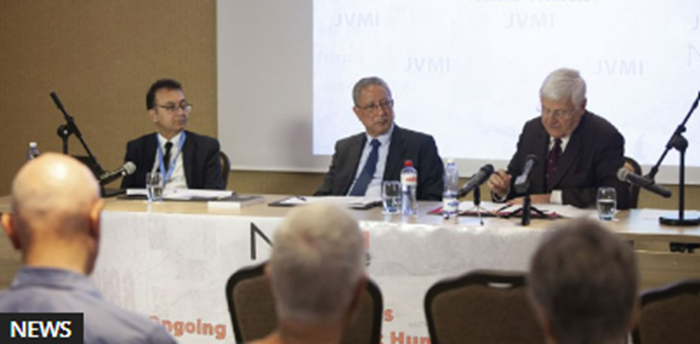
On Wednesday, June 19, 2024, at a Geneva conference titled “Justice for Iran’s Ongoing Crimes Against Humanity,” Javaid Rehman, the United Nations Special Rapporteur on human rights in Iran, presented his latest report.
Rehman expressed pride in completing his report, which he describes as documenting “atrocity crimes and grave violations of human rights” in Iran from 1981 onwards. He emphasized the continuing relevance of these issues, stating, “It is not a historical issue, as many people think. It is a live issue. There are serious concerns about gross violations of human rights.”
Rehman highlighted the death of Ebrahim Raisi on May 19, 2024, urging that it must not lead to the denial of truth, justice, and reparations for the Iranian people. Raisi, a member of the “Death Commission,” was involved in mass murder and the summary executions of thousands of political prisoners in 1988. Rehman insisted that those responsible for these crimes must be held accountable, and impunity must end in Iran.
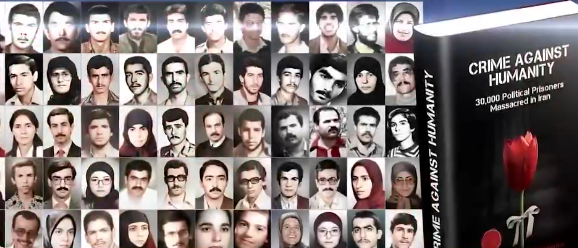
This report addresses the 1988 massacre and the executions of 1981 and 1982 by Iran’s clerical regime.
The Special Rapporteur emphasized that accountability for crimes against humanity is not constrained by a statute of limitations. He clarified the contemporary relevance of his report: “This report is relevant because it is affecting people today. It’s affecting their lives.”
Rehman also connected past and present issues, citing the 2022 nationwide uprising as part of a longer struggle for equality and rights that began when Khomeini came to power in 1979. He noted, “That wasn’t the start of women’s struggle for equality and rule of law and women’s rights. It goes back to the time when Khomeini came into power.”
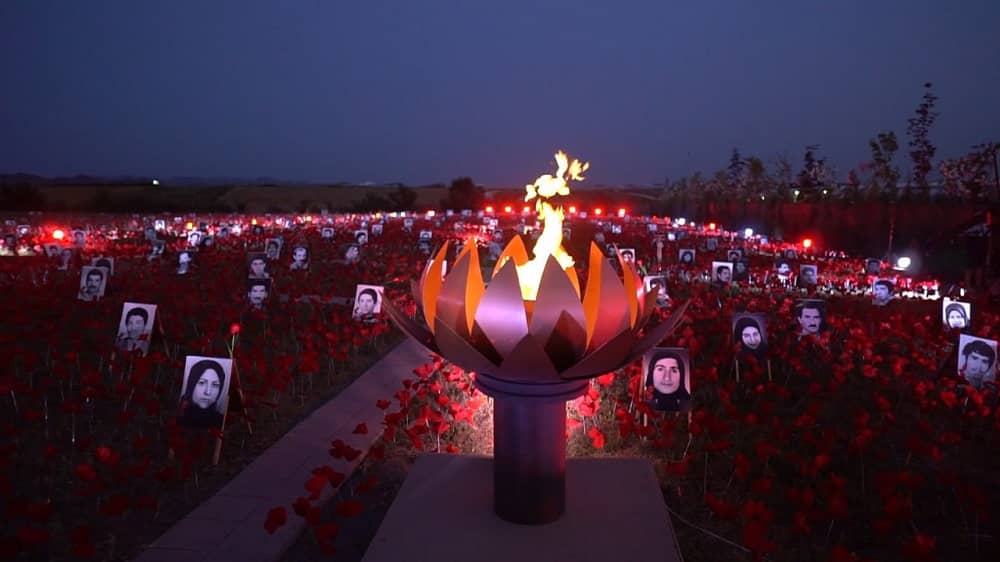
Referring to Khomeini’s fatwa that led to the 1988 massacre of the People’s Mojahedin Organization of Iran (PMOI/MEK), Rehman explained, “Thousands of political prisoners were targeted and murdered without fair trial.
Khomeini issued a fatwa in which he said that all of those monafiqeen (Mojahedin) who remain steadfast must be executed. He used this terminology through a religious prism but urged commissioners to disregard the rule of law and human rights.”
Rehman added that these prisoners were punished for their ideological positions and subjected to torture. They were executed without due process, often at short notice and without the opportunity to defend themselves. He noted, “They were asked questions that were not legal… These were not legal questions.” In an interview with Simay-e Azadi television after the conference, Rehman called on the international community, the UN.

MEK Iran (follow us on Twitter and Facebook), Maryam Rajavi’s on her site, Twitter & Facebook, NCRI (Twitter & Facebook), and People’s Mojahedin Organization of Iran – MEK IRAN – YouTu