
POLITICAL PLATFORM
- Title: Iran’s Defiant Resistance: The People’s Fight for Freedom
- Khamenei’s Real Fear: Unrest Within, Not Threats from Abroad
- As Protests Spread, Khamenei’s Plea Reflects a Shaken Regime
- UK Parliament Confronts Iran-Linked Security Threats
- Title: U.S. House Endorses Democratic Future for Iran with Bipartisan Resolution
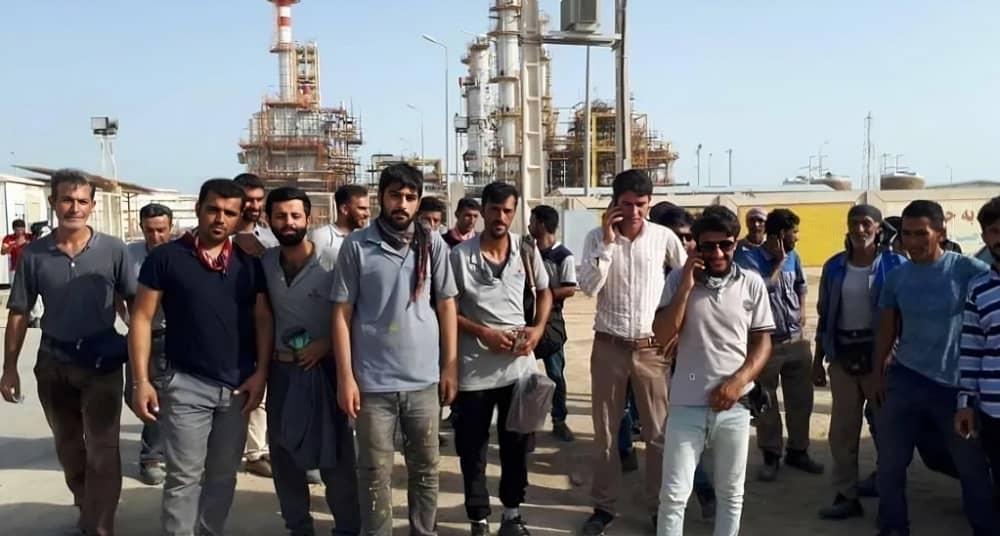
On June 23, Iran witnessed a surge of protests and strikes as workers, retirees, and teachers took to the streets to express their dissatisfaction with various socio-economic issues.
One of the most significant movements involved over 20,000 contract workers in the oil, gas, and petrochemical industries. They continued their strike for the fifth consecutive day as part of the “14-14 Campaign.”
This campaign, which began on June 19, demands the elimination of contractors, higher wages, and a revised work schedule of 14 days on and 14 days off. Workers from 75 different companies joined the strike, highlighting their struggle against poor working conditions and inadequate pay.
Footage on social media showed workers at Dirin Sanat Raveen in Andimeshk participating, underscoring their determination to intensify protests if their demands were not met by the end of June.
June 23—Isfahan, central #Iran
Retirees of the steel industry hold protest rally, demanding higher pensions and other basic rights.
"Shout for your rights!" protesters chant#IranProtestspic.twitter.com/Aq1p6zhiao— People's Mojahedin Organization of Iran (PMOI/MEK) (@Mojahedineng) June 23, 2024
The Coordination Council for Protesting Oil Contract Workers reported that more than 20,000 workers from nearly 90 oil and gas companies had joined the strike. They reiterated demands for better pay, improved working conditions, and the abolition of the contractor system, comparing it to modern-day slavery.
The council declared, “We are claimants and will not submit to this slavery,” calling for nationwide support for the striking workers. In Rasht, retirees of the Social Security Organization gathered to demand higher pensions and other basic needs. In Ahvaz, steel industry retirees held a protest rally, insisting on their right to higher pensions according to the regime’s laws.
June 23—Aran va Bidgol, central #Iran
Workers of the Kavir Steel complex join the nationwide strike by oil-sector workers.
The strike began on June 19 and has expanded to 75 sites and 17,500 workers, with more workers joining every day.#IranProtestspic.twitter.com/7T0qajZAJW— People's Mojahedin Organization of Iran (PMOI/MEK) (@Mojahedineng) June 23, 2024
Similarly, retired steelworkers in Isfahan chanted slogans like “Steelworkers, shout out, demand your rights” and “Enough with promises, our tables are empty.” These protests were echoed in Shush, where social security and other sector retirees marched together, demanding justice and improved living conditions.
Municipality workers in Abadan also joined the growing wave of dissent, striking in front of the municipality offices to protest against the authorities’ neglect of their demands. In Tehran, teachers rallied in front of the Ministry of Education, highlighting their poor working conditions.
June 23—Tehran, #Iran
Protest rally by retirees of the Social Security Organization, demanding higher pensions and basic needs according to the regime's own laws.#IranProtestspic.twitter.com/hQ7il4wZkF— People's Mojahedin Organization of Iran (PMOI/MEK) (@Mojahedineng) June 23, 2024
Meanwhile, in Qaemshahr, northern Iran, steel industry retirees resumed their weekly protests in front of the Steel Retirement Fund offices in Mazandaran, demanding pensions that reflect the rising cost of living.
Social security and state retirees gathered in Kermanshah, expressing their frustration with slogans like “We haven’t seen justice, we won’t vote anymore.” The demonstrators showed a deep-seated disillusionment with the electoral process and the government’s failure to address their needs.
June 23—Tehran, #Iran
Teachers rally in front of the Ministry of Education, protesting poor working conditions.#IranProtestspic.twitter.com/1FLCILyyHn— People's Mojahedin Organization of Iran (PMOI/MEK) (@Mojahedineng) June 23, 2024
These widespread protests reflect growing discontent among various sectors of Iranian society. Despite the government’s increased pressure on union activists, workers, retirees, and teachers remain steadfast in their fight for justice and fair treatment.
