

Saeed Jalili, born on September 6, 1965, in Mashhad, Iran, stands as a prominent yet polarizing figure within the Iranian political landscape.
Known for his unwavering loyalty to Supreme Leader Ali Khamenei and his hardline stance on foreign affairs, Jalili’s career trajectory highlights his deep entrenchment in Iran’s clerical regime and his significant influence on the country’s strategic decisions.
Early Life and Military Service
Jalili’s political journey is deeply rooted in his early life experiences, particularly his involvement in the Iran-Iraq war. As a young Basij militant, Jalili served from his high school years through university, demonstrating a fierce commitment to the Iranian cause. His dedication was epitomized during Operation Karbala-V in 1986, where he suffered severe injuries and lost his right leg while serving as a forward observer for the Imam Reza Division of Khorasan.
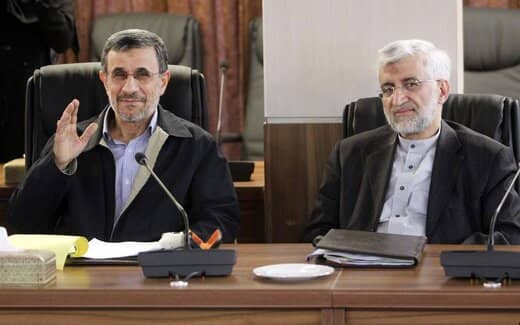
In 1989, Jalili embarked on a career in the Ministry of Foreign Affairs, quickly ascending through various roles.Jalili’s career saw a resurgence under Mahmoud Ahmadinejad’s administration.
Climbing the Ranks in the Foreign Ministry
During Mohammad Khatami’s presidency, Jalili served as Deputy Director overseeing the Americas until 1997. After his dismissal, he was appointed senior director of policy planning in the office of Supreme Leader Ali Khamenei in 2001.
In 2004, he became an advisor to Ahmadinejad, and in 2005, he was appointed Deputy Foreign Minister for Europe and America. His rise continued with his appointment as Secretary of the Supreme National Security Council in 2007, a role in which he became the chief negotiator for Iran’s nuclear talks with world powers.
Nuclear Negotiations and Sanctions
Jalili’s tenure as Iran’s chief nuclear negotiator was marked by his confrontational and inflexible approach. His refusal to make concessions led to severe sanctions from the United Nations, the United States, and the European Union, which significantly impacted Iran’s economy by reducing oil exports and foreign exchange revenues. Despite this, Jalili boasted about Iran’s advancements in nuclear capabilities, often stalling negotiations by focusing on historical grievances rather than substantive discussions.
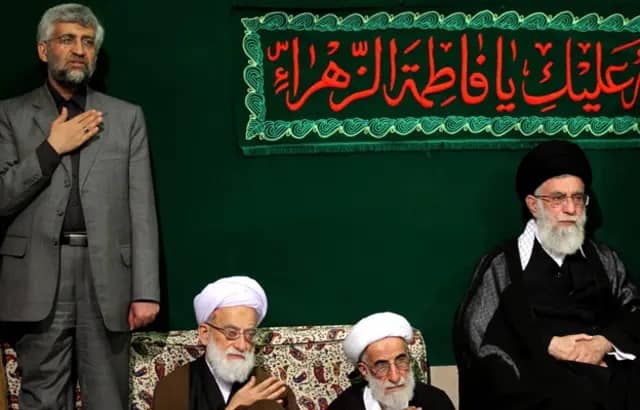
Jalili’s tenure as Iran’s chief nuclear negotiator was marked by his confrontational and inflexible approach.
Economic Views and Presidential Ambitions
In the 2013 presidential debates, Jalili’s economic views drew criticism and ridicule. His suggestion that $11 billion could create significant employment by increasing domestic production of items like popsicle sticks was widely mocked. Following his defeat in the 2013 presidential election, Jalili proposed the creation of a shadow government to assist the incumbent administration, a concept that has yet to gain significant traction.
Continuing Influence
Despite controversies and criticisms, Saeed Jalili remains a key figure in Iranian politics. His positions as a member of the Strategic Council for Foreign Relations, Representative of Khamenei in the Supreme National Security Council, and member of the Expediency Discernment Council underscore his ongoing influence.

Jalili’s career, marked by steadfast loyalty and extreme positions, continues to shape Tehran’s strategic decisions, fueling both domestic and international tensions.
Jalili’s career, marked by steadfast loyalty and extreme positions, continues to shape Tehran’s strategic decisions, fueling both domestic and international tensions. In conclusion, Saeed Jalili’s legacy in Iranian politics is defined by his uncompromising stance on key issues, loyalty to the regime, and significant influence over Iran’s strategic direction. His career highlights the complexities and challenges within Iran’s political framework, reflecting a broader narrative of ideological rigidity and contentious diplomacy.

MEK Iran (follow us on Twitter and Facebook), Maryam Rajavi’s on her site, Twitter & Facebook, NCRI (Twitter & Facebook), and People’s Mojahedin Organization of Iran – MEK IRAN – YouTu