
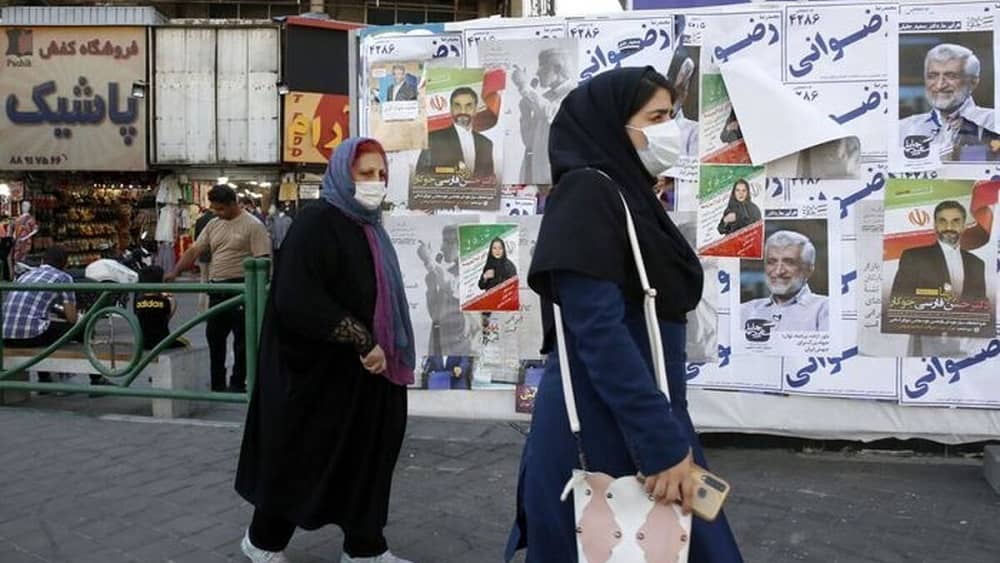
Following the tragic death of Iranian President Ebrahim Raisi in a helicopter crash on May 19, Supreme Leader Ali Khamenei has moved quickly to organize the next presidential election.
The process, steeped in political maneuvering and state control, is set to culminate on June 28. This development has triggered widespread speculation about potential shifts in Tehran’s political landscape, both domestically and internationally.
In the week after Raisi’s death, a wide array of former and current state officials flocked to the Ministry of Interior. They conducted press conferences, released promotional videos on social media, and disseminated news and rumors to generate excitement for the upcoming election. However, since the uprisings in 2017 and 2019, Iranian elections have been less about competition and more about endorsing Khamenei’s chosen candidate. Analysts now question if Raisi’s death will disrupt this pattern of predetermined outcomes.
Candidate registration for Iran’s 14th presidential election began on May 30 and ended on June 3. During this period, 287 individuals applied, but only 80 met the legal requirements to be officially registered. Notable figures in the race include Saeed Jalili, Khamenei’s representative on the Supreme National Security Council; Alireza Zakani, Mayor of Tehran; and Mohammad Bagher Ghalibaf, Speaker of Parliament. Former President Mahmoud Ahmadinejad and other significant political personalities are also in the mix.
Who Is Vahid Haghanian, The Invisible Hand of Khamenei Now in #Iran’s Presidential Spotlighthttps://t.co/JbPvTZg5BG
— NCRI-FAC (@iran_policy) June 1, 2024
The Guardian Council, responsible for vetting candidates, will announce the final list on June 11. Given Tehran’s opaque electoral practices, there is speculation about whether previously disqualified candidates might now gain approval. Analysts are keen to see who passes this scrutiny and what the implications will be for Iran’s political future.
The recent history of failed elections and popular uprisings has weakened Khamenei’s regime. The Supreme Leader’s efforts to project Iran as a regional power are undermined by internal strife and widespread public discontent. Raisi’s death, coupled with his administration’s economic and political failures, poses a significant challenge to Khamenei’s authority. Despite these setbacks, Khamenei has reiterated his preference for a president with qualities similar to Raisi, emphasizing regional destabilization as a strategy to divert attention from internal issues.
This election is not only a domestic affair but also has significant foreign policy ramifications. Observers in the West are already debating how the election’s outcome could influence international stances towards Iran, particularly concerning nuclear negotiations and regional security.
Khamenei’s strategy seems clear: maintain a facade of electoral dynamism while ensuring the regime’s survival through stringent control and suppression of dissent. This approach, however, risks further alienating the Iranian populace and galvanizing opposition both inside and outside the country. As Iran heads towards the June 28 election, the world watches closely, aware that the results could have far-reaching consequences for regional stability and international relations. The resilience of the Iranian people and the organized resistance may ultimately challenge Khamenei’s grip on power, signaling a potential shift in Iran’s political trajectory.

MEK Iran (follow us on Twitter and Facebook), Maryam Rajavi’s on
her site, Twitter & Facebook, NCRI (Twitter & Facebook),
and People’s Mojahedin Organization of Iran – MEK IRAN – YouTu