
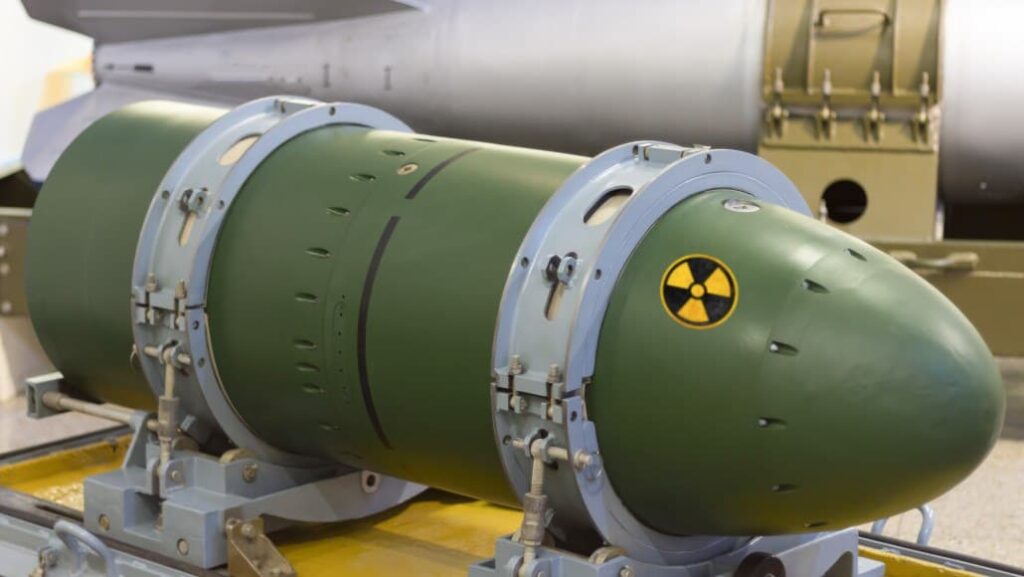
In an interview published on May 21 by the website “Diplomacy,” Ahmad Bakhshayesh Ardestani, a former member of the Iranian parliament, reaffirmed Iran’s pursuit of nuclear weapons.
This assertion comes in the wake of a tragic helicopter crash that killed Iranian President Ebrahim Raisi and Foreign Minister Hossein Amir-Abdollahian, adding a somber backdrop to the already tense geopolitical situation.
Bakhshayesh Ardestani emphasized the strategic necessity of nuclear arms for Iran’s diplomatic resilience. He argued that had Iran achieved military nuclear capability earlier, the challenges faced by Amir-Abdollahian in foreign policy over the past two and a half years could have been mitigated. He stated, “Based on the experiences from the Zarif-era and the late Amir-Abdollahian, it is essential to acquire nuclear weapons as soon as possible to provide a robust backing for future foreign ministers in diplomacy.”
The former MP underscored the disparity in international negotiations with nuclear-armed states. Citing former U.S. Secretary of State Mike Pompeo, Bakhshayesh Ardestani highlighted that countries like North Korea face different diplomatic dynamics due to their nuclear status. This remark illustrates Iran’s belief in the strategic leverage provided by nuclear weapons.
Wary of facing pushback from its warmongering in the #MiddleEastConflict, #Iran's regime has sent another official to play the nuclear extortion card, hinting that its Supreme Leader may reconsider his fatwa and pursue nuclear weapon production. pic.twitter.com/NR14AOpObd
— NCRI-FAC (@iran_policy) April 9, 2024
Recent statements by Iranian officials have further fueled concerns. On May 10, Bakhshayesh Ardestani suggested that Iran might already possess nuclear weapons, although this has not been officially confirmed. He explained that while Iran’s executive policy may include atomic armament, the official stance remains aligned with the Joint Comprehensive Plan of Action (JCPOA).
Despite persistent calls from the European Union, the United States, and the International Atomic Energy Agency (IAEA) for Iran to cease its nuclear ambitions, Tehran continues to employ atomic blackmail. This tactic is perceived as a means to secure political and strategic concessions from the West.
Kamal Kharazi, head of the Strategic Council on Foreign Relations and advisor to Supreme Leader Ali Khamenei, reinforced this stance in an interview with Al Jazeera Mubasher. He declared, “We have no decision to produce nuclear bombs, but if Iran’s existence is threatened, we will be forced to change our nuclear doctrine.” This sentiment was echoed by Mahmoudreza Aghamiri, a state-affiliated nuclear expert, who noted that while building a nuclear bomb is currently forbidden by a religious fatwa, this could change if the Supreme Leader’s stance evolves.
Since the early 2000s, following revelations by the Iranian Resistance about Iran’s secret nuclear weapons program, Tehran has oscillated between overt threats and covert negotiations. This dual strategy aims to fortify its position and extract concessions while navigating severe internal and international pressures. In summary, Iran’s renewed emphasis on nuclear weapons continues to stir international anxiety. The regime’s persistent threats and ambiguous policies reflect its strategy to leverage atomic capability as a diplomatic tool, despite global calls for disarmament and peaceful negotiation.

MEK Iran (follow us on Twitter and Facebook), Maryam Rajavi’s on
her site, Twitter & Facebook, NCRI (Twitter & Facebook),
and People’s Mojahedin Organization of Iran – MEK IRAN – YouTu