
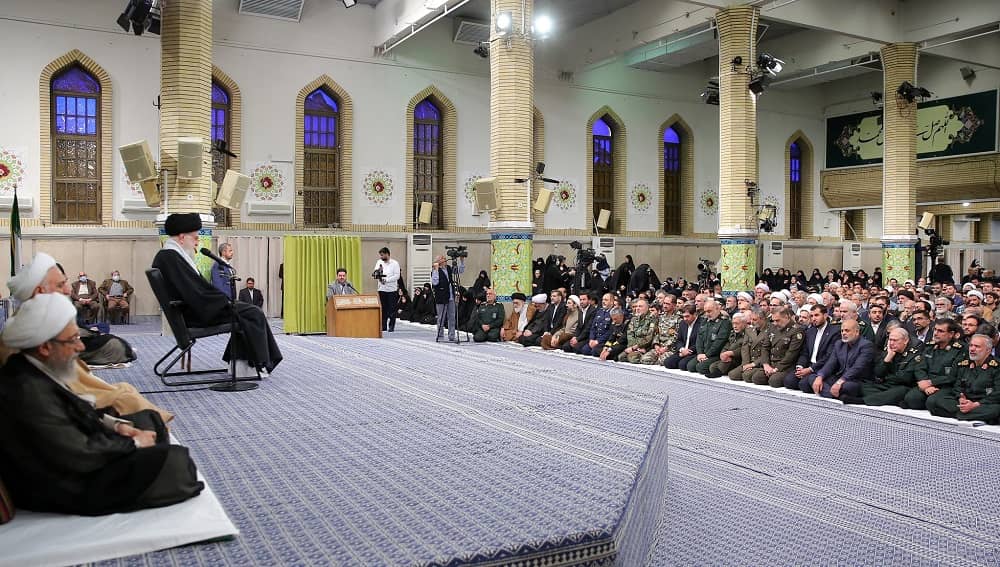
In the wake of a tragic helicopter crash that claimed the lives of Iran’s President Ebrahim Raisi and several high-ranking officials, Supreme Leader Ali Khamenei is focused on demonstrating stability and quelling concerns among internal factions and foreign allies.
With the deaths of senior figures, including Raisi, Khamenei promptly reassured the nation, stating, “The Iranian people should not worry; there will be no disruption in the country’s affairs.” This swift move underscores his determination to maintain order amidst political upheaval.
Transition of Power
Under Article 131 of Iran’s constitution, First Vice President Mohammad Mokhber was temporarily appointed to assume the presidential duties. Khamenei mandated that a new presidential election be held within 50 days, setting the stage for a rapid political transition. This constitutional provision ensures continuity, addressing potential power vacuums and demonstrating the regime’s preparedness for unforeseen crises.
Potential Candidates Emerge
The upcoming election has ignited global speculation about potential candidates. Among the names floated by media close to Khamenei are Mohammad Mokhber, Parliament Speaker Mohammad Bagher Ghalibaf, Tehran Mayor Alireza Zakani, and Saeed Jalili of the Supreme National Security Council.
#Raisi’s Death Cripples Khamenei’s Decade-Long Project to Maintain Rule over #Iran https://t.co/ibcs5oMwbB
— NCRI-FAC (@iran_policy) May 22, 2024
Despite facing corruption allegations, figures like Ghalibaf and Zakani remain politically viable, having avoided significant legal obstacles. This pattern highlights Khamenei’s strategy of consolidating power within a trusted inner circle, a tactic evident in previous parliamentary and presidential elections.
Historically, reformist and moderate candidates have struggled against Khamenei’s tight control. Notable figures such as former President Hasan Rouhani and former Foreign Minister Mohammad Javad Zarif face significant barriers, including disqualification and political marginalization. Rouhani’s exclusion from the Assembly of Experts election and Zarif’s strategic withdrawal from the political arena illustrates the diminishing influence of moderate factions.
The #Iranian regime's power consolidation plan crumbles under the weight of its own shortcomings.https://t.co/ErwiobZpJO
— NCRI-FAC (@iran_policy) May 27, 2023
Former President Mahmoud Ahmadinejad, known for his unpredictable nature, is unlikely to gain approval due to his contentious history and ongoing legal issues involving his associates. Similarly, despite their past prominence, other potential candidates like Ali Shamkhani and Mohsen Rezaei have been tainted by corruption scandals and political conflicts.
Khamenei’s Strategy for Power Consolidation
Khamenei’s approach to consolidating power involves neutralizing potential rivals and ensuring loyalty within his ranks. The regime faces substantial internal challenges, including recent uprisings, labor strikes, and economic instability. Internationally, Iran navigates complex issues such as the nuclear crisis and regional tensions, further complicating its strategic landscape. Khamenei’s unwavering strategy centers on maintaining a tight grip on power, which inevitably pits the regime against domestic opposition and international scrutiny.
The extremist regime in #Iran doesn’t eat its children—it devours itselfhttps://t.co/XZu1kg73A1
— NCRI-FAC (@iran_policy) August 16, 2023
Conclusion
As Iran prepares for a critical presidential election, Khamenei’s actions reflect a calculated effort to stabilize the regime and reaffirm his control. The political landscape remains fraught with challenges, but Khamenei’s decisive maneuvers signal his commitment to steering the country through turbulent times. Whether this approach will ensure long-term stability or precipitate further conflict remains to be seen. However, the immediate focus is clear: a seamless transition and the consolidation of power within Iran’s highest echelons.

MEK Iran (follow us on Twitter and Facebook), Maryam Rajavi’s on
her site, Twitter & Facebook, NCRI (Twitter & Facebook),
and People’s Mojahedin Organization of Iran – MEK IRAN – YouTu