
In a remarkable wave of defiance against Iran’s authoritarian regime, rebellious youth across the country have intensified their protests against new repressive measures targeting women and girls.
This uprising comes in response to a series of draconian rules aimed at curbing women’s freedoms, particularly concerning the enforcement of strict hijab laws.
Reports and videos flooding in from Iran depict security forces harshly enforcing these regulations, with numerous instances of harassment against those who resist compliance. The regime’s oppressive tactics are widely viewed as attempts to suppress dissent and mask its failures and setbacks, both domestically and regionally.
Recent days have seen a surge in targeted actions by young protestors, aiming to dismantle the regime’s symbols of oppression. For example, on April 16, Tehran witnessed an audacious attack on the Quds Complex, known for its role in the suppression of women. Explosions were heard, sending a clear message of resistance against the regime’s authoritarian policies.
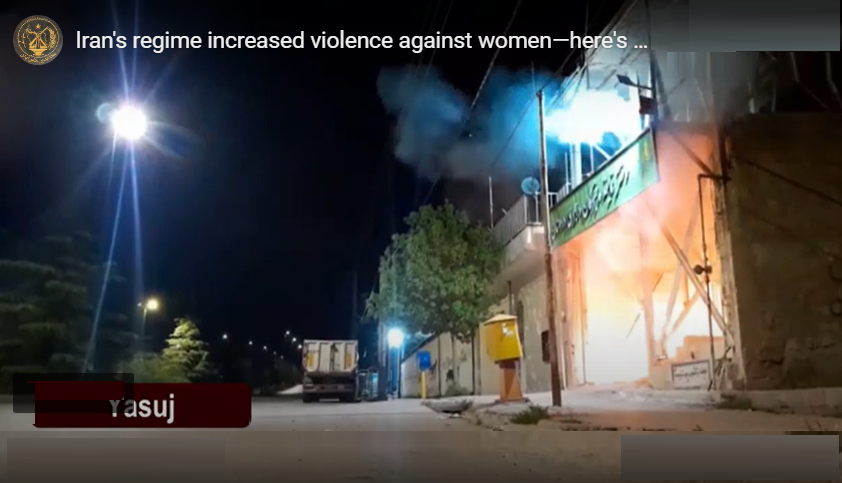
That same day, in Yasuj, southwest Iran, protestors set fire to the office entrance of Sharafeddin Malek Hosseini, a regime official involved in the suppression of women’s rights . Moreover, the unrest has expanded beyond attacks on oppressive infrastructure. On April 13, in Shiraz, youthful dissidents targeted a naval base of the Revolutionary Guards with explosives, signaling a broader rejection of the regime’s control mechanisms. Similarly, attacks occurred in Kermanshah and Talesh, where local regime-associated facilities were targeted.
The regime’s newly enacted regulations, effective from April 13, grant extensive powers to security forces, allowing them to arrest, fine, and punish those who defy the strict dress code.
This has escalated violence and heightened public outrage, particularly as the violence disproportionately targets women, who have been at the forefront of the fight for freedom in Iran.
This ongoing resistance also ties into broader grievances, including the regime’s treatment of kolbars—impoverished porters in the Kurdish regions. These individuals often face lethal force from security personnel while trying to earn a living under severe conditions. In a show of solidarity and resistance, youth groups have also targeted regime centers linked to the suppression and exploitation of kolbars.
As Iran grapples with significant military losses in the Middle East and fails to quell internal protests, the actions of its rebellious youth are seen as pivotal in challenging the regime’s authority and highlighting its inability to stifle the quest for freedom and equality in the country. Today, their unyielding spirit continues to inspire and mobilize various segments of Iranian society, signaling a potent and enduring challenge to the regime’s repressive measures.

MEK Iran (follow us on Twitter and Facebook), Maryam Rajavi’s on her site, Twitter & Facebook, NCRI (Twitter & Facebook), and People’s Mojahedin Organization of Iran – MEK IRAN – YouTu