
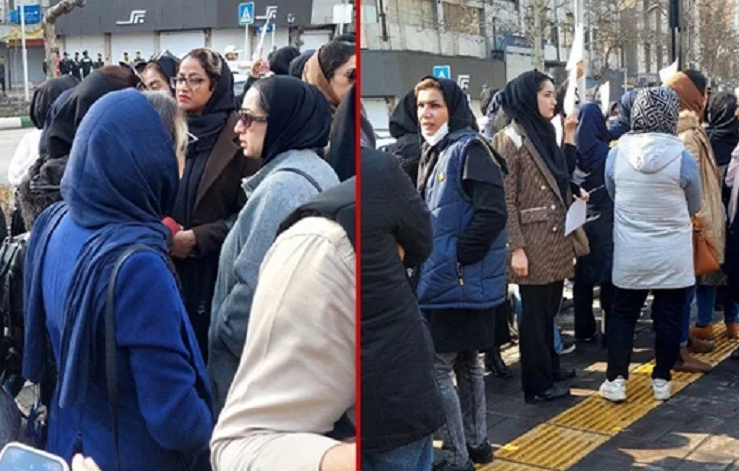
Iran is facing a new wave of public protests as citizens from different social and professional backgrounds take to the streets to express their mounting frustration over economic hardship, corruption, and social injustice.
On February 15, demonstrations erupted in several cities and provinces, highlighting the widespread discontent among Iranians struggling with deteriorating living conditions and government neglect. In the capital, Tehran, protests broke out in multiple locations, reflecting the grievances of different societal groups. Oil industry retirees gathered outside the Ministry of Oil to demand unpaid financial entitlements, stressing that their worsening economic situation, coupled with skyrocketing prices, has made survival increasingly difficult. Their protest underscores the broader economic collapse gripping the nation.
University of Tehran students also defied strict security measures to stage a demonstration outside the Central Library, demanding justice for a fellow student allegedly murdered by security forces. Their chants, such as “A student prefers death over humiliation” and “The blood that is spilled cannot be erased by anything,” echoed their demand for safety and accountability in an increasingly repressive environment.
February 15—Tehran, Iran
Retirees of the oil industry rally in front of the oil ministry, protesting unpaid pensions.#IranProtestspic.twitter.com/VvHdaIg3pr— People's Mojahedin Organization of Iran (PMOI/MEK) (@Mojahedineng) February 15, 2025
Meanwhile, candidates for master’s and doctoral entrance exams held their fourth protest in front of the National Organization of Educational Testing, urging authorities to revise exam schedules. Representing over 11,000 students, they decried what they termed as negligence in handling their futures, demanding swift reforms.
Mashhad, Iran’s second-largest city, witnessed two major protests. Nurses and emergency medical staff gathered outside the University of Medical Sciences and Imam Reza Hospital, demanding overdue wages, improved working conditions, and fair compensation for their sacrifices. Simultaneously, taxi drivers demonstrated in Shohada Square, denouncing poor public transportation policies, rising operational costs, and government indifference to their plight.
The wave of discontent was not confined to large urban centers. In Kerman, telecommunications contract workers launched a strike over unpaid wages and healthcare cost increases, emphasizing the growing economic strain on middle-class workers. In Mazandaran province, health workers (Behvarzan) protested poor living conditions and salary disparities.
February 15—Tehran, Iran
More footage of the ongoing protest rally by students of Tehran University despite heavy presence of security forces. Students are protesting the murder of a fellow student by security forces.#IranProtestspic.twitter.com/4zFn7ymzZw— People's Mojahedin Organization of Iran (PMOI/MEK) (@Mojahedineng) February 15, 2025
Meanwhile, in Ramhormoz, villagers from Zaraghli protested in front of the governor’s office against the planned seizure of their agricultural lands by the Endowment Organization. “Why do you deprive the poor of their land and build villas for the wealthy?” they asked, highlighting concerns about land appropriation benefiting the elite at the expense of local farmers.
The protests come amid an economic meltdown fueled by government mismanagement, corruption, and international sanctions. Inflation continues to soar, unemployment is rampant, and the Iranian rial has plummeted, trading at over 92,000 tomans per US dollar. Many Iranians blame the regime for prioritizing foreign military interventions, nuclear ambitions, and regional militias over domestic welfare.
February 15—Ramhormoz, southwest Iran
Residents of Zaraghli village rally in front of the governorate of Ramhormoz, protesting the government's plan to confiscate their lands.#IranProtests pic.twitter.com/Yj1Ft7Cq53— People's Mojahedin Organization of Iran (PMOI/MEK) (@Mojahedineng) February 15, 2025
As discontent spreads, the Iranian government faces growing pressure to address public grievances. However, with continued crackdowns and economic decline, the protests signal an escalating challenge to the regime’s authority, raising questions about the country’s future stability.

MEK Iran (follow us on Twitter and Facebook), Maryam Rajavi’s on her site, Twitter & Facebook, NCRI (Twitter & Facebook), and People’s Mojahedin Organization of Iran – MEK IRAN – YouTu