
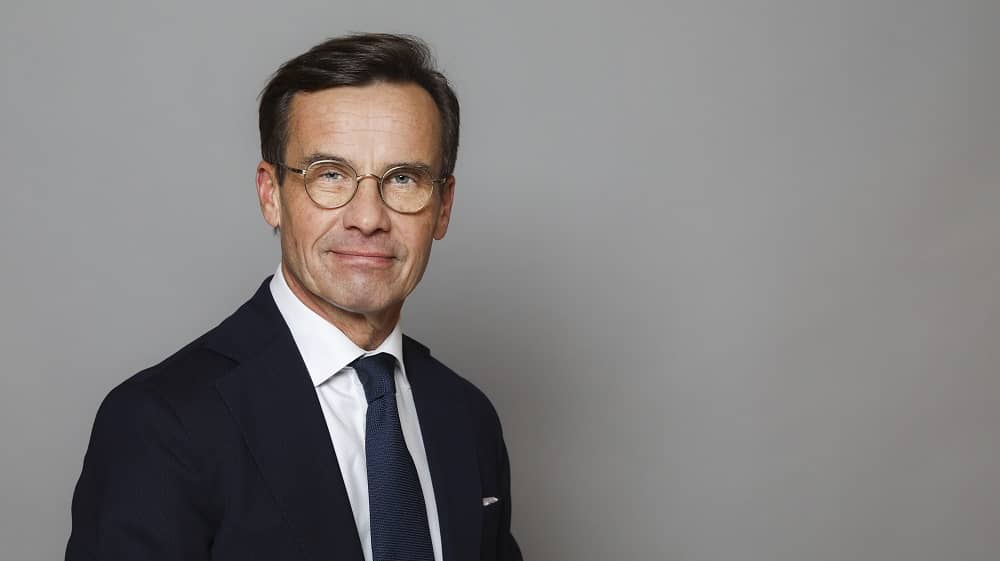
Swedish Prime Minister Ulf Kristersson
Swedish Prime Minister Ulf Kristersson has accused Iran of employing organized criminal gangs to carry out proxy attacks within Sweden, describing these actions as part of a broader hybrid warfare strategy. Speaking at the Folk och Försvar (People and Defense) conference on January 13, Kristersson highlighted the escalating threat to Sweden’s national security, stating, “Iran is using organized and violent criminal gangs to carry out serious attacks within Sweden.”
The Prime Minister underscored the unique nature of these threats, noting, “Sweden is not at war. But there is no peace either.” He emphasized that hybrid attacks—executed through cyber operations, disinformation, economic sabotage, and criminal proxies—pose significant challenges to national stability. Kristersson’s remarks align with findings from Sweden’s Security Service (Säpo), which in 2024 reported evidence of the Iranian regime’s involvement in recruiting Swedish gang members, including minors, to perpetrate violence.
These revelations come amid rising tensions in the Baltic Sea region, where hybrid threats have increasingly targeted critical infrastructure. Sweden has experienced undersea cable damage in recent months, though officials have refrained from directly assigning blame. Nonetheless, Kristersson warned of “hostile intentions” and advocated for long-term defensive strategies, asserting, “Those who want peace must be prepared for war.”
Tehran’s Spy Arrested in Sweden: A Grim Reminder of Rooted Terrorism in Europe#Iran #ProsecuteRaisiNOW
https://t.co/249GnKoyDA— NCRI-FAC (@iran_policy) September 25, 2021
Analysts interpret Iran’s actions as part of a broader strategy to exert influence through unconventional means while maintaining plausible deniability. Tehran has been accused of leveraging criminal networks and terrorist proxies globally to destabilize adversaries. These methods reflect an effort to advance geopolitical objectives without engaging in direct conflict.
Kristersson’s condemnation marks a significant shift in Sweden’s stance, with the Prime Minister explicitly identifying Iran’s role in these hybrid operations. His remarks signal an urgent call for vigilance and coordinated action to counter the multifaceted threats posed by proxy actors.
The international community has increasingly scrutinized Iran’s hybrid warfare tactics, which include cyberattacks, disinformation campaigns, and the use of criminal elements abroad. Scandinavian nations, in particular, have faced heightened pressure from these covert operations, prompting greater regional cooperation to address shared security challenges.
As Sweden strengthens its defensive posture, Kristersson’s statements serve as a stark reminder of the evolving nature of modern warfare, where battles are fought not just with weapons but with influence, deception, and the exploitation of vulnerabilities within open societies.

MEK Iran (follow us on Twitter and Facebook), Maryam Rajavi’s on her site, Twitter & Facebook, NCRI (Twitter & Facebook), and People’s Mojahedin Organization of Iran – MEK IRAN – YouTu