
The fall of Bashar al-Assad’s regime in Syria has marked a pivotal moment in the Middle East, dealing a severe blow to Iran’s regional influence. For decades, Tehran has leveraged proxy forces and interventionist policies to maintain a strategic foothold in the region, but the collapse of its dominance in Syria has profoundly altered the balance of power.
Combined with Iran’s worsening internal crises—an economic collapse, escalating social discontent, and a population increasingly disillusioned with the regimethe situation has become precarious for Tehran. Amid these challenges, Iran’s leadership has turned to its nuclear program as a lifeline, seeking to offset its regional losses with a show of power. Analysts observe that Tehran has intensified its pursuit of nuclear weapons, viewing them as a critical bargaining chip for survival.
NCRI Report: Locations and Details of #Iranian Regime’s #Nuclear Detonator Development Siteshttps://t.co/0SoF3ZmmUQ
— NCRI-FAC (@iran_policy) December 20, 2024
This troubling development was underscored on December 20, 2024, during a press conference by the National Council of Resistance of Iran (NCRI) in Washington. The NCRI presented evidence of Iran’s efforts to develop detonators essential for nuclear explosions, underscoring the regime’s relentless push toward weaponization.
The Failure of Appeasement
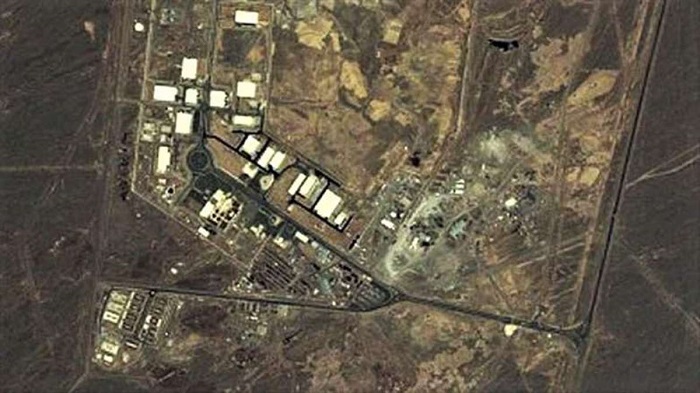
The international community’s approach to Iran’s nuclear ambitions has been marked by a history of missed opportunities. Since the NCRI first exposed Iran’s covert nuclear activities in 2002, including its Natanz uranium enrichment site and Arak heavy water facility, Western powers have largely pursued a strategy of negotiation and concessions. This policy of appeasement, while aimed at curbing Iran’s nuclear advancements, has instead provided Tehran with the time and cover to progress its program.
Despite repeated warnings and detailed intelligence from opposition groups, Iran has consistently exploited diplomatic talks to further its nuclear goals. The recent revelations highlight a sobering truth: the regime’s nuclear ambitions are not a negotiation tactic but a cornerstone of its survival strategy. The evidence presented by the NCRI confirms that Iran’s focus on weaponization has reached a critical stage, leaving no room for complacency.
NCRI Exposes #Iranian Regime’s Accelerated #Nuclear Weaponization at Washington DC Conferencehttps://t.co/0iLV1MbET4
— NCRI-FAC (@iran_policy) December 20, 2024
A Call for Decisive Action
With Iran closer than ever to achieving nuclear capability, the international community faces a defining moment. The path forward must include:
- Reinstating Sanctions: Swift reactivation of the Snapback Mechanism under UNSC Resolution 2231 to impose comprehensive sanctions on Iran.
- Rigorous Inspections: Enhanced international oversight to ensure transparency in Iran’s nuclear activities.
- Support for Regime Change: Backing democratic resistance groups like the NCRI and MEK Resistance Units, which offer a viable alternative to the current regime.
NCRI has long warned about the #Iranian regime’s secret nuclear weaponization. Since 2004, it has exposed METFAZ's role in explosive chambers at Parchin. Decades later, METFAZ remains central to #Tehran's nuclear ambitionshttps://t.co/EiJenArCtmhttps://t.co/3z7ZiPGfWB
— NCRI-FAC (@iran_policy) December 21, 2024
Ultimately, ending the nuclear threat requires addressing its root cause: the Iranian regime itself. Empowering the Iranian people and their organized resistance offers the best chance for a peaceful and democratic future, free from the specter of nuclear escalation.

MEK Iran (follow us on Twitter and Facebook), Maryam Rajavi’s on her site, Twitter & Facebook, NCRI (Twitter & Facebook), and People’s Mojahedin Organization of Iran – MEK IRAN – YouTu