
The recent appointment of Mohammad Javad Zarif as Strategic Affairs Advisor to President Masoud Pezeshkian has sparked a political maelstrom, revealing deep fissures within Iran’s ruling system.
At the heart of the controversy lies a 2021 law barring individuals with close family members holding dual citizenship from assuming sensitive government roles. Zarif’s children, who hold U.S. citizenship, make his appointment a direct violation of this legislation, creating a storm of opposition from factions within the regime.
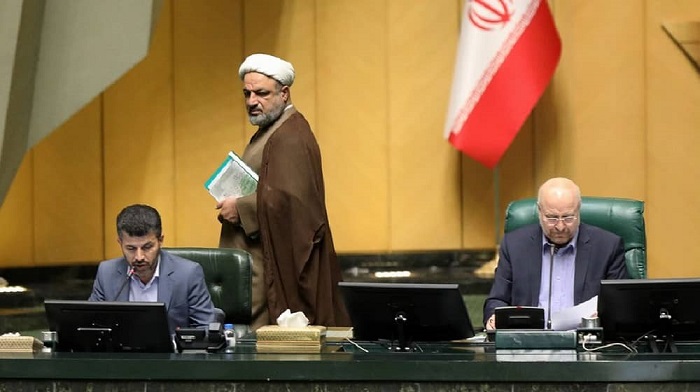
This legal dispute, however, masks a more profound power struggle. The Supreme Leader Ali Khamenei’s reported approval to amend the dual citizenship law has done little to quell tensions. Parliament Speaker Mohammad Bagher Ghalibaf has labeled Zarif’s appointment “illegal,” promising legal action, while Khamenei’s office remains ambiguous, neither confirming nor denying the amendment’s legitimacy. Critics speculate that Khamenei’s silence may be a tactical move to test factional reactions or manage growing discord.
Factional Feud Escalates in #Iran Over Zarif Appointment Amid Domestic and Regional Criseshttps://t.co/iO5uhIMyvv
— NCRI-FAC (@iran_policy) October 23, 2024
Zarif, who resigned briefly in August amid mounting criticism, returned to his role in September, reportedly after securing backing from Pezeshkian and meeting with Khamenei. This reversal has exacerbated public and political outrage, with extremist MPs like Hamid Rasaee accusing Zarif of mocking Parliament and flouting the law. Heated exchanges in Parliament underscore the bitterness fueling this dispute, with some MPs voicing frustration over the relentless attacks on Zarif.
The controversy highlights broader challenges with the 2021 dual citizenship law. Initially enacted to consolidate Khamenei’s faction’s control, the law now acts as a double-edged sword, ensnaring officials from all factions. Critics argue it excludes skilled individuals from governance, while supporters claim loosening its restrictions could open the floodgates for foreign influence.
Rivalry Intensifies Among #Iranian Regime Factions with Pezeshkian’s New Cabinethttps://t.co/fvhiWitPcP pic.twitter.com/7VAwhuWdJg
— NCRI-FAC (@iran_policy) August 11, 2024
Parliamentary liaison Shahram Dabiri has suggested amendments to focus the law solely on the individual, not their family members, but this proposal has only added to the debate. The law’s inconsistencies, illustrated by its potential impact on figures like Zainab Soleimani, daughter of General Qassem Soleimani, underline its divisive nature.
The crisis surrounding Zarif is emblematic of a regime grappling with internal rivalries and systemic fragility. While framed as a legal issue, it serves as a proxy for the factional struggles destabilizing Iran’s clerical establishment. As tensions rise, Zarif’s role—and the broader implications of his appointment—serve as a stark reminder of the regime’s deepening instability in the face of mounting internal and external pressures.
As various regime factions desperately try to deceive people into participating in the upcoming sham #elections, remember this: On Aug 21, 2019, months before the 2019 uprising, then-FM Javad Zarif claimed the majority support the clerical dictatorship, citing over 70% turnout. pic.twitter.com/RuA0vIKfpd
— NCRI-FAC (@iran_policy) June 20, 2024

MEK Iran (follow us on Twitter and Facebook), Maryam Rajavi’s on her site, Twitter & Facebook, NCRI (Twitter & Facebook), and People’s Mojahedin Organization of Iran – MEK IRAN – YouTu