
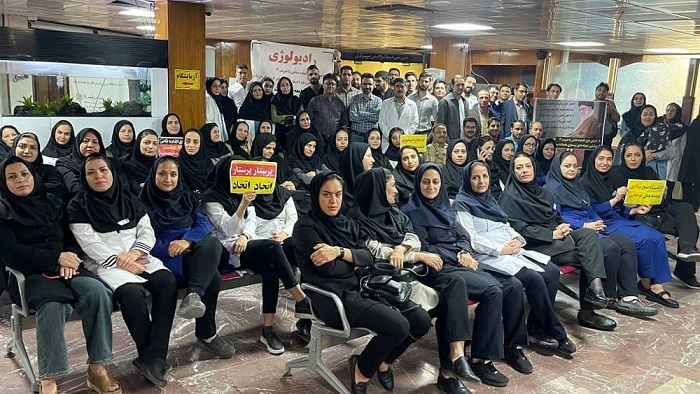
Amid rising economic turmoil and unfulfilled promises, Iran is witnessing a surge of protests from diverse labor groups, spanning healthcare professionals, oil workers, loggers, and retirees.
The recent protests, which swept across the country on November 5, 2024, underscore a growing demand for systemic reform and fair treatment for Iran’s working class and vulnerable populations. In Yazd, central Iran, nurses from Sadoughi Hospital and other healthcare facilities spearheaded strikes demanding improved wages and working conditions.
The action has significantly disrupted hospital services, with only emergency procedures being conducted. Protesters rallied with slogans like “Enough with empty promises; our tables are empty” and “Where did our pay go? Into whose pockets?” expressing anger over stagnant pay and unmet financial commitments from authorities. This unrest in healthcare is echoed across the nation, as workers in Shiraz’s medical sector held similar rallies, demanding increased pay and improved support, critical amid worsening inflation.
November 5—Shiraz, southern Iran
Nurses continue their protests, demanding higher wages and better working conditions.#IranProtests pic.twitter.com/mxUtKu5wBZ— People's Mojahedin Organization of Iran (PMOI/MEK) (@Mojahedineng) November 5, 2024
Economic hardship and safety concerns have also mobilized oil and gas workers in Ahvaz, who protested against inadequate wages and working conditions. Employees of Arvand Oil & Gas Company joined in demanding fair compensation and safer work environments in an industry essential to Iran’s economy. These protests reflect a growing frustration among oil sector workers who feel overlooked despite the sector’s pivotal role in sustaining the country.
November 5—Iran
Contract workers of South Pars Gas Company hold 14th week of rallies to protest wages and poor working conditions and lack of response by authorities.#IranProtests pic.twitter.com/L2X59stanc— People's Mojahedin Organization of Iran (PMOI/MEK) (@Mojahedineng) November 5, 2024
The economic challenges extend beyond healthcare and energy sectors. In Zanjan, loggers voiced concerns over financial strain, while in Ilam, road maintenance workers protested eight months without formal contracts and cuts to their salaries. With stagnant wages and shrinking job security, workers are increasingly vocal, advocating for government attention to their deteriorating conditions. Meanwhile, in Bushehr, nurses rallied against unpaid wages, further fueling discontent as inflation erodes living standards.
November 5—Yazd, central Iran
Fourth day of protests by nurses, demanding better working and living conditions.#IranProtestspic.twitter.com/t0z5gVcV8O— People's Mojahedin Organization of Iran (PMOI/MEK) (@Mojahedineng) November 5, 2024
The government’s response to unrest has been firm. In a recent incident on November 3, security forces raided a residence in Golshahr, Sistan and Baluchestan, resulting in casualties and arrests, highlighting tensions between authorities and ethnic communities. This forceful approach has drawn criticism, with claims of discriminatory practices worsening societal divisions.
November 5—Ahvaz, southwest Iran
Employees of the Arvand Oil & Gas Company rally to protest poor working conditions and low wages.#IranProtests pic.twitter.com/xjMhy0rA6x— People's Mojahedin Organization of Iran (PMOI/MEK) (@Mojahedineng) November 5, 2024
Retirees, another marginalized group, joined the protests in cities like Kermanshah, Isfahan, and Shiraz, decrying poor pensions and insufficient social services. Their chants of “No more war; we need lasting welfare” capture the broad sentiment of disillusionment and demand for a stable livelihood. This wave of protests across Iran reveals an urgent need for economic reform and government accountability, as the population’s patience wanes amid worsening economic and social challenges.
