
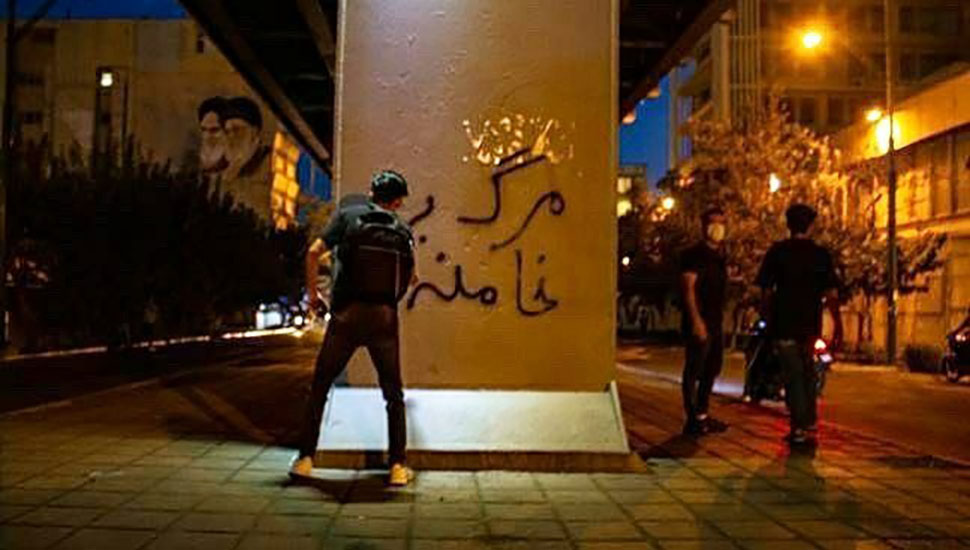
On September 16, 2022, the tragic death of Mahsa Zhina Amini at the hands of Iranian security forces triggered a nationwide uprising that has since left an indelible mark on Iran’s social and political landscape.
This rebellion, driven by public outrage over Amini’s death, was not just a reaction to a single incident but the culmination of years of frustration, inequality, and repression. The protests of 2022, which spanned over 282 cities, resulted in at least 750 deaths and 30,000 arrests, according to the People’s Mojahedin of Iran (PMOI/MEK). The uprising was not an isolated event but the continuation of previous protests from December 2017 and November 2019, marking a significant moment in Iran’s struggle for freedom and democracy.
One of the most profound realizations from the 2022 uprising is the exposure of the Iranian regime’s vulnerability. The clerical regime, which has long portrayed itself as stable and powerful through its military and nuclear ambitions, was revealed to be a regime sitting on a powder keg. Despite the regime’s propaganda efforts, the unrest demonstrated that the era of revolution in Iran is far from over, with the country’s population continuing to resist oppression in the face of brutal repression.
The uprising carried the powerful slogan, “Death to the oppressor, be it the Shah or the Mullahs,” clearly articulating the people’s desire for an end to all forms of dictatorship. The protests were a rallying cry for a new political order, rejecting both the authoritarian rule of the past and the current regime.
A key aspect of the movement was the prominent role played by women. Brave women and girls led protests across the country, making the slogan “Woman, Resistance, Freedom” resonate deeply with a population yearning for gender equality. The leadership of women in the uprising highlighted the broader democratic aspirations of the Iranian people, reinforcing the idea that equality and freedom are central to the revolution.
Despite the regime’s continued use of repression, censorship, and violence to stifle dissent, the factors that led to the 2022 uprising remain deeply entrenched. Economic hardship, inflation, and widespread poverty have fueled a constant wave of protests from various sectors of society, from retirees to workers. These protests go beyond economic grievances, reflecting broader demands for freedom and justice.
With organized resistance and the growth of Resistance Units across the country, the Iranian regime faces a growing challenge. Supreme Leader Ali Khamenei is acutely aware of the increasing unrest and the readiness of the population for another uprising. While the regime continues to employ brutal tactics, many believe that the seeds of democratic change planted in the 2022 uprising will eventually lead to the fall of the current regime. Two years after the death of Mahsa Amini, the legacy of the uprising continues to fuel hope for a future democratic republic in Iran.

MEK Iran (follow us on Twitter and Facebook), Maryam Rajavi’s on her site, Twitter & Facebook, NCRI (Twitter & Facebook), and People’s Mojahedin Organization of Iran – MEK IRAN – YouTu