
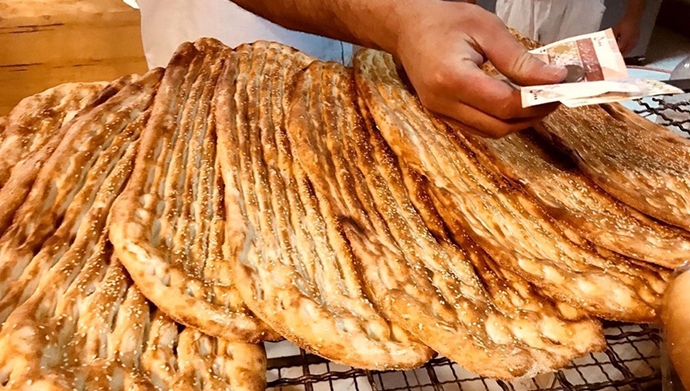
On September 9, state-run media outlets in Iran announced a significant increase in the prices of staple bread varieties, triggering widespread concern among a struggling population.
The cost of Lavash, Barbari, and Sangak bread in Tehran surged by 40 to 66 percent, exacerbating the hardships faced by the nation’s working class and rural farmers. This price hike is part of a broader economic decline that has gripped Iran over the past several months, marked by increasing instability and deceptive government practices.
According to the ISNA news agency, the price of Sangak bread jumped from 3,000 to 5,000 tomans, while Lavash bread made with first-grade flour rose from 5,000 to 7,000 rials. The price of Barbari bread, also made from government-subsidized flour, increased from 18,000 to 25,000 rials. Despite these figures, reports indicate that actual prices may be even higher than the official announcements, leaving many Iranians feeling deceived.
Government Exploitation of Farmers
The regime has been accused of buying wheat from farmers at artificially low prices, while simultaneously charging bakers and the public significantly more for the same wheat. Farmers, who have faced delayed payments for their crops, are struggling to make ends meet. According to a regime official from the Chamber of Commerce, the government reduced the approved price of wheat by 20,000 rials without justification, effectively taking billions of tomans from farmers.
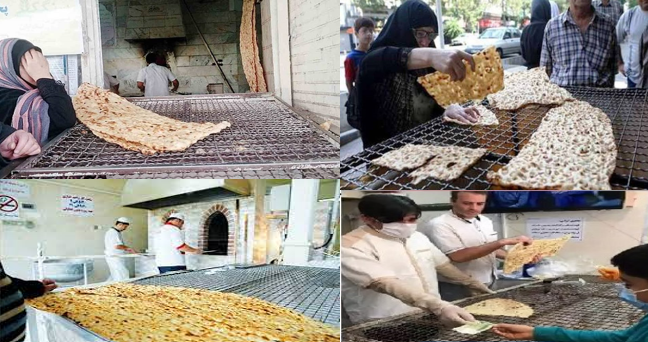
This sharp rise in bread prices comes against a backdrop of government exploitation of wheat farmers.
The situation has left many farmers in economic limbo. Despite promises to improve the payment structure, a portion of last year’s payments remains unsettled. Additionally, the government’s newly announced wheat price of 205,000 rials per kilogram for the upcoming agricultural year falls far below the 300,000 rials that farmers argue is necessary to cover their costs amidst rising inflation.
For many Iranian families living below the poverty line, bread has become the primary food staple as other essential items like meat, dairy, and vegetables have become unaffordable. The increase in bread prices threatens not only the livelihood of farmers but also the survival of millions who rely on it as their main source of sustenance.
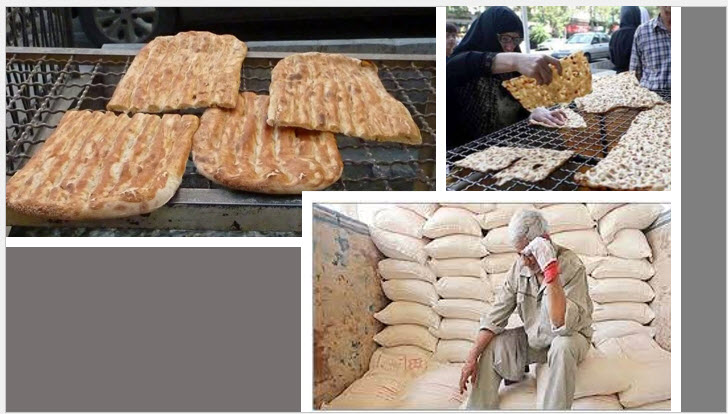
Bread as a Symbol of Survival
This rise in costs comes as various social groups retirees, workers, and laborers—have been staging protests across the country in response to economic injustices. The government’s failure to address these grievances, combined with the growing cost of necessities, is seen as further fueling unrest and setting the stage for more widespread demonstrations. As the economic situation worsens, the government’s actions appear to be stripping even the most basic means of survival from its people, intensifying dissatisfaction and paving the way for potential uprisings.

MEK Iran (follow us on Twitter and Facebook), Maryam Rajavi’s on her site, Twitter & Facebook, NCRI (Twitter & Facebook), and People’s Mojahedin Organization of Iran – MEK IRAN – YouTu