
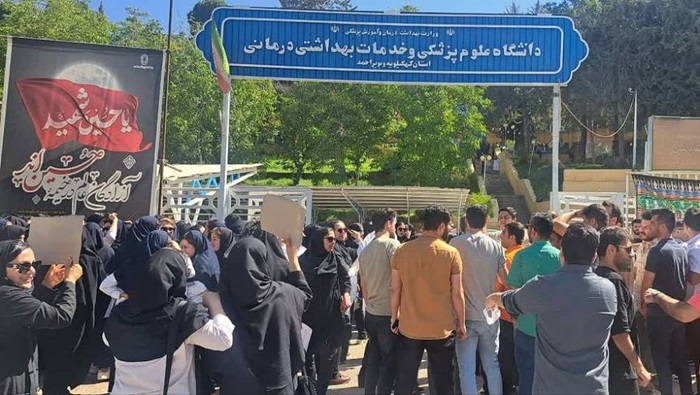
In a significant escalation of ongoing protests, nurses at Imam Reza Hospital in Mashhad gathered on Saturday, August 17, to demand better working conditions and fair pay, despite explicit threats from authorities.
Chanting slogans like “Inflation is in dollars, our salaries are in rials,” the nurses voiced their frustration with the severe economic disparities and deteriorating working conditions they face. The protests began on August 2, 2024, in the cities of Shiraz and Karaj, where nurses at multiple hospitals, including Kowsar, Imam Ali, and Shariati, walked out in a coordinated strike. The movement quickly spread to other regions, with nurses in cities such as Tabriz, Zanjan, Yazd, and Kermanshah joining the cause. Their demands center around the government’s failure to implement promised reforms, particularly concerning pay and working conditions.
In their demonstrations, nurses chanted slogans that highlighted the dissonance between their sacrifices during the COVID-19 pandemic and the lack of support from the government. Among the slogans were, “Enough with promises, our tables are empty,” and “We fought coronavirus, we saw no support.” The dissatisfaction is not limited to wages; nurses are also protesting against mandatory overtime and the incomplete implementation of the tariff law, which was supposed to enhance their financial stability but has yet to be fully realized.
Government authorities have responded to the growing unrest with repression rather than dialogue. Instead of addressing the nurses’ grievances, security forces were dispatched to intimidate and disperse the protesters. Reports from the regime’s newspaper, Hammihan, on August 11 indicated that 90 percent of nurses in Shiraz hospitals had stopped working, leading to threats of dismissal and other punitive measures by security agencies. The economic challenges facing nurses are part of a broader crisis affecting Iran’s healthcare sector.
Mohammad Sharifi Moghaddam, Secretary of the Nursing Home, highlighted the growing exodus of medical professionals from Iran, driven by inflation and poor working conditions. According to a report from the Strategic Studies Center of the Presidency, 73 percent of doctors and nurses have expressed a strong desire to emigrate due to the economic situation. Iranian opposition President-elect Maryam Rajavi of the National Council of Resistance of Iran (NCRI), praised the nurses for their resilience and dedication. She condemned the regime for its neglect and urged continued resistance against what she described as “religious fascism.”
As the protests continue to spread across the country, the Iranian government faces increasing pressure to address the healthcare crisis that has pushed its medical professionals to the brink. The ongoing strikes and protests serve as a powerful reminder of the mounting dissatisfaction within Iran’s critical public sectors, signaling broader discontent that could have significant implications for the regime’s stability.

MEK Iran (follow us on Twitter and Facebook), Maryam Rajavi’s on her site, Twitter & Facebook, NCRI (Twitter & Facebook), and People’s Mojahedin Organization of Iran – MEK IRAN – YouTu