

Iran’s nuclear program, touted by the regime as a critical solution to the nation’s energy demands, starkly contrasts with the daily struggles of its citizens, who endure frequent power outages and water shortages.
Iran’s nuclear program, touted by the regime as a critical solution to the nation’s energy demands, starkly contrasts with the daily struggles of its citizens, who endure frequent power outages and water shortages. Despite the government’s claims, the massive investments in nuclear infrastructure have failed to alleviate the country’s energy crisis, casting doubt on Tehran’s true intentions regarding its nuclear ambitions.
Over the past decade, the Iranian regime has funneled billions of dollars into its nuclear projects, with little to show in return. The Sirik nuclear power plant alone is projected to cost $20 billion and take nearly a decade to become operational. Meanwhile, the Bushehr nuclear power plant, the country’s only functioning reactor, generates just 3,000 megawatts—barely making a dent in the nation’s energy needs, which peak at over 73,000 megawatts.
In stark contrast, investing in renewable energy sources like solar and wind could offer a more cost-effective and timely solution to Iran’s energy crisis. The International Renewable Energy Agency (IRENA) reports that the global average cost of utility-scale solar photovoltaic (PV) systems has dropped to around $0.06 per kilowatt-hour (kWh) as of 2020. With Iran’s abundant sunlight, the country is well-positioned to harness solar energy at similar costs.
In light of @iaeaorg BoG resolution on the #Iranian regime's misconduct and failure to cooperate with the @UN watchdog, it's crucial to revisit over 3 decades of secretive activities and the NCRI's constant efforts to prevent a nuclear-armed pariah state.https://t.co/EiJenAsaiU https://t.co/lvD6qbumiY pic.twitter.com/qcXZLwOPO7
— NCRI-FAC (@iran_policy) June 5, 2024
For instance, a $20 billion investment in solar energy—equivalent to the funds allocated for the Sirik nuclear plant—could potentially install around 33 gigawatts (GW) of solar capacity. This would not only surpass the expected output of the Sirik plant but could also be deployed much faster. Solar installations typically take just a few years to become operational, compared to the nearly decade-long construction period for nuclear plants.
With the global average cost for onshore wind energy at about $1,300 per kilowatt (kW), a $20 billion investment could develop approximately 15 GW of wind capacity. This would provide significant energy to meet Iran’s needs, particularly in wind-rich regions like the northern areas near the Caspian Sea.
Investing in green energy would yield quicker returns, reduce environmental impacts, enhance energy security, and create thousands of jobs. Moreover, by diversifying its energy sources, Iran could lessen the risks associated with an over-reliance on any single form of energy production.
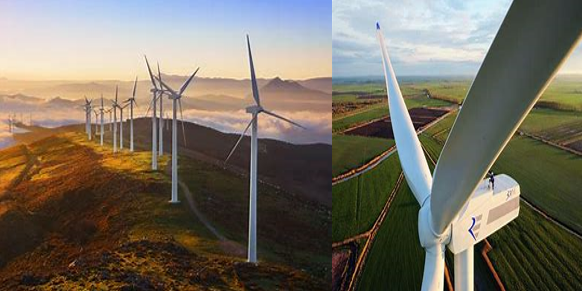
Wind energy presents another viable alternative.
Despite pouring billions into the Bushehr nuclear plant—estimated to have cost over $11 billion—the benefits to ordinary Iranians remain negligible. The regime’s nuclear ambitions have only brought poverty and suffering to the nation, with international sanctions further crippling the economy and decaying essential infrastructure. While the regime clings to power through repression and nuclear extortion, it continues to create intolerable conditions for its citizens, pushing them closer to the brink of desperation.

MEK Iran (follow us on Twitter and Facebook), Maryam Rajavi’s on her site, Twitter & Facebook, NCRI (Twitter & Facebook), and People’s Mojahedin Organization of Iran – MEK IRAN – YouTu