
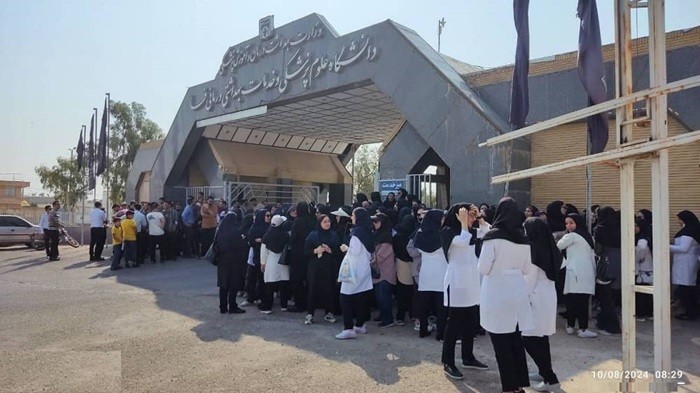
Iran is grappling with a significant wave of protests that have erupted nationwide, revealing deep-seated frustrations over social, economic, and political issues.
The demonstrations, which spread from the southern oil-rich regions to the bustling capital of Tehran, underscore the widespread discontent among various segments of Iranian society. In Tehran, a major rally organized by graduates of teacher training academies called attention to the government’s failure to fulfill promises of employment. These individuals, who have invested significantly in their education, are demanding the government honor its commitment to provide job opportunities. Their protest is emblematic of the broader issues facing young professionals in Iran, where high unemployment and underemployment rates are pervasive.
Meanwhile, in the provinces of Kohgiluyeh and Boyer Ahmad, residents of Yasuj staged a large protest in front of the provincial governorate. Their anger stems from an executive order to transfer the northern Dena region to Isfahan province—a move met with staunch opposition from local communities. The protesters argue that this decision disregards their cultural and administrative ties, further fueling regional tensions.
August 10—Asaluyeh and Kangan, southern Iran
Protest rally by employees of Pars Oil and Gas Company who demand changes to retirement rules, removing the salary ceiling, and other needs. #IranProtests pic.twitter.com/1dsTKIPfoL— People's Mojahedin Organization of Iran (PMOI/MEK) (@Mojahedineng) August 10, 2024
The situation in Iran’s energy sector is equally fraught. In Asaluyeh and Kangan, workers from the South Pars Oil and Gas Company, including those on offshore platforms, protested for better working conditions and improved retirement plans. Similarly, employees of the Continental Shelf Oil Company joined the protests, demanding fair treatment and safe working environments. These demonstrations reflect ongoing unrest in Iran’s vital energy sector, where workers have repeatedly called for better wages, job security, and safety standards.
In Chabahar, contract workers from Makrān Steel Company and Omran Sazan Company protested against precarious employment conditions, demanding job security and timely wage payments. The protests here highlight the vulnerability of contract workers across Iran, who often find themselves without adequate protection or recourse.
August 10—Shiraz, southern Iran
Sixth day of strikes by nurses in Shiraz, protesting poor work conditions, low wages, shortage of workforce, and destructive work-hour policies.#IranProtests pic.twitter.com/T686xoUJP1— People's Mojahedin Organization of Iran (PMOI/MEK) (@Mojahedineng) August 10, 2024
Further protests were seen in Harsin, Kermanshah, where bakers took to the streets to protest against frequent power outages, and in Khorasan Razavi province, where aqueduct owners demanded better water management policies amidst an ongoing drought. Both protests underline the critical infrastructural challenges that many Iranians face in their daily lives.
The healthcare sector has also been a hotbed of discontent, with nurses in multiple cities, including Shiraz, Zanjan, and Tabriz, staging strikes and protests. These healthcare workers are demanding better wages, improved working conditions, and an end to chronic staff shortages. Their actions have brought many state hospitals to a standstill, severely disrupting medical services.
The unrest is not confined to public demonstrations. In Iran’s prisons, two prominent student activists, Ali Younesi and Amirhossein Moradi, declared a hunger strike in protest against the execution of a political prisoner and the mistreatment of female inmates. Their actions have drawn attention to the harsh conditions within Iran’s penal system and the regime’s increasingly brutal tactics against dissent.
August 10—Yasuj, southwest Iran
The people of Kohgiluyeh and Boyer Ahmad province continue their protests in front of the provincial governorate, demanding the cancellation of an executive order for transferring northern Dena to Isfahan province.pic.twitter.com/IAhPfDMJWF— People's Mojahedin Organization of Iran (PMOI/MEK) (@Mojahedineng) August 10, 2024
The protests on August 10, 2024, reflect the mounting tensions within Iranian society, driven by economic hardships, political repression, and a demand for fundamental rights. As these demonstrations continue to unfold, they signal a growing determination among Iranians to challenge the status quo and push for significant change in the face of systemic oppression.