
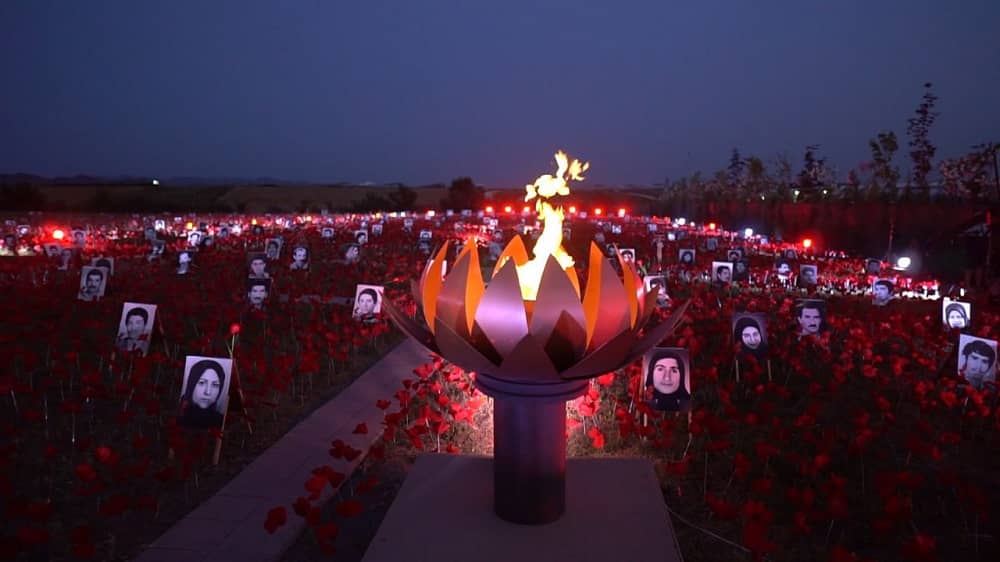
A recent report by Javaid Rehman, the UN Special Rapporteur on Human Rights in Iran, has brought renewed global attention to the 1988 massacre of political prisoners in Iran, labeling the atrocities as genocide and crimes against humanity.
This report marks a significant milestone in the decades-long quest for justice by the families of the victims and the Iranian resistance movement. In 1988, Iranian Supreme Leader Ruhollah Khomeini issued a chilling decree that led to the mass execution of thousands of political prisoners, primarily members and supporters of the People’s Mojahedin of Iran (PMOI/MEK). Khomeini’s handwritten order emphasized the need for swift execution of those loyal to the PMOI, intending to eradicate their ideals and existence. This massacre, which claimed the lives of an estimated 30,000 people, was carried out in secret, with bodies buried in unmarked mass graves. The regime sought to erase any trace of these individuals, denying families the right to mourn their loved ones.
For years, the Iranian regime has attempted to cover up these crimes. Still, the relentless efforts of survivors, families, and human rights activists have kept the memory of the victims alive. The UN General Assembly has repeatedly condemned Iran’s human rights violations, but Rehman’s report represents a turning point. It acknowledges the systematic nature of the 1988 killings and calls for international action to hold the perpetrators accountable.
The report categorically labels the 1988 massacre as an “atrocity crime,” including both genocide and crimes against humanity. Rehman’s findings highlight the deliberate intent behind the executions, pointing to Khomeini’s fatwa as undeniable evidence of genocidal intent. The fatwa explicitly called for the destruction of the PMOI as a religious group, framing their execution as a divine mandate.
In response to the report, the Iranian regime has reacted with hostility, with officials dismissing Rehman as a “paid mercenary” of the PMOI. This defensive stance underscores the regime’s fear of accountability as the international community increasingly recognizes the gravity of these crimes.
Rehman’s report urges the establishment of an international mechanism to investigate and prosecute those responsible for the 1988 massacre. It calls on UN member states to exercise universal jurisdiction to ensure thorough and impartial investigations. This global push for justice not only seeks to address the past but also aims to end the impunity that has allowed such crimes to continue.
در ادامه سیاست پوشاندن و از بینبردن آثار قتلعام و جنایت علیه بشریت و تعطیلی زندان گوهردشت، حکومت آخوندی با راهاندازی یک تور نمایشی شماری از عوامل خود را تحت عنوان خبرنگار به این زندان بعد از تخلیه برد.
خاطرنشان میشود زندان گوهردشت محل اعدام و شکنجه هزاران تن از فرزندان مجاهد… pic.twitter.com/e4gtH0BtvO— ایران ما (@iranema2017) August 17, 2023
The recognition of these mass killings as genocide and crimes against humanity is a pivotal moment in the justice-seeking movement. As the world demands accountability, the Iranian regime faces mounting pressure to confront its dark history and the persistent calls for justice from those it sought to silence.

MEK Iran (follow us on Twitter and Facebook), Maryam Rajavi’s on her site, Twitter & Facebook, NCRI (Twitter & Facebook), and People’s Mojahedin Organization of Iran – MEK IRAN – YouTu