
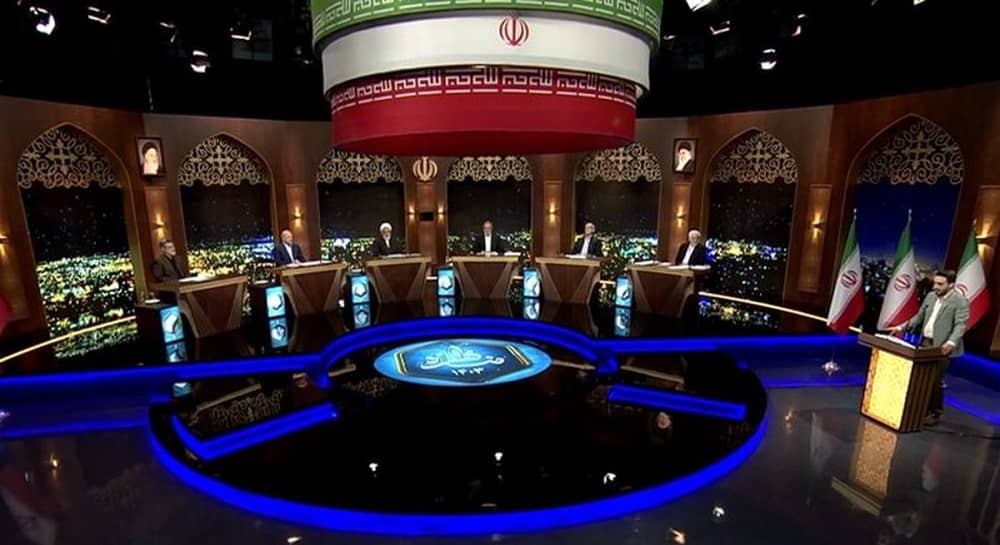
In the second political debate ahead of Iran’s presidential elections, Mostafa Pourmohammadi, a candidate and former Interior Minister, revealed startlingly about Saeed Jalili’s opposition to Iran joining the Financial Action Task Force (FATF).
According to Pourmohammadi, Jalili’s resistance was not based on policy concerns but on political maneuvering to prevent FATF approval under the administration of then-President Hassan Rouhani.Pourmohammadi recounted an incident from 2016 during a Supreme National Security Council meeting where he discussed the FATF at length. He revealed that Jalili supported the FATF when Pourmohammadi was in charge of its implementation but opposed it under other officials. This suggests Jalili’s stance was politically motivated rather than principled, sparking widespread reactions from various political figures and media outlets in Iran.
Abdolkareem Hasanzadeh, a member of the Iranian Parliament, sharply criticized Jalili, accusing him of holding the livelihoods of millions of Iranians hostage for political gain. “Such behavior transcends mere unethical conduct and is an unforgivable action against the Iranian people,” Hasanzadeh stated, demanding that Jalili explain his actions clearly.Former Communications Minister Mohammad-Javad Azari Jahromi also condemned Jalili’s stance, emphasizing the severe economic consequences of not joining the FATF. Jahromi questioned whether Jalili understood the impact of his actions on ordinary Iranians and whether such a mindset was suitable for managing the country.
#Iran News in Brief
According to @FATFNews, despite calls for action, Iran's regime remains on FATF's high-risk jurisdictions list due to significant anti-money laundering and #terrorism financing concerns.https://t.co/Y59U8MH6LT pic.twitter.com/gBxaIPksCx— NCRI-FAC (@iran_policy) February 24, 2024
The controversy over the FATF is deeply intertwined with the Iranian regime’s strategy to leverage terrorism as a tool for maintaining power and extracting concessions from the international community. Supreme Leader Ali Khamenei and top officials view funding proxy militant groups as essential for their survival. Approving the FATF would restrict these financial channels, weakening Tehran’s ability to project power through groups like the Houthis and Hezbollah. In February, the FATF announced that Iran would remain on its blacklist for money laundering, urging member countries to apply enhanced due diligence to their financial transactions with Iran. The group cited ongoing concerns about terrorist financing risks posed by Iran, threatening the integrity of the international financial system.
Pourmohammadi’s disclosure has drawn attention from other political figures as well. Abdollah Ramezanzadeh, former spokesman for Mohammad Khatami’s government, questioned whether Jalili’s actions constituted a betrayal of national interests. Yadollah Eslami, Secretary-General of the Islamic Parliamentarians Society, called for Jalili to be prosecuted, describing his actions as terrifying and destructive. Former President Hassan Rouhani had previously warned that failure to adopt FATF regulations would increase the cost of financial transactions for Iran by 20%, urging measures to counter the regime’s international isolation. Critics of the FATF within Iran argue that compliance would hinder financial support to Tehran’s proxy groups, which they view as “resistance movements.”
#FATF Remains Concerned With Terrorist Financing From #Iran. https://t.co/3x04htsHgV pic.twitter.com/WMYzPb08sP
— NCRI-FAC (@iran_policy) March 1, 2017
The debate over the FATF underscores the regime’s internal struggle between avoiding international scrutiny and sustaining its strategic priorities. Supreme Leader Ali Khamenei believes he can endure the costs of international isolation by relying on global inaction and Western appeasement, ensuring the regime’s survival through domestic repression and global terrorism. As the elections approach, the controversy over the FATF highlights the broader political and strategic conflicts within Iran.

MEK Iran (follow us on Twitter and Facebook), Maryam Rajavi’s on her site, Twitter & Facebook, NCRI (Twitter & Facebook), and People’s Mojahedin Organization of Iran – MEK IRAN – YouTu