

The re-emergence of Iran’s morality police, under the banner of the Noor Project, has escalated tensions and concerns over the infringement of personal and social freedoms, particularly targeting women who defy the mandatory hijab.
This renewed enforcement has not only stirred societal unease but also significantly impacted local businesses, as highlighted by the Etemad newspaper. A recent field report by Etemad in Tehran captures the growing discontent among shopkeepers who have observed a sharp decline in customer traffic, predominantly affecting women. “People are changing their routes to avoid encountering the morality police,” one shopkeeper lamented. “We constantly worry that they might seal our shops if they stop nearby.”
The deteriorating economic landscape compounds the problem, but shopkeepers emphasize that the presence of morality police has exacerbated the downturn. The fear of arrests and shop closures has deterred both sellers and buyers, reducing sales substantially. Another shopkeeper criticized the dire economic conditions, stating, “The economy is already bad, and these events have worsened it, reducing our sales by 20-30%.”
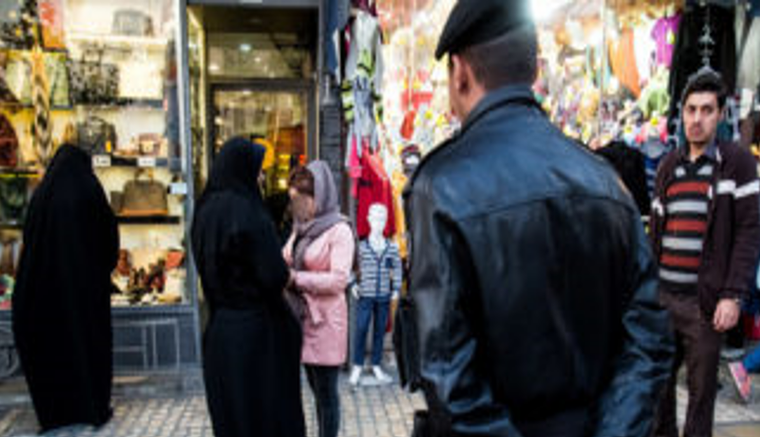
An elderly wholesaler recounts an incident where the head of the clothing union instructed him to “not allow unveiled women into the shop,” a directive deemed degrading and impractical.
Many vendors reported a drastic 60% drop in customer numbers, with no one daring to venture near areas patrolled by the morality police. One vendor shared a harrowing account: “When a customer tries to cross here, they are followed by a motorbike and van, caught, and taken away.” They expect the impossible,” he remarked, reflecting the widespread frustration among business owners.
Reports have surfaced detailing the violent tactics employed by officers, including arresting non-compliant women and sealing various establishments like medical centers, entertainment venues, and restaurants.
This crackdown has sparked widespread condemnation on social media. Critics highlight that the “Chastity and Hijab” bill, yet to become law, lacks the legal foundation for such enforcement. A collective of 61 lawyers issued a statement decrying the “violent clashes” instigated by the morality police against women opposing the mandatory hijab. They denounced the regime’s policies as “illegal and a violation of public freedoms,” emphasizing fundamental rights like freedom of choice in clothing and protection from assault.
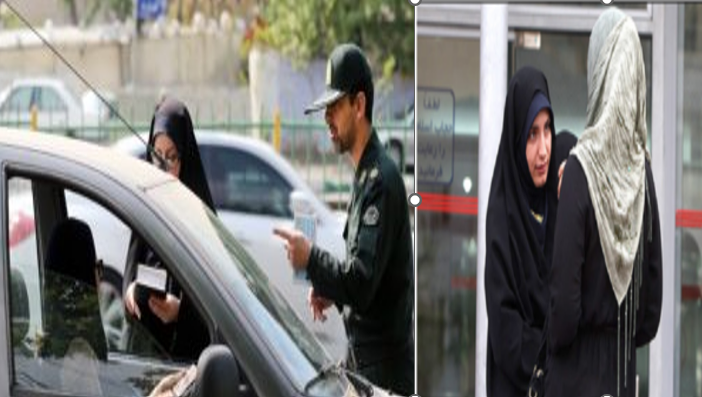
Since March 20, the regime, wary of potential uprisings, has reinforced the mandatory hijab law through its morality police.
The return of the morality police and the resurgence of coercive policies against women signifies a “historical regression,” according to the statement. This move has not only reignited debates over individual freedoms but also spotlighted the broader socio-economic ramifications, underlining the intricate interplay between governance, societal norms, and economic vitality in Iran.

MEK Iran (follow us on Twitter and Facebook), Maryam Rajavi’s on her site, Twitter & Facebook, NCRI (Twitter & Facebook), and People’s Mojahedin Organization of Iran – MEK IRAN – YouTu