
In the wake of a tragic helicopter crash that claimed the lives of President Ebrahim Raisi and other senior officials on May 19, Iran has initiated the process of electing a new president.
The Iranian regime’s Minister of Interior, Ahmad Vahidi, announced the commencement of candidate registrations, which will continue for five days. This expedited election process aims to maintain stability and prevent unrest following the sudden leadership void. Supreme Leader Ali Khamenei swiftly directed state officials to organize new elections, adhering to the constitutional mandate that requires a presidential election within 50 days of a president’s death. Consequently, the candidate registration period will remain open until June 3, after which the Guardian Council will spend seven days vetting the candidates’ qualifications.
Mohsen Eslami, spokesperson for Iran’s Election Headquarters, reported to ISNA News Agency that 30 individuals registered as presidential candidates within the initial hours. However, none met the necessary qualifications for definitive registration after their documents were reviewed. This indicates the stringent criteria and rigorous scrutiny candidates will face.
Khamenei’s Blueprint for #Iranian Regime’s Next Governmenthttps://t.co/o1Z49BMhR7
— NCRI-FAC (@iran_policy) May 23, 2024
The Ministry of Interior has outlined the election timeline, with the final list of approved candidates to be announced on June 11. Historical trends suggest that the Guardian Council, operating under the Supreme Leader’s directives, will only approve candidates who align with the regime’s preferences. This practice has led to widespread criticism of the electoral process as being heavily controlled and undemocratic.
The previous presidential election in 2021 saw the Guardian Council disqualify numerous prominent political figures, including former President Mahmoud Ahmadinejad, then-Vice President Eshaq Jahangiri, and former Speaker of Parliament Ali Larijani, who is also an advisor to Khamenei. This led to a significant boycott by the Iranian populace, with a large number of blank votes cast in protest, coming in second only to Raisi.
The upcoming election, originally set for June 2026, has been moved to June 28 due to Raisi’s untimely death. As the regime prepares for this expedited electoral cycle, the political atmosphere remains tense. The tight control over candidate approvals is expected to exacerbate factional tensions and conflicts within the political landscape.
#Raisi’s Death Cripples Khamenei’s Decade-Long Project to Maintain Rule over #Iran https://t.co/ibcs5oMwbB
— NCRI-FAC (@iran_policy) May 22, 2024
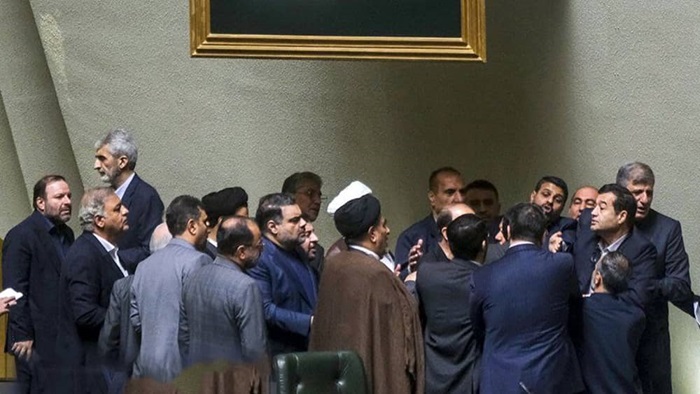
On May 29, the political discord was palpable in the newly formed 12th parliament. Despite Khamenei’s attempts to ease tensions, heated debates and protests over the Parliament Speaker’s decisions led to physical altercations among members. This incident underscores the volatility and high stakes of the current political environment in Iran. As Iran moves towards this critical election, the international community and the Iranian people will be watching closely, scrutinizing the legitimacy and fairness of the process amidst the ongoing political strife.

MEK Iran (follow us on Twitter and Facebook), Maryam Rajavi’s on
her site, Twitter & Facebook, NCRI (Twitter & Facebook),
and People’s Mojahedin Organization of Iran – MEK IRAN – YouTu