
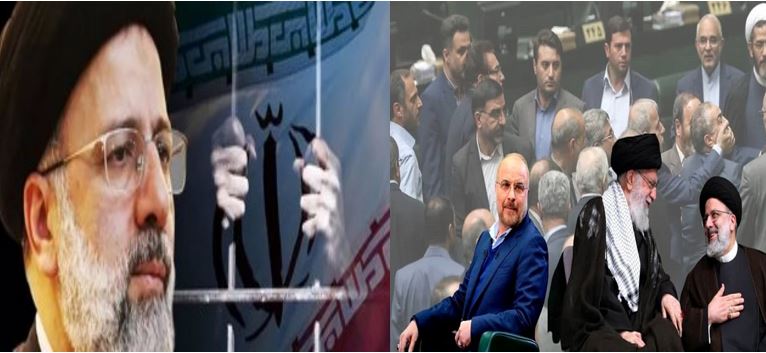
In a significant meeting on May 5, Iranian President Ebrahim Raisi discussed with the country’s governors the escalating social challenges Iran faces.
This meeting underscored the regime’s deep-seated concerns about the nation’s economic and societal turmoil, as conveyed by President Raisi’s emphasis on the urgency of addressing these issues.
The discussion revealed that Iran’s Supreme Leader, Ali Khamenei, has held multiple sessions with key government leaders, signaling his intense apprehension about the current state of affairs. However, this concern appears to be less about the direct suffering of the Iranian people such as poverty, corruption, and inflation—and more about the potential consequences these issues may precipitate.
Critics argue that the government’s approach to “social damages” is not genuinely aimed at rectifying these issues for the betterment of the populace. Instead, it seems geared toward managing the fallout through stringent security measures and repression.
The regime’s recent actions, including a surge in criminal executions with 80 individuals executed in just 18 days, exemplify a draconian strategy rather than a corrective one. These measures highlight a broader, more troubling trend within the Iranian leadership’s policy framework, which prioritizes power retention over public approval or welfare.
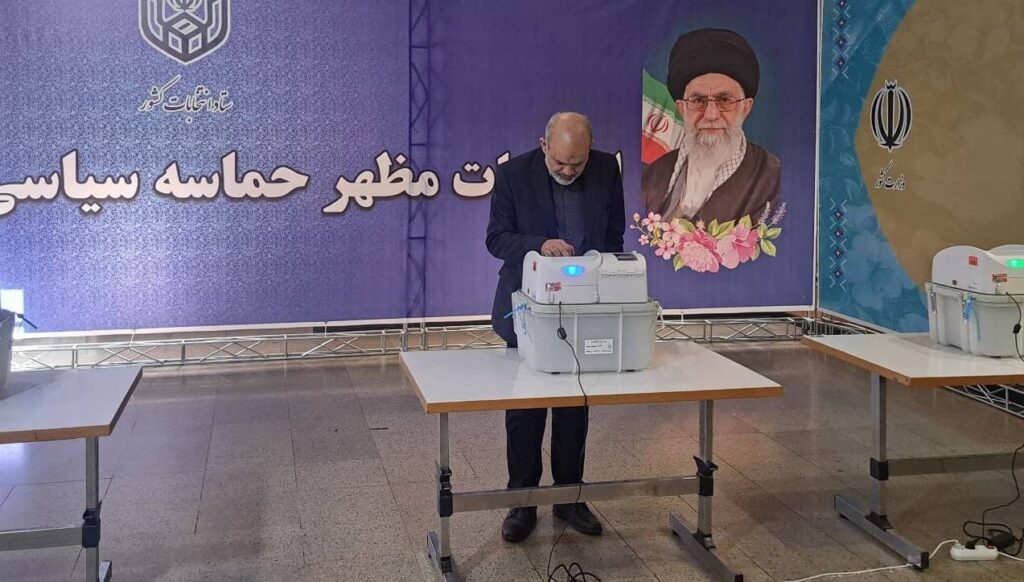
The appointment of Ahmad Vahidi, Minister of Interior and a former commander of the controversial Quds Force, to oversee these efforts is viewed as a move to bolster the regime’s control rather than provide real solutions.
President Raisi’s directives to the governors—many of whom hail from the hardline Revolutionary Guards and intelligence sectors—emphasize a disregard for public opinion in favor of swift and decisive action. This stance, which sidelines electoral and popular considerations, reveals a fundamental principle of the regime: the absolute maintenance of power, often at the expense of the general populace.
This power-centric approach has historical precedents, such as the mass executions of political opponents in the 1980s and the violent suppression of protests in recent years, including the killing of over 1,500 demonstrators in 2019 and at least 750 in 2022. These actions underscore a persistent pattern of governance that relies on oppression and exploitation.
Additionally, the economic policies under Raisi’s administration, including excessive money printing reported by the former head of the Central Bank, Abdolnaser Hemmati, have led to significant inflation and economic instability. According to Hemmati, the amount of money printed in the last two and a half years has surpassed the total produced since the Achaemenid dynasty, exacerbating the financial hardships for the Iranian populace.
Why does #Khamenei fear his own sham elections? Why sideline allies like Fallahian, Salehi, Taeb and Rouhani? Is it about succession or survival? Explore in an 8-minute video on #IranElections. pic.twitter.com/byvOocmwR8
— NCRI-FAC (@iran_policy) February 13, 2024
As Iran navigates these turbulent times, the leadership’s approach to internal crises and its impact on regional stability continue to draw significant scrutiny both domestically and internationally. The long-term implications of such governance on Iran’s socio-economic fabric remain a critical concern for observers and citizens alike.

MEK Iran (follow us on Twitter and Facebook), Maryam Rajavi’s on her site, Twitter & Facebook, NCRI (Twitter & Facebook), and People’s Mojahedin Organization of Iran – MEK IRAN – YouTu