
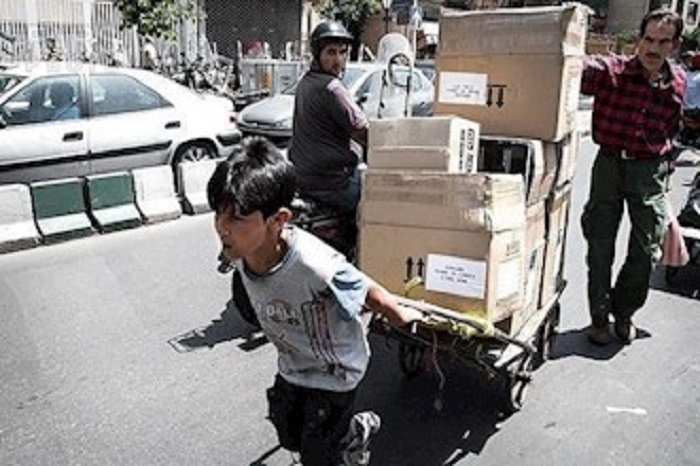
In Iran, under the austere rule of the mullahs, the fate of a newly born child remains a poignant question.
For many Iranian children, dreams of education are replaced with the harsh realities of life on the streets, in underground workshops, or alongside thoroughfares, shouldering the heavy burden of their family’s survival.
Recent statistics released by the regime paint a dire picture: absolute poverty afflicts at least 30% of Iran’s populace, translating to 25 million people grappling with insufficient income for basic necessities such as food, living expenses, and especially shelter. This dire situation has led to over half of Iranian households being unable to provide adequate and suitable food for their children.
On January 4, 2024, the state-run Donya-ye Eqtesad newspaper revealed staggering figures: there are over 14 million children under 18, 9 million under 12, and 3.5 million under six in Iran. The past decade has seen a drastic 34% drop in per capita income, severely impacting the consumption of essential goods.
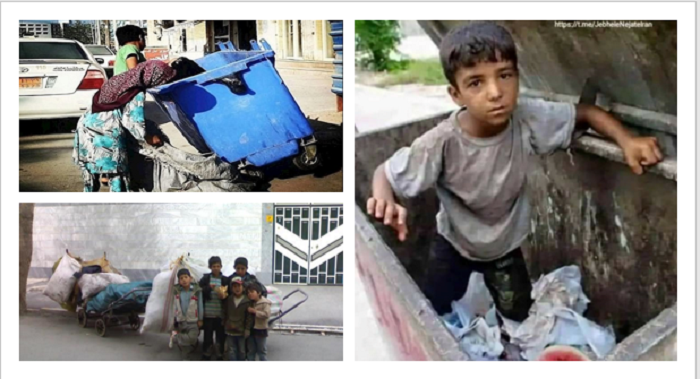
The year 2022 saw a 37% hike in the household expenditure for tenants, making children the most vulnerable demographic, facing malnutrition risks and potential long-term detriments.
Educational Decline and Labor Exploitation
This crisis is not limited to basic needs; the educational sector is also severely affected. There’s a notable decline in academic performance among children from impoverished backgrounds, an issue that now tarnishes Iran’s international image. An increasing dropout rate and a surge in child labor, including waste pickers and young girls selling flowers on the streets, underscore the depth of the crisis.
Children Who Have Not Had a Childhood
The grim reality of child labor in Iran is a direct consequence of economic hardship. Families, out of desperation, send their children to work. Workshop owners, seeking cheap labor, readily exploit these children, who receive meager wages, lack insurance, and are unable to protest against their conditions.
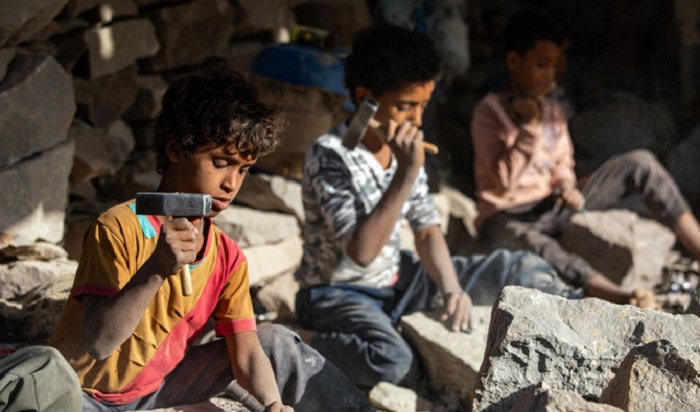
Approximately 1.5 million children are at risk of dropping out, with over half a million already deprived of education.
A Vicious Cycle
Efforts like the “Child Labor Organization” plan, aimed at masking the issue, have been ineffective. Despite promises by officials to address child labor, media outlets like Entekhab and Fararu highlight the plan’s futility and the continuing rise in child labor due to economic pressures.
The Tejarat newspaper echoes these sentiments, with experts predicting a bleak future: an increase in street children, abandoned women, the elderly, the mentally ill, and disabled individuals living in destitution. This scenario is a vivid representation of the escalating poverty, with child laborers, homelessness, and other social ills as its most visible symptoms.
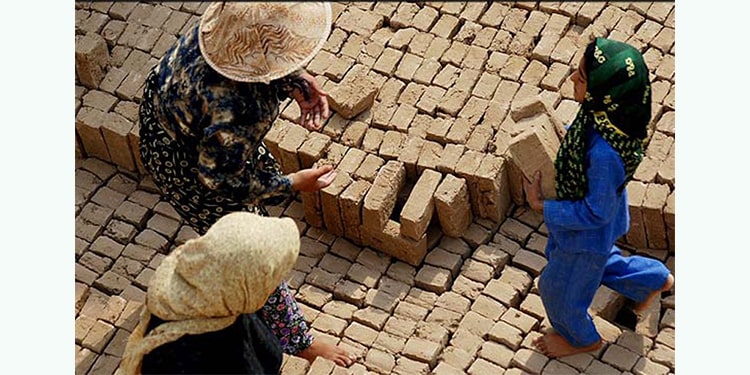
In conclusion, the children of Iran, born under the rule of the mullahs, are trapped in a cycle of poverty and exploitation.
Deprived of a childhood, their plight is a stark reminder of the urgent need for change in a society where hunger and despair overshadow the innocence of youth.

MEK Iran (follow us on Twitter and Facebook), Maryam Rajavi’s on her site, Twitter & Facebook, NCRI (Twitter & Facebook), and People’s Mojahedin Organization of Iran – MEK IRAN – YouTu